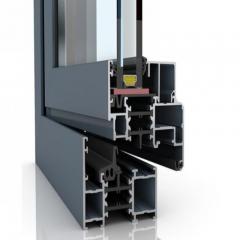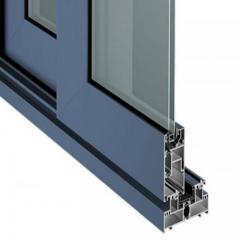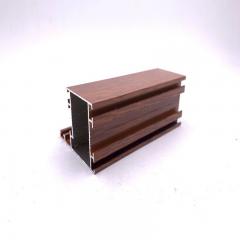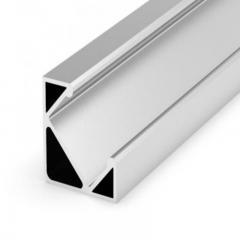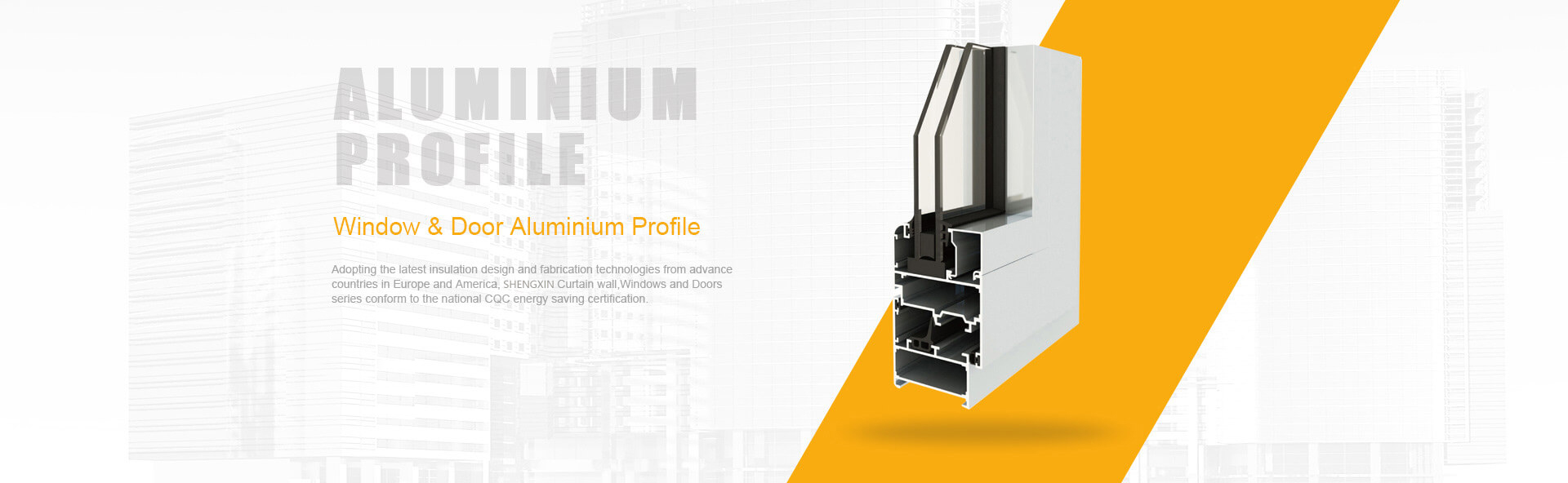
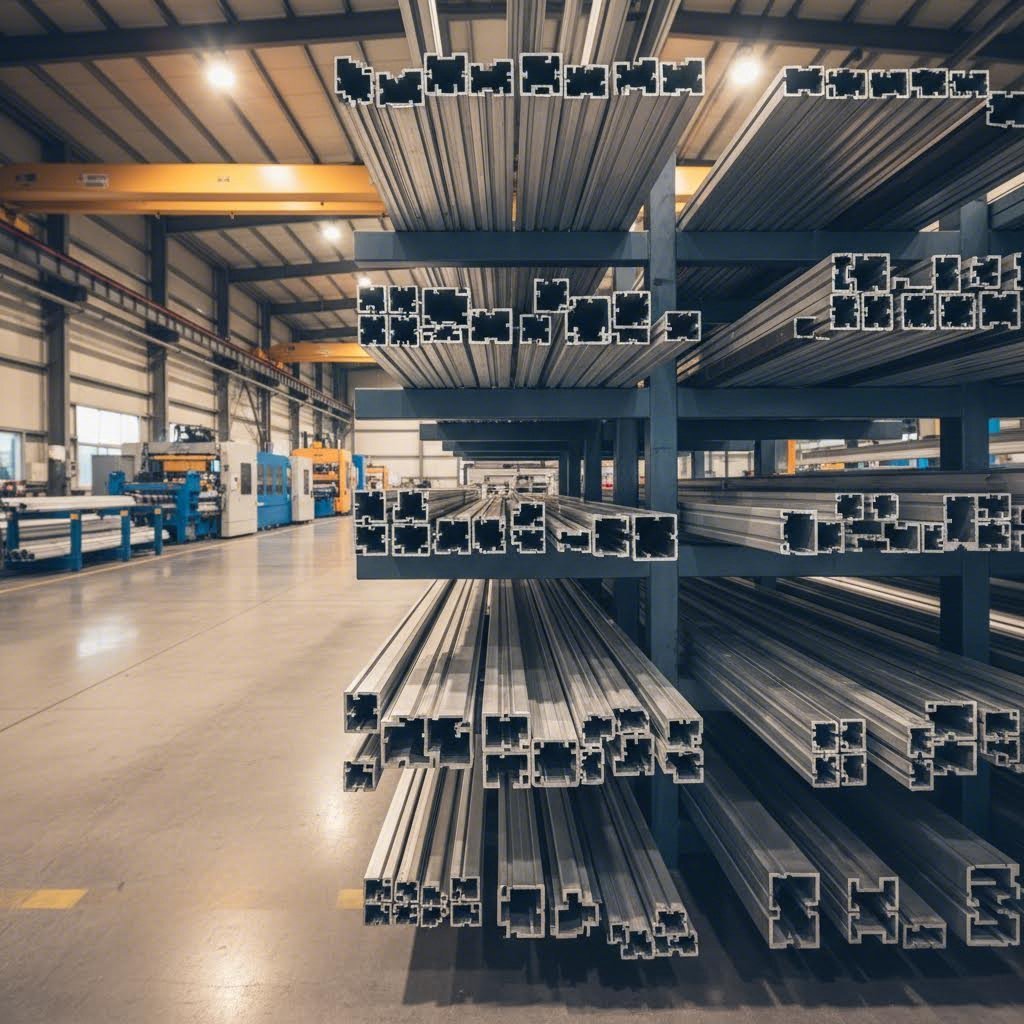
When you're sourcing materials for large-scale manufacturing or construction projects, understanding how bulk aluminum extrusion works can save you significant time and money. But what exactly sets industrial-scale purchasing apart from grabbing a few pieces at your local hardware store? Let's break down the essentials you need to know before placing your first major order.
Imagine squeezing toothpaste through a tube—that's essentially how manufacturers extrude aluminum, just on a massive industrial scale. The process begins with a cylindrical aluminum billet, which is heated to approximately 800-925°F until it becomes malleable. This heated billet is then placed into a container and forced under tremendous pressure through a specially shaped opening called a die.
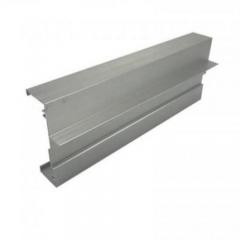
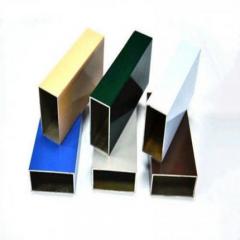
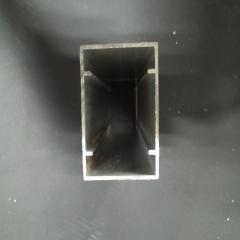
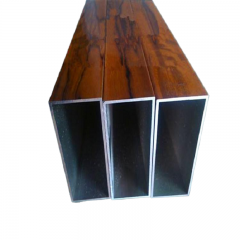
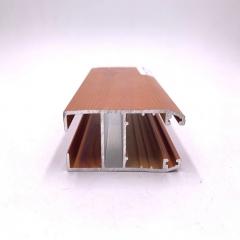
As the softened metal passes through this die, it takes on the exact cross-sectional shape of the opening—whether that's a simple rectangular bar, a complex T-slot profile, or a hollow tube. The resulting aluminum extrusion emerges as a continuous length, typically 8 to 24 feet long, maintaining consistent dimensions throughout. After extrusion, these profiles undergo quenching (rapid cooling) to lock in their properties, by stretching for straightness and aging treatments to achieve the desired temper and mechanical strength.
This process allows manufacturers to create extruded aluminum profiles in virtually any shape imaginable—solid, hollow, or semi-hollow configurations that would be impossible or cost-prohibitive to produce through other manufacturing methods.
Purchasing aluminum extrusions in bulk operates fundamentally differently from retail buying. Here's what changes when you scale up:
Volume thresholds typically start at 500-1,000 pounds minimum, though many suppliers set minimums based on linear footage or piece count. Some manufacturers require full billet runs, meaning you'll receive the complete output from one or more billets.
Pricing structures shift dramatically at scale. While retail customers pay per-piece premiums, bulk aluminum buyers access tiered pricing that drops significantly as quantities increase. You're essentially paying closer to raw material costs plus processing, rather than retail markups.
Lead times extend compared to off-the-shelf purchases. Standard extrusion parts might ship within 2-4 weeks, while custom profiles or large orders may require 6-12 weeks for die creation, production scheduling, and quality verification.
Before diving into specifications with suppliers, familiarize yourself with these essential terms:
With these fundamentals in place, you're ready to explore the critical decisions that shape every successful bulk purchasing strategy—starting with alloy selection.
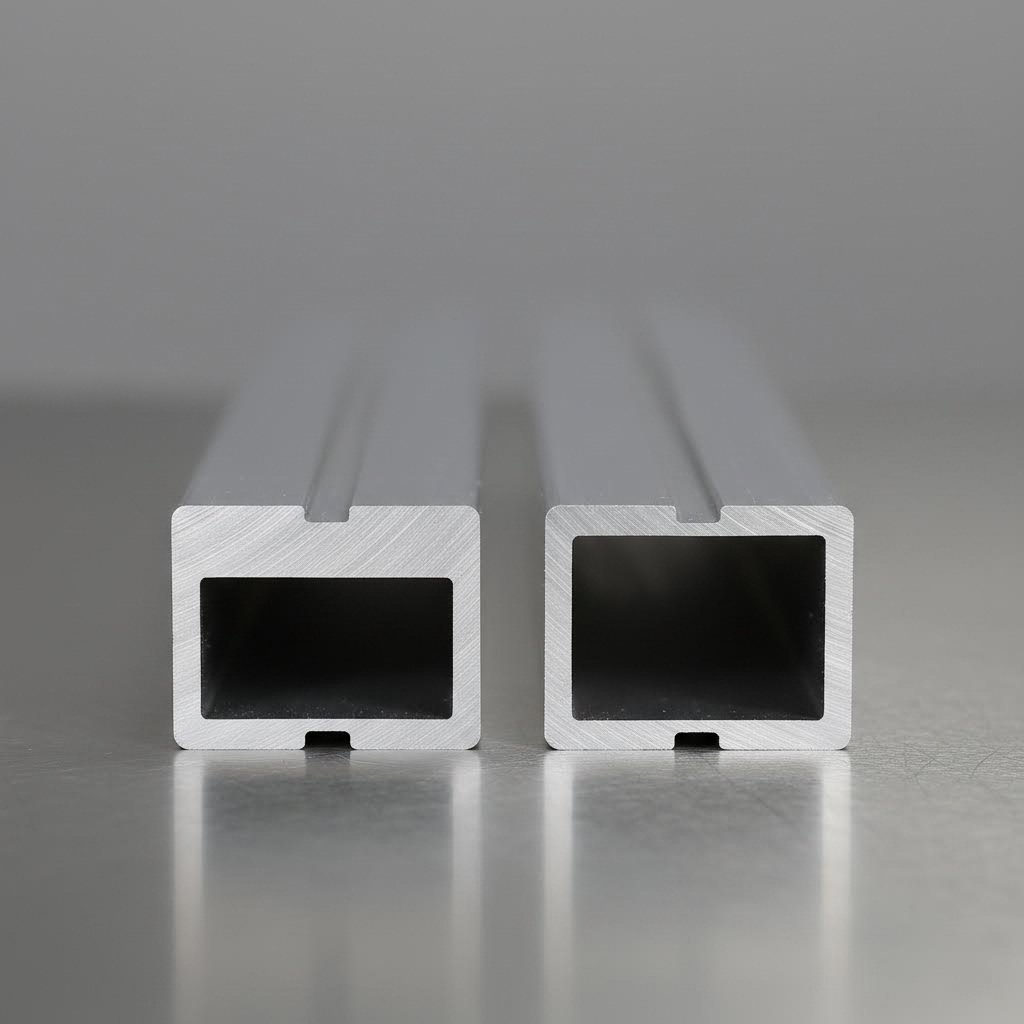
Choosing the right aluminum alloy isn't just a technical detail—it's one of the most consequential decisions you'll make when placing a bulk aluminum extrusion order. Why? Because once you've committed to thousands of pounds of material, exchanging it becomes extraordinarily costly and time-consuming. Understanding the differences between common alloy grades upfront helps you match material properties to your project requirements from day one.
The two workhorses of the aluminum extrusion industry are 6061 and 6063 alloys. Both belong to the 6000 series, meaning they contain magnesium and silicon as primary alloying elements. However, their distinct compositions create meaningful differences in performance.
6061 aluminum, often called "structural aluminum," delivers superior strength and excellent machinability. It's your go-to choice when load-bearing capacity matters most—think machine frames, automotive components, or structural supports. According to Industrial Metal Supply, 6061-T6 offers higher yield strength and fatigue strength compared to 6063-T6, making it ideal for applications where mechanical stress is a primary concern.
6063 aluminum, commonly referred to as "architectural aluminum," excels in extrudability and surface finish quality. If you're producing window frames, door frames, railings, or any application where aesthetics matter, 6063 delivers smoother surfaces that anodize beautifully. It also provides better corrosion resistance than 6061, weathering outdoor exposure more gracefully.
Here's a practical way to think about it: when you need aluminum tubing or aluminum square tube for structural frameworks requiring maximum strength, lean toward 6061. When surface appearance and corrosion resistance take priority—like architectural trim or furniture components—6063 is typically the better investment.
You've probably noticed designations like T5 or T6 following alloy numbers. These temper codes reveal how the aluminum was processed after extrusion, directly affecting its mechanical properties.
The tempering process works like this: after extrusion, aluminum can undergo solution heat treatment—heating to approximately 980°F to dissolve alloying elements into a solid solution, then rapidly quenching in water. This creates the T4 condition. Engineering Express explains that subsequent aging at temperatures between 325-400°F causes alloying elements to form ordered atomic structures called GP zones, significantly strengthening the material—this produces T6 temper.
In practice, you'll encounter:
For bulk orders, T5 often provides adequate performance for general applications while reducing processing costs. T6 justifies its premium when your application demands peak mechanical properties or when specifications explicitly require it.
Selecting between 6063-T5 and 6061-T6 comes down to prioritizing your project's most critical requirements. The comparison table below highlights key differences to guide your decision:
| Property | 6063-T5 | 6061-T6 |
|---|---|---|
| Tensile Strength | ~27,000 psi | ~45,000 psi |
| Yield Strength | ~21,000 psi | ~40,000 psi |
| Corrosion Resistance | Excellent | Good |
| Weldability | Excellent | Good (strength reduced in weld zone) |
| Surface Finish Quality | Superior | Good |
| Extrudability | Excellent | Good |
| Typical Applications | Architectural trim, window frames, railings, electrical conduit, furniture | Machine frames, structural components, 2 square tubing for heavy-duty applications, aerospace fittings |
When evaluating options for your bulk order, consider these questions: Will the profiles face significant mechanical loads? Does the application require outdoor weather exposure? Is surface aesthetics a selling point for your end product? Your answers will naturally point toward the appropriate alloy selection.
Remember that switching alloys mid-project or after receiving bulk shipments creates substantial waste—both financial and material. Taking time to verify alloy suitability before ordering, whether you're sourcing aluminum 1-inch profiles or large structural sections, protects your investment and ensures your finished products perform as expected.
With your alloy selection finalized, the next decision involves choosing the right profile type and series system for your bulk extrusion project.
Now that you've nailed down your alloy choice, here's the next question: which profile shape and series will best serve your project? The aluminum extrusion profiles available today range from simple solid bars to intricate T-slot systems designed for modular construction. Understanding these categories—and the sizing conventions that govern them—helps you specify exactly what you need when placing bulk orders.
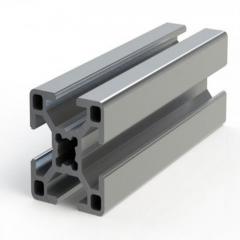
T-slot aluminum profiles have become the backbone of industrial framing, workstations, and machine enclosures. Their defining feature? A continuous T-shaped groove running along each face, allowing components to be attached anywhere along the profile's length without drilling holes. This modularity makes T-slot systems incredibly popular for bulk purchasing—you're buying flexibility, not just metal.
The naming convention for T-slot profiles follows a logical pattern based on cross-sectional dimensions. When you see "2020 aluminum extrusion dimensions," you're looking at a profile measuring 20mm x 20mm. Similarly, a 4040 profile measures 40mm x 40mm. The 1010 aluminum extrusion—one of the smallest common options—provides a compact 10mm x 10mm cross-section ideal for lightweight applications.
Here's where it gets practical: series designations like 10 series aluminum extrusion or 15 series refer to the slot width and bolt compatibility rather than the overall profile size. A 10 series (also called fractional inch or 1" series) uses 1/4"-20 hardware, while metric series use M5 or M6 fasteners depending on the profile size. This distinction matters significantly for international bulk ordering—mixing metric and imperial systems creates assembly headaches.
The table below compares popular T-slot series to help you match specifications to your project requirements:
| Profile Series | Cross-Section | Approximate Load Capacity (Simply Supported, 500mm Span) | Common Applications |
|---|---|---|---|
| 1010 / 10 Series | 10mm x 10mm | Light duty (under 5 kg) | 3D printer frames, small enclosures, electronics housings |
| 2020 / 20 Series | 20mm x 20mm | Light-medium duty (10-25 kg) | CNC router frames, workbenches, display fixtures, prototyping |
| 4040 / 40 Series | 40mm x 40mm | Medium-heavy duty (50-100 kg) | Machine guards, conveyor frames, automation cells, workstations |
| 4545 / 45 Series | 45mm x 45mm | Heavy duty (75-150 kg) | Industrial machinery bases, robot cells, structural frameworks |
| 8080 / 80 Series | 80mm x 80mm | Extra heavy duty (200+ kg) | Large machine frames, gantry systems, heavy equipment enclosures |
According to BE-CU's technical analysis, the transition from 2020 to 4040 profiles represents a significant jump in structural capability—the larger profiles offer increased wall thickness, wider T-slots for more robust fastening, and substantially higher rigidity for demanding industrial applications.
While T-slot profiles dominate structural framing, V-slot extrusions have carved out their own niche—quite literally. The key difference? V-slots feature angled, V-shaped grooves (typically 90 degrees) designed specifically to accommodate V-wheels for smooth linear motion.
Think of it this way: T-slots excel at building rigid, static structures where you're bolting components in place. V-slots shine when you need integrated linear motion—the profile itself becomes the track. This makes them popular for:
For bulk purchasing decisions, here's the practical takeaway: if your project primarily requires sturdy framework construction with occasional component mounting, T-slot profiles with their extensive ecosystem of 80/20 aluminum accessories and fasteners are typically the better choice. If integrated linear motion is a core requirement, V-slot extrusions—often compatible with a v slotted aluminum insert for enhanced wheel tracking—provide that functionality directly within the structural profile.
Many bulk buyers actually combine both systems, using T-slot profiles for the main structural frame and V-slot sections specifically where linear motion occurs. This hybrid approach optimizes both cost and functionality.
Standard T-slot and V-slot profiles cover the vast majority of industrial applications—suppliers like MISUMI offer 50+ size combinations precisely because standardization drives efficiency. But when do custom extrusion profiles justify their additional cost and lead time?
Custom profiles make financial sense when:
For most bulk buyers entering the market, starting with standard 80 20 aluminum profiles makes sense. You'll benefit from immediate availability, proven performance data, and a robust accessory ecosystem. As production volumes grow and design requirements become clearer, transitioning to custom profiles becomes a strategic option worth evaluating.
One final consideration for international bulk orders: verify whether your supplier quotes in metric or imperial dimensions. A "20 series" profile from a European manufacturer may not match a "20 series" from an American supplier. Confirming exact 2020 aluminum extrusion dimensions—or any profile specification—before committing to large quantities prevents costly compatibility issues during assembly.
With your profile type and series selected, the next step involves specifying surface finishes and treatments that protect your investment and meet application requirements.
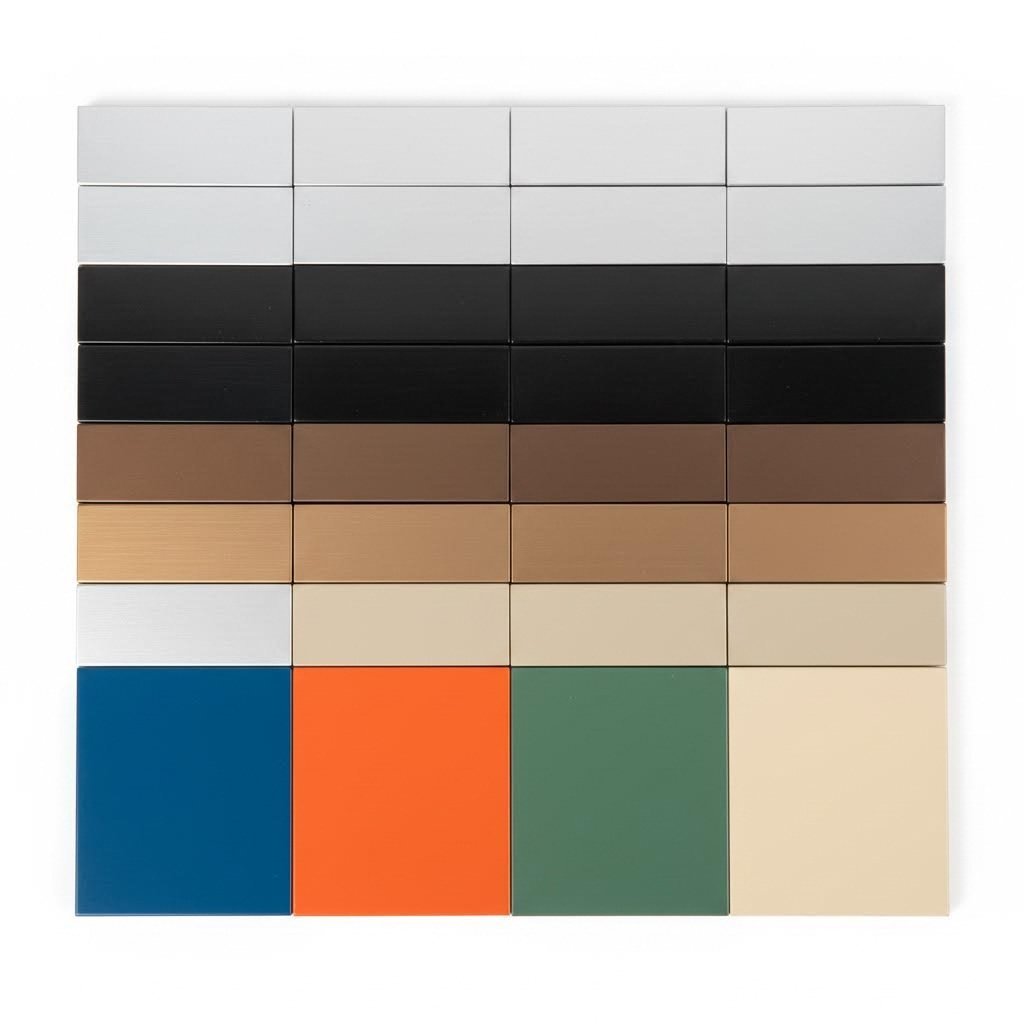
You've selected your alloy and profile—but here's a question that often gets overlooked until too late: how will your extruded aluminum profile perform after months or years of real-world exposure? The answer largely depends on surface finish selection. Whether you're sourcing aluminum angle for outdoor railings or aluminum fence panels for commercial installations, the right finish determines longevity, appearance, and maintenance requirements. Let's explore your options.
Every aluminum extrusion begins life with a mill finish—the natural state of the metal as it exits the die. You'll notice visible die lines, a somewhat dull appearance, and no protective treatment beyond aluminum's natural oxide layer. While some applications work perfectly fine with mill finish (think hidden structural components or parts destined for further processing), it's generally unsuitable for exposed applications where aesthetics or enhanced corrosion resistance matter.
Here's the honest assessment: mill finish represents the cheapest aluminum option upfront, but this savings evaporates quickly in applications requiring durability or visual appeal. For bulk orders destined for outdoor or customer-facing uses, investing in proper surface treatment pays dividends over your product's lifespan.
Anodizing remains the gold standard for aluminum surface treatment—and for good reason. Unlike paint or coatings that sit on top of the metal, anodizing actually grows from the aluminum itself through an electrochemical process. The result? A hard, durable aluminum oxide layer that's integral to the metal and won't peel or flake.
According to SAF's technical guidelines, anodizing creates a porous structure that can accept dyes while providing excellent abrasion resistance—making it ideal for high-traffic applications like storefronts and handrails. The coating thickness directly correlates with durability: Class I (0.7 mils) lasts approximately twice as long as Class II (0.4 mils) in exterior applications.
Color options for anodizing include:
One important caveat: anodizing struggles with bright colors and cannot produce true white. If vibrant hues are essential to your design, powder coating offers broader possibilities.
When unlimited color options and thick, protective coverage matter most, powder coating delivers. The process applies dry paint powder electrostatically, then bakes it into a smooth, even finish that bonds firmly to properly prepared aluminum surfaces.
Powder coating advantages for bulk orders include:
The tradeoff? Powder coatings aren't as hard as anodized surfaces. High-abrasion environments may show wear over time. Additionally, touch-up in the field is challenging—damaged areas typically require complete recoating. For applications where scratches and chips are likely, anodizing's integral hardness may prove more practical despite its color limitations.
For exterior architectural applications demanding decades of performance, PVDF (polyvinylidene fluoride) coatings—sold under trade names like Kynar 500® and Hylar 5000®—represent the industry's most stringent standard. These resin-based coatings offer exceptional UV resistance, chemical resistance, and color retention that powder coatings and standard paints simply can't match.
SAF notes that PVDF coatings meeting AAMA 2605 specifications must pass actual ten-year exposure testing in South Florida—the industry's benchmark for weathering performance. This makes PVDF the preferred choice for curtainwall systems, metal roofing, and architectural cladding where coating failure would be catastrophic.
While PVDF traditionally required solvent-based application, manufacturers have recently introduced PVDF powder coatings that combine premium performance with powder coating's environmental advantages—a development worth discussing with suppliers when specifying bulk orders for demanding exterior applications.
Beyond standard finishes, several specialized treatments address specific performance requirements:
For bulk buyers evaluating these options, the key question becomes: does your application genuinely require specialized treatment, or would standard anodizing or powder coating suffice? Cheap aluminium extrusion projects rarely benefit from premium finishes—but underspecifying surface treatment for demanding environments leads to premature failure and costly replacements.
Beyond protective treatments, you'll encounter choices regarding surface texture. Grooved finishes retain subtle linear marks from the extrusion die, while milled (or polished) finishes undergo additional mechanical processing for smoother surfaces.
For T-slot profiles and structural applications, grooved finishes typically perform identically while costing less. Milled finishes justify their premium when:
When ordering in bulk, specifying the appropriate surface texture upfront prevents rework costs and ensures consistent quality across your entire shipment.
Looking for comprehensive finishing capabilities under one roof? Suppliers offering integrated deep processing services—like Shengxin Aluminium's processing facilities—can handle everything from anodizing in custom colors (champagne, rose gold) through powder coating, PVDF application, and micro-arc oxidation. This end-to-end approach streamlines logistics and ensures finish quality meets your specifications without juggling multiple vendors.
With your surface finish specified, the next critical step involves planning the logistics that transform your specifications into delivered material.
You've specified your alloy, selected your profile series, and determined the perfect surface finish. Now comes the question that separates successful bulk aluminum extrusion projects from costly headaches: how do you actually plan, order, and receive thousands of pounds of material without over-ordering, missing deadlines, or blowing your budget? Unlike picking up a few pieces at aluminum extrusion Lowes or similar retail outlets, wholesale aluminum extrusions require strategic planning that accounts for lead times, pricing tiers, and international shipping complexities.
Getting your quantities right matters more than you might think. Order too little, and production grinds to a halt while you wait weeks for supplemental shipments. Order too much, and you're stuck warehousing excess inventory that ties up capital. Here's a systematic approach to calculating what you actually need:
Start with your bill of materials (BOM). For each unique profile, calculate the total linear footage required across all assemblies. Don't forget to account for:
For complex projects, creating a cutting optimization spreadsheet—or using nesting software—helps minimize waste and reveals the most economical stock lengths to order. Sometimes ordering non-standard lengths directly from the manufacturer costs less than absorbing significant cutting waste from standard lengths.
Minimum order quantities (MOQs) vary dramatically across suppliers and profile types. Here's what you'll typically encounter:
| Order Type | Typical MOQ Range | Pricing Impact |
|---|---|---|
| Standard profiles (stock) | 10-50 pieces or $500-$1,000 order value | Base pricing; limited negotiation room |
| Standard profiles (bulk) | 500-2,000+ lbs or full billet runs | 15-30% discount from base pricing |
| Custom profiles | 1,000-5,000 lbs minimum (plus die cost) | Competitive pricing once die is amortized |
| Finished/processed parts | Varies by processing complexity | Volume discounts typically start at 100+ pieces |
The aluminum extrusion cost per foot drops significantly at volume thresholds—but only if you're comparing apples to apples. When evaluating quotes, ensure pricing includes:
Here's an insider tip: many manufacturers offer better pricing for orders that fill complete production runs. Asking "what quantity hits your next price break?" or "what volume optimizes your production scheduling?" often reveals opportunities that standard price lists don't show.
Bulk aluminum shipments present unique logistics challenges. Unlike small orders that ship via parcel carriers, wholesale quantities typically require freight shipping—and the method you choose significantly impacts both cost and delivery timeline.
According to Sinoextrud's shipping management guidelines, sea freight remains the most economical option for large aluminum shipments, though it requires longer transit times. Air freight suits urgent, smaller shipments where speed justifies higher costs. For domestic bulk orders, less-than-truckload (LTL) or full truckload (FTL) shipping typically offers the best balance of cost and transit time.
Packaging considerations for bulk shipments include:
For international orders, customs duties and tariffs add another layer of complexity. The United States, for example, imposes specific tariffs on aluminum imports that vary based on country of origin and trade agreements in effect. Factor these costs into your total landed cost calculations—not just the quoted material price.
Ready to buy aluminum extrusion in bulk quantities? Follow this proven sequence to move from specification to delivery:
Wondering where to buy aluminum extrusion near me in bulk quantities? While Lowes extruded aluminum works for small projects, industrial volumes typically require direct manufacturer relationships or specialized distributors. Establishing ongoing supplier partnerships—rather than treating each order as a one-time transaction—often unlocks better pricing, priority scheduling, and technical support that casual buyers don't receive.
With your order placed and logistics arranged, the next critical phase involves assembling your extrusions—which starts with selecting the right fastening systems and hardware.
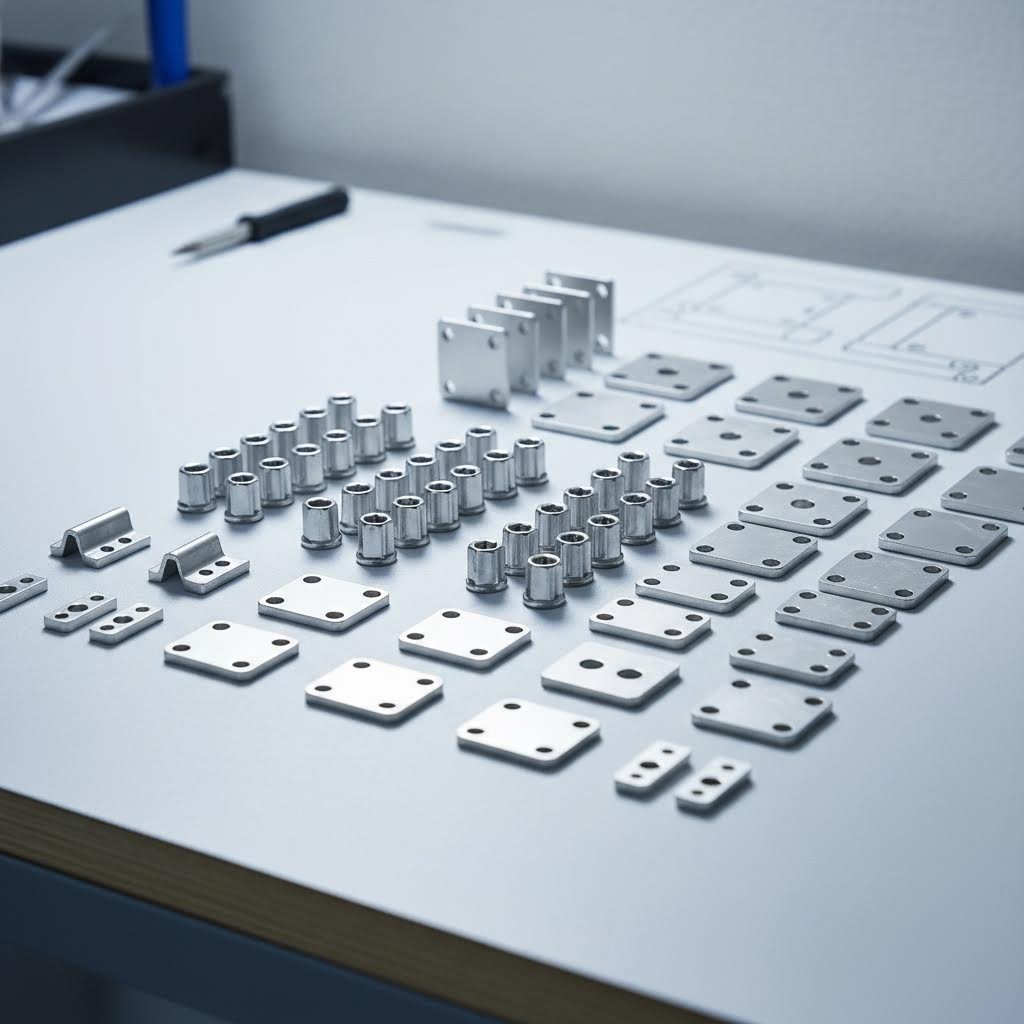
Your bulk aluminum extrusion shipment has arrived—now what? Before you can transform those profiles into functional workstations, machine frames, or safety enclosures, you need the right fastening hardware. And here's the catch: underestimating hardware quantities is one of the most common mistakes in bulk extrusion projects. Imagine pausing a production line because you're 200 T-nuts short. Let's make sure that doesn't happen.
T slotted aluminum profiles offer two fundamental approaches to joining components: internal fasteners that work within the slot channels, and external fasteners that attach to profile surfaces. Understanding when to use each method directly impacts assembly speed, joint strength, and overall project cost.
Internal fastening utilizes the t slotted rail channels themselves as anchor points. This approach keeps hardware concealed within the profile, creating cleaner aesthetics and protecting fasteners from environmental exposure. The primary hardware types include:
External fastening relies on brackets, plates, and connectors attached to profile surfaces. While more visible, external methods often provide superior load-bearing capacity and easier assembly for complex joints. Common external hardware includes L shaped brackets, gusseted corner brackets, joining plates, and linear connectors.
Here's a practical comparison to guide your selection:
| Fastener Type | Load Rating | Ease of Installation | Best Applications |
|---|---|---|---|
| Slide-in T-nut | High (full thread engagement) | Requires pre-planning | Primary structural joints, heavy loads |
| Drop-in T-nut | Medium-High | Moderate (angle insertion) | General assembly, component mounting |
| Roll-in T-nut | Medium | Easy (no disassembly needed) | Retrofits, adjustable components |
| Corner bracket (2-hole) | Medium | Very easy | Light frames, enclosures, guards |
| Gusseted corner bracket | High | Easy | Structural frames, load-bearing joints |
| Joining plate | High (distributed load) | Easy | Profile-to-profile connections, splices |
Beyond basic T-nuts, successful bulk projects require a comprehensive hardware kit. Think of this as your assembly toolkit—missing any component can stall production.
Corner brackets form the backbone of frame construction. According to 80/20's fastening guide, options range from simple 2-hole inside corner brackets for light-duty applications to 8-hole gusseted brackets providing maximum rigidity for structural frames. Slotted versions allow fine positional adjustment during assembly—particularly valuable when aligning multiple profiles simultaneously.
Joining plates connect profiles end-to-end or side-by-side. Straight flat plates handle inline splices, while L-shaped and T-shaped plates accommodate perpendicular or three-way intersections. For applications similar to drawer glides where smooth linear movement matters, specialized low-profile plates minimize interference with moving components.
Linear connectors create hidden joints where aesthetics matter. These internal fasteners pull profiles tightly together without visible external hardware—ideal for customer-facing equipment or cleanroom applications where minimizing particle traps is essential.
Anchor fasteners secure frames to floors, walls, or machinery. Options include 4x4 post brackets for heavy floor mounting, adjustable leveling feet for uneven surfaces, and specialized bolts for 4x4 posts when integrating with wooden structures. For metal framing, screws for metal studs provide secure attachment points without pre-drilling.
Here's where bulk projects get tricky: hardware quantities multiply faster than you might expect. A simple cube frame with 12 profiles requires at minimum 8 corner connections—but each connection needs multiple fasteners. Underestimating by even 10% can halt assembly at critical moments.
Use this systematic approach to calculate your hardware needs:
Step 1: Count all joint types. Walk through your design and categorize every connection point:
Step 2: Determine fasteners per joint. Each joint type requires specific hardware quantities:
Step 3: Add contingency. For bulk projects, add 15-20% additional hardware beyond calculated requirements. This buffer covers:
Step 4: Consider fastener grades. Not all T-nuts are created equal. For vibration-prone environments or heavy loads, specify higher-grade steel fasteners with appropriate coatings. The cost difference is minimal compared to joint failure consequences.
For example, a typical industrial workstation frame using 40-series profiles might require:
When ordering hardware alongside your bulk aluminum extrusion, verify that fastener thread sizes match your profile series. A 40-series profile typically uses M8 hardware, while 20-series uses M5 or M6. Mixing incompatible fasteners with profiles creates assembly frustration and potential safety hazards.
With your fastening strategy defined and hardware quantities calculated, the final critical step before assembly involves verifying that your received materials meet quality specifications.
Your bulk aluminum extrusion shipment just rolled off the truck. Before signing that delivery receipt, pause—because accepting material that doesn't meet specifications creates downstream problems that compound quickly at scale. Unlike retail purchases where you might return a defective piece, bulk shipments require systematic inspection protocols to verify that thousands of pounds of material actually match what you ordered.
Every aluminum extrusion dimensions specification includes acceptable tolerance ranges—the permissible variation from nominal measurements. But how tight should those tolerances be? The answer depends on your application and what you specified during ordering.
The Aluminum Extruders Council references tolerance tables published in the Aluminum Association's Aluminum Standards & Data (Tables 11.5 through 11.14 and 12.2 through 12.14). These tables establish both industry standard tolerances and tighter "precision" tolerances for applications demanding greater accuracy. For small profiles, standard tolerances typically allow ±0.15mm (about 0.006") deviation, though many extruders can achieve tighter specifications when required.
When inspecting bulk shipments, focus your dimensioning and tolerancing checks on:
For 2020 extrusion dimensions and similar small profiles, even minor deviations become proportionally significant. A 0.3mm variation on a 20mm profile represents 1.5% error—potentially enough to cause assembly issues across large frame structures.
Surface defects range from minor cosmetic issues to functional problems that compromise performance. According to Yaji Aluminum's inspection guidelines, systematic visual and tactile inspection catches most common defects before they cause problems.
Use this checklist when receiving bulk orders:
For coated profiles, the cross-hatch adhesion test quickly reveals coating integrity. Apply adhesive tape firmly to the surface, then pull sharply at a 90-degree angle. If coating peels with the tape, adhesion has failed. Salt spray testing per ASTM B117 provides accelerated corrosion assessment for anodized or powder-coated surfaces when long-term durability verification is required.
Physical inspection tells only part of the story. Material certifications—specifically Mill Test Reports (MTRs)—provide documented proof that your aluminum actually matches specifications. This traceability becomes critical for quality-critical applications and when metal stud dimensions or structural calculations depend on specific material properties.
According to EOXS's MTR guide, a complete Mill Test Report should include:
Why does this matter for bulk orders? Consider this scenario: a shipment marked as 6061-T6 actually contains 6063-T5 material. Visual inspection won't reveal the difference—both look identical. But 6061-T6 offers approximately 45,000 psi tensile strength compared to 6063-T5's 27,000 psi. Using the wrong alloy in a structural application could lead to catastrophic failure.
For high-value or safety-critical applications, consider requesting Optical Emission Spectrometer (OES) verification. This quick, non-destructive test confirms actual alloy composition on-site—essential when material substitution risks are unacceptable.
Request MTRs before shipment whenever possible. Discovering certification problems after material arrives creates costly delays and return logistics complications.
With your quality verification complete and materials confirmed to specification, you're ready to put those extrusions to work—which raises the question of exactly what applications best leverage bulk aluminum's versatility.
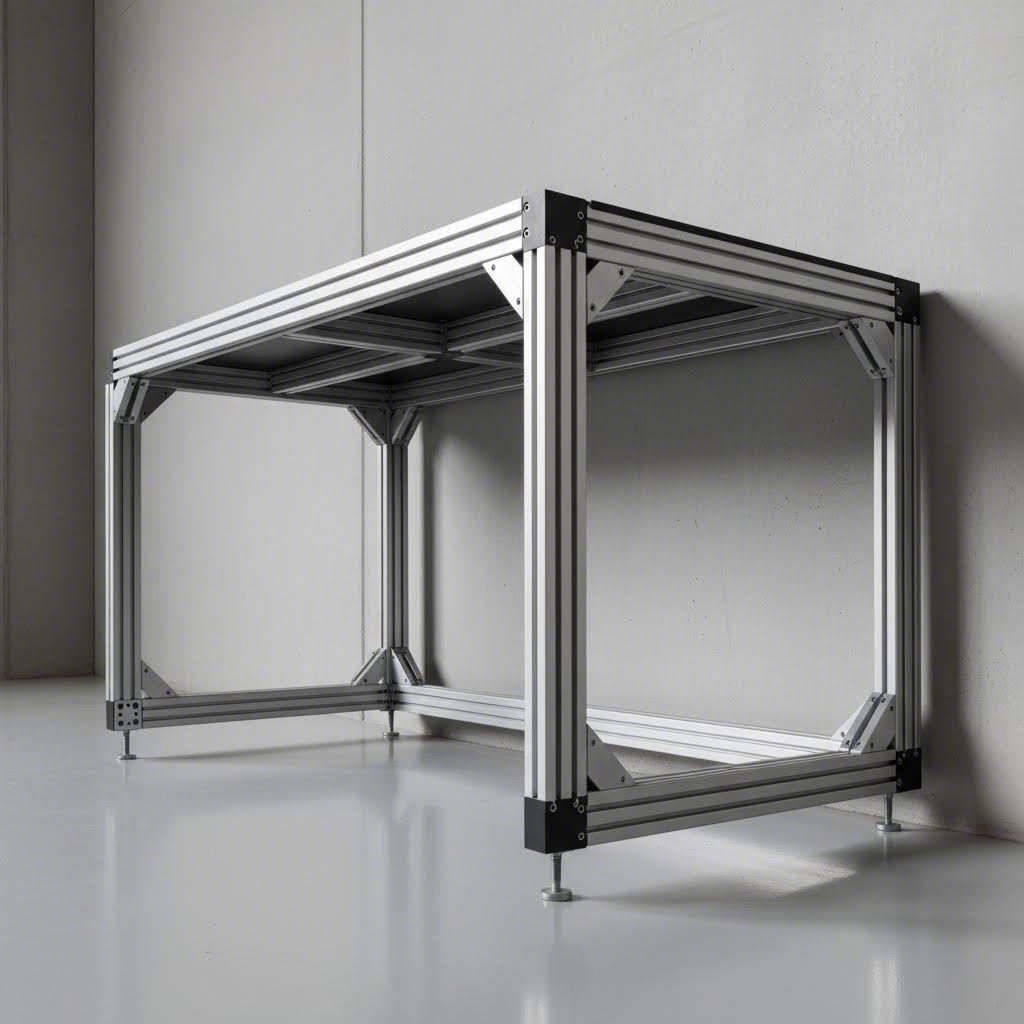
You've verified your material, organized your hardware, and confirmed everything meets specification. Now the exciting part begins: transforming those aluminum profiles into real-world solutions. Bulk aluminum extrusion finds its way into virtually every industrial sector—from manufacturing floors to commercial construction sites. Understanding these applications helps you validate your purchasing decisions and potentially discover uses you hadn't considered.
Walk through any modern manufacturing facility and you'll notice aluminum extrusion profiles forming the structural backbone of countless systems. Why has this material become so dominant? The answer lies in its unique combination of strength, modularity, and adaptability.
According to 80/20's automation solutions guide, T-slot aluminum profiles provide both the rigidity needed for large machine bases and the precision required for jigs, sensors, and safety components. This dual capability—supporting heavy equipment while enabling precise component positioning—makes bulk purchasing particularly attractive for manufacturers building multiple production cells or workstation configurations.
Common machine frame and workstation applications include:
The modularity advantage becomes particularly valuable at scale. When you're equipping an entire production line, purchasing bulk aluminum means every workstation, guard, and fixture draws from the same material pool. Standardization reduces inventory complexity, simplifies maintenance, and enables rapid reconfiguration when production requirements evolve.
Material handling represents one of the highest-volume applications for extruded aluminum profiles. Conveyor frames, transfer systems, and automated guided vehicle tracks all leverage aluminum's favorable strength-to-weight ratio and corrosion resistance.
Proax's manufacturing applications guide highlights critical conveyor and automation components including:
The T-slot channel design proves especially valuable for automation applications. As 80/20 notes, these channels create safe, integrated pathways for running power and pneumatics to equipment—eliminating external cable trays and reducing trip hazards. When you're building automation systems at scale, this integrated wire management capability significantly reduces installation time and maintenance complexity.
Research cited by 80/20 suggests that automation systems designed with lean principles in mind—including modular aluminum framing—can save up to 30% of floor space compared to traditional steel construction. For bulk buyers planning multiple automation cells, this space efficiency compounds into meaningful facility cost savings.
Beyond factory floors, bulk aluminum extrusion plays an increasingly prominent role in construction and architectural applications. According to Zetwerk's architectural extrusion guide, aluminum's excellent balance of weight and strength, combined with inherent corrosion and heat resistance, makes it ideal for both structural and decorative building components.
Architectural applications leveraging bulk aluminum include:
For construction applications, understanding standard stud spacing becomes relevant when integrating aluminum extrusions with conventional building systems. While metal stud and steel stud framing typically follow 16" or 24" on-center spacing, aluminum extrusion systems offer flexibility to match these standards or create custom configurations. This adaptability makes bulk aluminum attractive for renovation projects where existing stud spacing must be accommodated.
The recyclability factor increasingly influences architectural specifications. Unlike many building materials, aluminum can be completely recycled without compromising its properties—Zetwerk notes this makes it the "metal of the future" for sustainability-conscious projects. Bulk buyers can often coordinate end-of-life recycling programs with suppliers, turning eventual material recovery into a project asset rather than a disposal cost.
How do you select the right profile series for specific applications? The decision comes down to load requirements, environmental conditions, and assembly complexity.
| Application Category | Recommended Profile Series | Key Selection Factors |
|---|---|---|
| Light-duty workstations | 20-series (2020) | Cost efficiency, ease of handling, sufficient for human-scale loads |
| Machine frames and guards | 40-series (4040) or 45-series | Vibration resistance, heavy component support, robust fastening |
| Conveyor systems | 40-series with reinforcement options | Span capability, dynamic load handling, accessory compatibility |
| Architectural trim | Custom or standard angles/channels | Surface finish quality, corrosion resistance, aesthetic requirements |
| Precision equipment | V-slot or precision-ground profiles | Linear motion capability, dimensional accuracy, repeatability |
| Cleanroom enclosures | Smooth profiles with sealed joints | Minimal particle traps, chemical resistance, easy cleaning |
For OEM production—where you're incorporating aluminum extrusions into products you manufacture and sell—bulk purchasing unlocks economies that retail buying simply cannot match. Consider router bit profiles used in woodworking equipment: an OEM producing 500 units annually needs consistent material supply, predictable costs, and reliable quality. Establishing a bulk supply relationship addresses all three requirements while protecting margins.
Similarly, framing corners and structural connections in manufactured equipment benefit from standardized bulk material. When every unit you produce uses identical profiles and hardware, assembly training simplifies, quality control tightens, and field service becomes more predictable.
The key insight? Bulk aluminum extrusion isn't just about getting a better price per foot—though you certainly will. It's about building manufacturing and construction systems on a foundation of consistent, verified, readily available material that scales with your operations.
With applications defined and specifications matched to requirements, the final critical decision involves selecting a supplier capable of delivering quality material reliably at the volumes you need.
You've defined your specifications, calculated quantities, and identified exactly which profiles your project requires. Now comes perhaps the most consequential decision of all: who will actually manufacture and deliver your bulk aluminum extrusion order? The right supplier becomes a strategic partner—supporting your operations through technical challenges, scaling with your growth, and delivering consistent quality year after year. The wrong choice? Missed deadlines, quality headaches, and supply disruptions that ripple through your entire production schedule.
Not all extrusion facilities are created equal. A supplier's manufacturing infrastructure directly determines what they can produce, how quickly, and at what quality level. When evaluating potential partners, dig into their actual capabilities rather than accepting marketing claims at face value.
According to Yaji Aluminum's supplier selection guide, evaluating production scale and technical capability should include reviewing extrusion press tonnage, die library depth, and machining center capabilities. Press tonnage matters because it determines the maximum profile size a manufacturer can produce—a 600-ton press handles small aluminum extrusion bars and precision profiles, while heavy industrial sections may require 3,000-ton or larger presses.
Key manufacturing capacity questions to ask:
For context on what comprehensive manufacturing capacity looks like, consider that established suppliers like Shengxin Aluminium operate 35 extrusion presses ranging from 600T to 5500T—enabling production of everything from delicate aluminum extrusion rails to massive structural profiles within a single facility. This range eliminates the need to split orders across multiple suppliers when your project spans different profile sizes.
Raw extrusion rarely arrives ready for immediate use. Most bulk orders require secondary processing—cutting to length, drilling mounting holes, machining features, or applying surface treatments. The question becomes: do you coordinate these operations across multiple vendors, or work with a supplier offering end-to-end capabilities?
American Douglas Metals highlights the advantages of integrated CNC machining centers designed specifically for aluminum extrusions. Their processing capabilities include precision drilling, countersinking, milling, tapping, and deburring—all accomplished in single setups that reduce handling and improve accuracy. First-stage processing completed before material reaches your factory decreases production delays and reduces your in-house labor costs.
Deep processing services to evaluate when selecting suppliers include:
The cost-benefit calculation is straightforward: integrated processing consolidates your supply chain, reduces coordination overhead, and often improves quality through consistent handling. For bulk buyers seeking these capabilities, Shengxin Aluminium's deep processing services demonstrate what comprehensive factory integration looks like—CNC machining centers, precision cutting, drilling, bending, and extensive surface treatment options including anodizing in custom colors, powder coating, PVDF, and micro-arc oxidation, all under one roof with over 30 years of experience backing the operation.
Beyond manufacturing hardware, evaluate the human expertise a supplier brings to your partnership. Technical support capabilities often differentiate adequate suppliers from exceptional ones—especially for custom profiles or challenging applications.
As Monarch Metal's 2025 sourcing guide emphasizes, domestic extruders tend to excel at tight DFM (Design for Manufacturability) feedback loops, fine-tuning die design, tongue ratios, and hollow features that can save downstream machining costs. This collaborative approach catches potential problems before they become expensive production issues.
Technical support capabilities worth investigating:
Consolidating these evaluation criteria into a structured assessment helps you compare potential suppliers objectively. Consider scoring each candidate across these dimensions:
Before committing to production volumes, request samples to validate extrusion precision, surface finish, and material consistency. If possible, conduct factory audits—either in-person or virtual—to assess machinery condition, workflow organization, and quality control practices firsthand.
For 8020 aluminum extrusion, misumi extruded aluminum, or profiles from other established brands, distribution networks offer convenience but typically at premium pricing. Direct manufacturer relationships—while requiring more initial qualification effort—often deliver better unit costs, customization flexibility, and technical support for bulk purchasing programs.
Whether you're sourcing through aluminum extrusions home depot for small quantities, mcmaster carr aluminum extrusion for rapid delivery, or tnutz aluminum extrusion for hobbyist projects, scaling to bulk volumes typically means transitioning toward direct manufacturer partnerships. The investment in supplier qualification pays dividends through consistent quality, competitive pricing, and a technical partner invested in your success.
Factory-direct pricing, end-to-end support from die development through mass production, and integrated processing capabilities—these advantages compound over time as your bulk purchasing relationship matures. The supplier you choose today shapes your supply chain resilience, product quality, and competitive position for years to come.
6061 aluminum offers higher tensile strength (~45,000 psi vs ~27,000 psi) and is ideal for structural, load-bearing applications like machine frames. 6063 aluminum excels in extrudability and surface finish quality, making it preferred for architectural applications such as window frames and railings. 6063 also provides superior corrosion resistance, while 6061 offers better machinability. For bulk orders, selecting the right alloy upfront is critical since material exchanges at scale are costly.
The most cost-effective approach for bulk aluminum extrusions is establishing direct manufacturer relationships rather than purchasing through retail channels like hardware stores. Factory-direct suppliers such as Shengxin Aluminium offer competitive pricing, especially at volume thresholds of 500-2,000+ lbs. Request quotes from multiple suppliers, compare total landed costs including shipping and processing, and ask about price breaks at higher quantities. International manufacturers often provide 15-30% discounts compared to retail pricing.
T-slot aluminum profiles are modular framing solutions featuring continuous T-shaped grooves that allow components to attach anywhere along the profile length without drilling. Common applications include industrial machine frames, CNC enclosures, assembly workstations, conveyor systems, safety guards, robotic work cells, and 3D printer frames. The modularity enables rapid reconfiguration and standardized hardware compatibility, making T-slots popular for manufacturing environments requiring flexibility.
MOQs vary by supplier and profile type. Standard stock profiles typically require 10-50 pieces or $500-$1,000 minimum order value. Bulk orders for standard profiles usually start at 500-2,000+ lbs or full billet runs. Custom profiles generally require 1,000-5,000 lbs minimum plus die costs ($500-$5,000+). Volume pricing discounts of 15-30% typically apply once these thresholds are reached. Contact suppliers directly to learn specific MOQs and price break quantities.
Choose anodizing when you need superior hardness, abrasion resistance, and a finish integral to the metal that won't peel. Anodizing works best for high-traffic applications and offers excellent durability but limits color options—no bright colors or true white. Choose powder coating when you need unlimited color options, thick protective coverage, or environmental sustainability (no VOCs). Powder coating provides excellent corrosion resistance but is softer than anodized surfaces and more difficult to repair in the field.



 Onlineservice
 0086 136 3563 2360
 sales@sxalu.com
 +86 136 3563 2360
 Deutsch
 English
 français
 русский
 español
 português
 العربية
 ไทย
ไทย Việt
Việt Українська