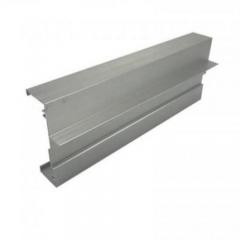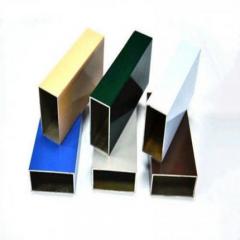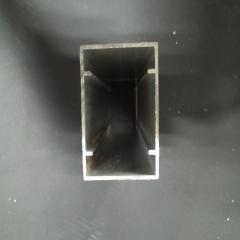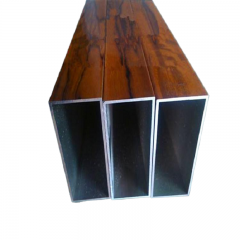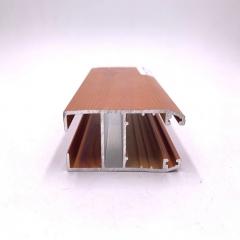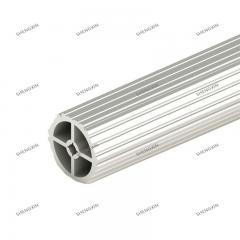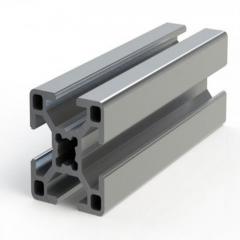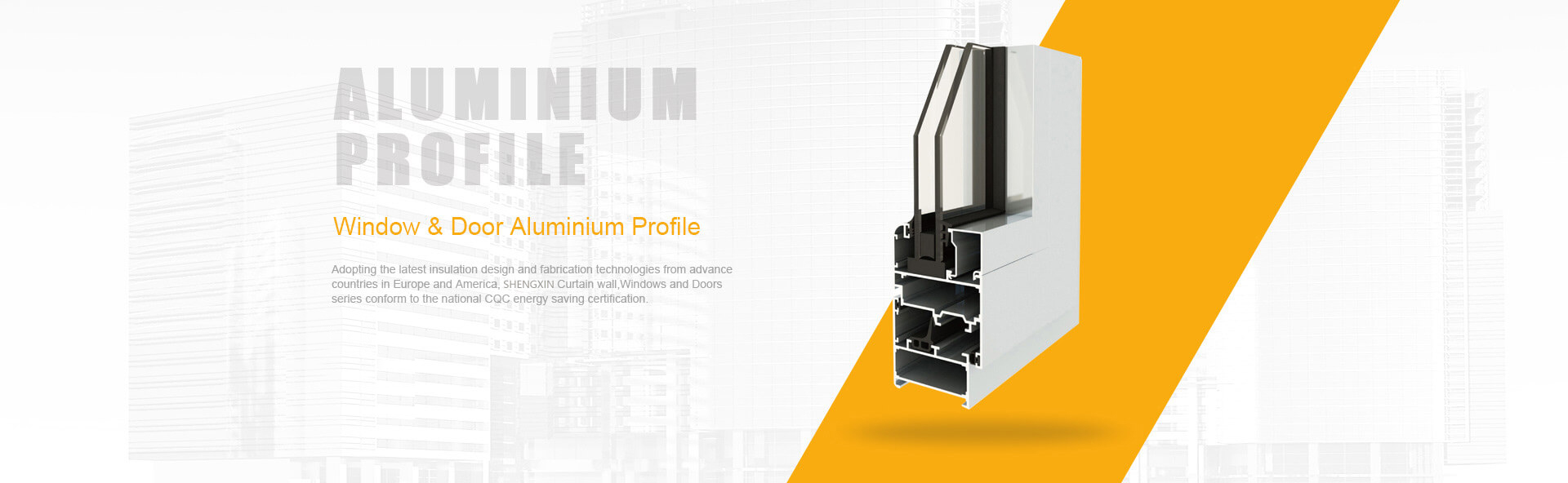
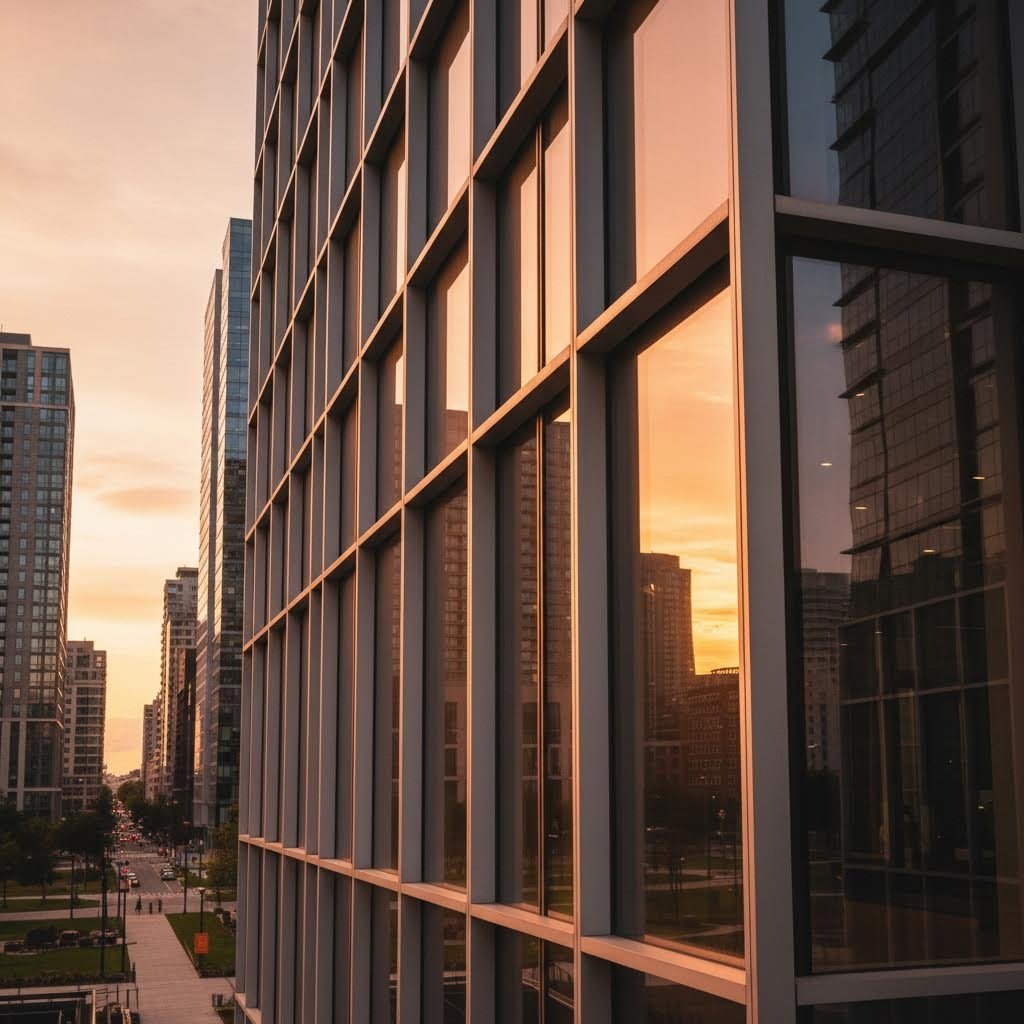
When you walk through any modern building, chances are you're surrounded by architectural 6063 aluminum extrusions without even realizing it. From the sleek window frames catching natural light to the elegant trim detailing an interior space, this specific alloy has become the backbone of contemporary architectural design. But why do architects consistently refuse to specify anything else?
The answer lies in a unique combination of properties that no other aluminum alloy can match for visible applications. Extruded aluminum 6063 contains approximately 98.9% aluminum with carefully balanced amounts of magnesium (0.7%) and silicon (0.4%), creating what industry professionals simply call "architectural aluminum." This composition delivers the perfect trifecta: exceptional extrudability, superior surface finish quality, and outstanding response to anodizing treatments.
Anodized aluminum 6063 is such a common architectural material that many professionals simply refer to it as "architectural aluminum" - a testament to its dominance in the field.
You might wonder why architects don't simply choose a stronger alloy like 6061. The decision comes down to what matters most in architectural applications: appearance and formability versus raw structural strength.
While 6061 aluminum offers higher tensile strength (at least 42,000 psi in T6 temper compared to 6063's 28,000 psi), it simply cannot achieve the same level of surface refinement. According to Eagle Aluminum's technical comparison, 6063 is "best suited for applications where visual appeal is more important than structural strength." For architects designing spaces where every detail matters, this distinction is critical.
The 6063 extrusion process allows manufacturers to create complex shapes with remarkably smooth surfaces. Imagine intricate mullion profiles, decorative corner pieces, or custom trim elements - these would be nearly impossible to produce with the same quality using other alloys. The material flows through extrusion dies with less resistance, enabling:
What makes 6063 respond so beautifully to finishing treatments? The secret lies in its simplified chemical composition. With lower amounts of copper, iron, and chromium compared to structural alloys, the material produces a more uniform grain structure during extrusion. This uniformity translates directly into better anodizing results - the electrochemical process produces an even, consistent oxide layer without the streaking or mottling that can plague other alloys.
As noted by Gabrian International, this alloy offers "excellent extrudability, high corrosion resistance, and ability to be formed into complex shapes." For architects working on exterior applications exposed to weather, UV radiation, and urban pollution, this corrosion resistance provides lasting performance without sacrificing the aesthetic qualities that define great design.
This article serves as your architecture-first specification guide, moving beyond generic material science to deliver practical insights for specifying, designing, and successfully implementing 6063 aluminum extrusions in your projects. Whether you're detailing a curtain wall system or selecting trim profiles for high-end interiors, you'll find the technical guidance you need to specify with confidence.
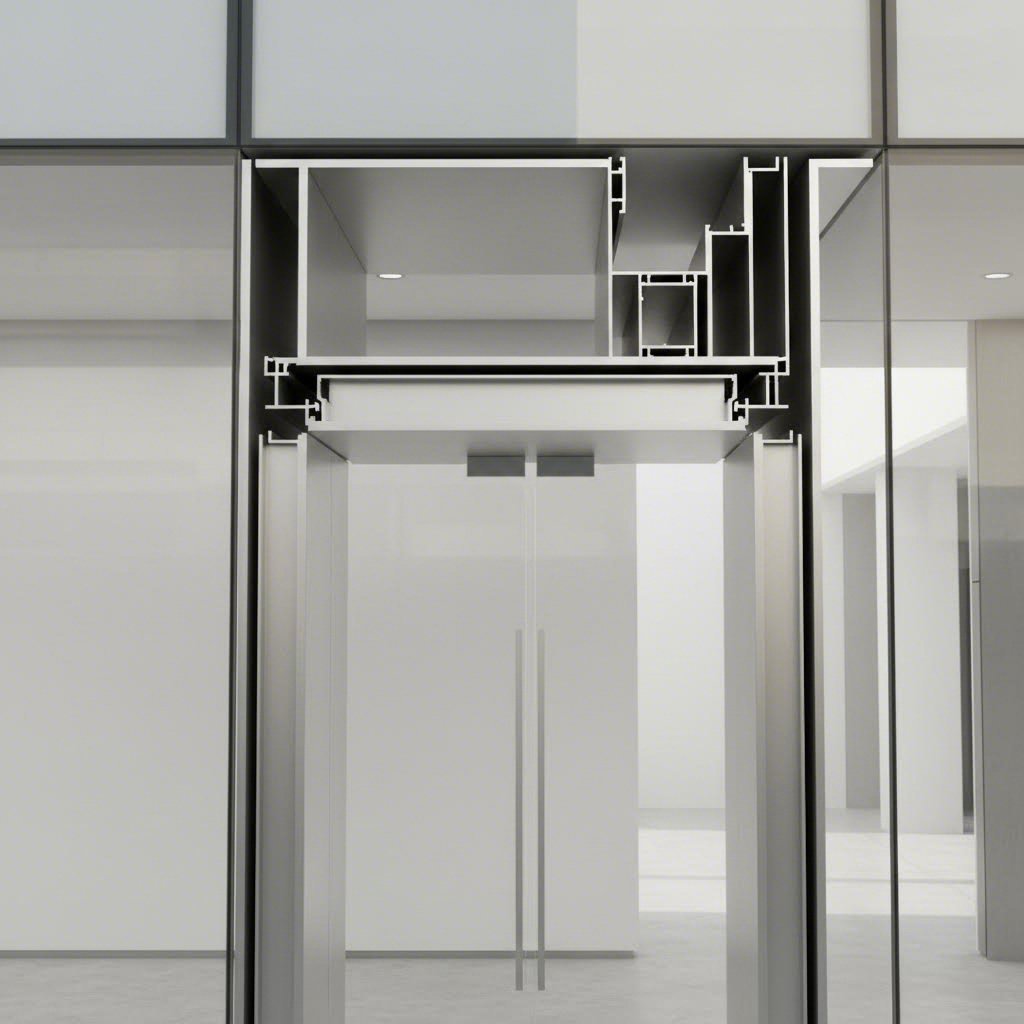
Now that you understand why 6063 reigns supreme among architectural alloys, let's explore where this material actually shows up in building design. From the moment you approach a structure to when you're admiring its interior details, architectural 6063 aluminum extrusions are working hard - often invisibly - to create the spaces we inhabit.
The versatility of this alloy means architects can specify it across virtually every building system. Whether you're designing a soaring glass curtain wall or selecting discrete flat aluminum trim for interior millwork, 6063 delivers consistent performance and aesthetics. Let's break down the specific applications by building system.
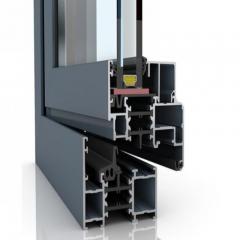
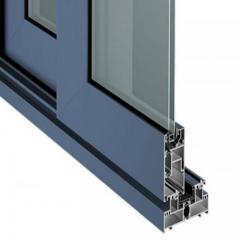
Windows and doors represent the most recognizable application for architectural aluminum extrusions. According to Casal Aluminium's industry guide, aluminum profiles for windows can be described as "structural elements characterized by a lightweight, high resistance, and a versatility, flexibility, and ease of maintenance hard to find in other materials."
For fenestration systems, architects commonly specify several profile types:
The opening type also influences profile selection. Swing, tilt-and-turn, Vasistas, top-hung, and pivoting windows each require specific aluminum profile geometries. This flexibility explains why modern buildings overwhelmingly feature aluminum-framed windows - the material adapts to virtually any design requirement while remaining cost-effective.
Walk past any commercial high-rise, and you're witnessing the most demanding application for 6063 aluminum extrusions. Curtain wall systems rely on precisely extruded aluminum mullions - both vertical and horizontal - to create the structural framework that supports glass panels while transferring wind loads back to the building structure.
According to patents documented by Light Metal Age, modern curtain wall innovations include:
Storefront systems represent a related but distinct category. These ground-level glazing assemblies use similar aluminum c channel and mullion profiles but with different structural requirements than high-rise curtain walls. The same 6063 alloy works beautifully in both applications because it can be extruded into the specific cross-sections each system demands.
Safety meets style in architectural railing applications. Whether you're specifying interior balustrades or exterior guardrails, 6063 aluminum provides the strength-to-weight ratio needed for code compliance while accepting the decorative finishes architects desire.
Common railing applications include:
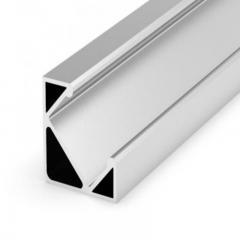
Perhaps the most diverse category, interior applications showcase the alloy's ability to create refined details at every scale. As noted by Extrude-A-Trim, "Protection, durability, and aesthetics make aluminum extrusions the perfect match for architectural millwork" - whether for interior or exterior woodworking projects.
Interior millwork applications span multiple categories:
The "hidden gems" of architectural aluminum - z-clips, T-bars, and sliding channels - often blend seamlessly into walls or remain completely concealed. They simplify hanging artwork, enable product displays, and create cabinet doors that disappear smoothly when opened.
What makes these interior applications particularly compelling is the range of finish options available. From mill finish to anodized blacks, brass tones, and stainless steel brushed effects, architects can match aluminum extrusions perfectly to any design aesthetic. Custom powder coating expands possibilities even further, allowing virtually any color specification.
Understanding these application categories helps architects and specifiers match the right profile type and finish to each project requirement. But before finalizing specifications, you'll need to understand how temper designations affect performance - a critical consideration we'll explore next.
You've identified the right applications for 6063 aluminum extrusion in your project. Now comes a decision that directly impacts performance, cost, and fabrication ease: which temper should you specify? Those simple suffixes - T5 or T6 - represent fundamentally different heat treatment processes that alter how your aluminum 6063 extrusion behaves in the field.
Think of temper designation as the final tuning of your material's personality. The same 6063 alloy chemistry can yield profiles that bend easily for curved designs or stand rigid under structural loads - all depending on how manufacturers treat the metal after extrusion.
What's actually happening during these heat treatments? The difference comes down to cooling methods and aging processes:
For architects, this translates into practical trade-offs. According to Alumaster Group's technical comparison, "6063-T5 stands out for its smooth finish and easy shaping, making it perfect for designs where looks matter. 6063-T6 gives you more strength for heavy or structural parts."
When should you specify each temper? Consider these guidelines:
Here's a practical insight: T5 costs less because it requires fewer processing steps and less energy. As noted by industry engineers, "T5 has a fair price and enough strength for most jobs." You'll find that many architectural applications - especially visible trim and decorative elements - perform perfectly well with T5 temper.
Numbers tell the real story when structural performance matters. The table below compares key mechanical properties for 6063 aluminum bar and extrusion profiles in both tempers:
| Property | 6063-T5 | 6063-T6 | Significance for Architects |
|---|---|---|---|
| Tensile Strength | ~22,000 psi (152 MPa) | ~30,000 psi (207 MPa) | T6 handles approximately 36% more pulling force |
| Yield Strength | ~16,000 psi (110 MPa) | ~25,000 psi (172 MPa) | T6 resists permanent deformation under higher loads |
| Elongation | ~12% | ~8% | T5 bends more before cracking - better for forming |
| Brinell Hardness | ~60 HB | ~73 HB | T6 resists scratching and wear more effectively |
| Machinability | Excellent | Good | T5 cuts and drills with less tool wear |
| Formability | Excellent | Moderate | T5 bends into curves without cracking |
Notice the trade-off pattern? Higher strength in T6 comes at the expense of ductility and formability. This is why experienced specifiers match temper to application rather than automatically choosing the "strongest" option.
For window frames and decorative trim, T5's superior elongation means fabricators can create tight corner bends and curved sections without material failure. According to Alumaster's architect guide, "Many architects pick aluminum 6063 T5 for window frames. T5 gives a great surface and is easy to cut and shape."
Conversely, curtain wall mullions that must resist wind loads or railings that need to meet building code strength requirements often demand T6 temper. The higher yield strength ensures these structural elements won't permanently deform under service conditions.
Both T5 and T6 tempers offer identical corrosion resistance - the temper designation affects mechanical properties, not the alloy's inherent ability to resist environmental degradation.
One critical consideration often overlooked: both tempers anodize beautifully. Whether you specify T5 or T6, your 6063 aluminum extrusion will accept Class I architectural anodizing with excellent results. The temper decision should focus on structural and fabrication requirements, not finish quality.
With temper selection clarified, you're ready to explore the full range of surface finishing options that make architectural aluminum truly shine in demanding applications.
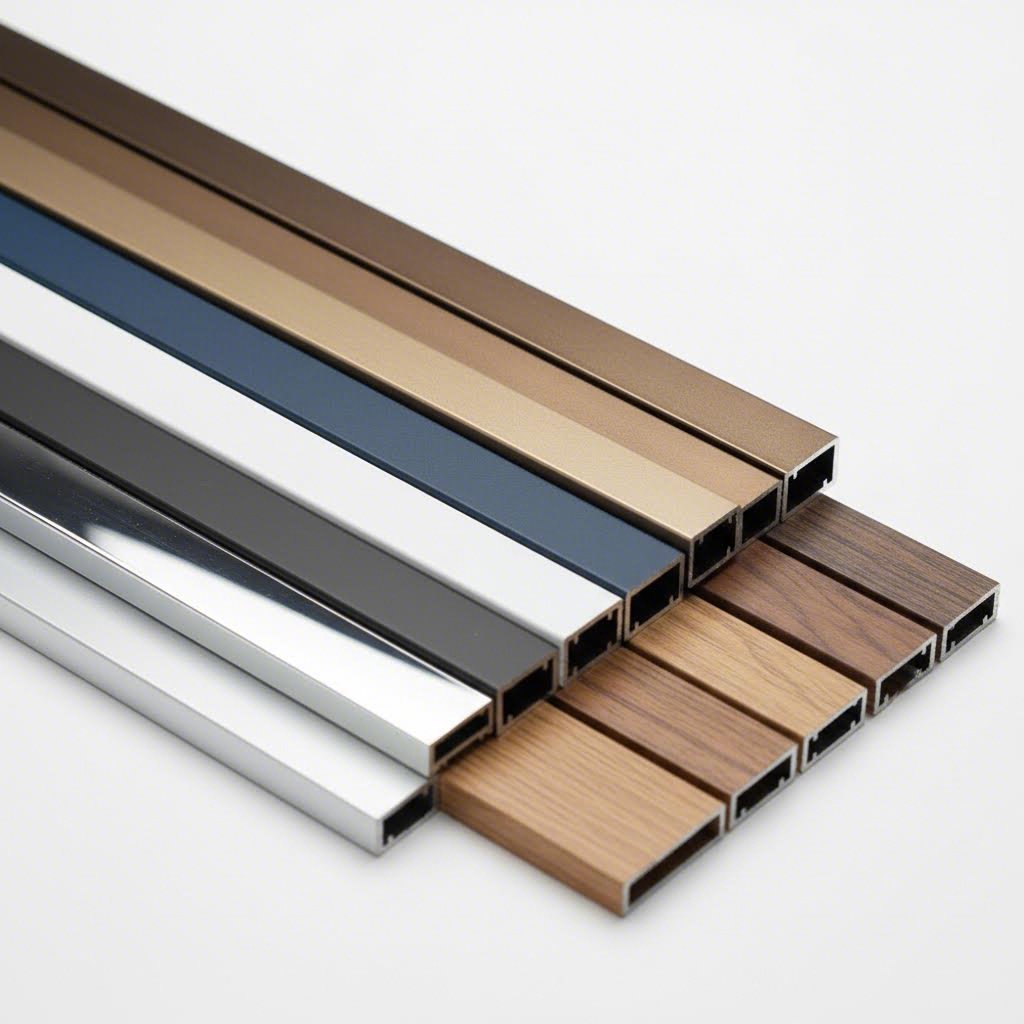
You've selected the right alloy and specified the appropriate temper. Now comes the decision that most dramatically affects how your 6063 aluminum channel will look and perform for decades to come: surface finishing. This is where architectural aluminum truly separates itself from industrial applications - and where many specification documents fall short.
The finish you choose does far more than add color. It determines weather resistance, maintenance requirements, warranty coverage, and ultimately, whether your building envelope performs as intended twenty years from now. Let's break down the options that matter most for architectural applications.
Anodizing remains the gold standard for architectural aluminum channel finishes, and for good reason. Unlike applied coatings, anodizing creates an integral oxide layer that becomes part of the aluminum itself. According to Linetec's technical guide, "Architectural anodize creates an extremely durable integral coating with exceptional hardness that is comparable to a sapphire."
But here's where specification writing gets critical: not all anodizing is created equal. The industry distinguishes between two architectural classifications that dramatically affect performance:
An Architectural Class I anodic coating is almost twice as thick as Class II, providing significantly greater protection for exterior building products that must withstand continuous outdoor exposure.
Color options for anodized aluminum typically range from clear (highlighting the natural silver tone) through champagne, bronze, and black. Darker colors require longer immersion times and increased metal deposition. Specialty finishes like copper and bordeaux tones use proprietary processes with actual copper deposition for unique architectural effects.
When reviewing aluminum extrusions for sale with anodized finishes, always verify the anodize class matches your application requirements. Specifying Class II for an exterior curtain wall would be a costly mistake that could void warranties and lead to premature finish failure.
While anodizing excels for many applications, certain environments and design requirements call for applied coating systems. Understanding the hierarchy of coating performance helps you match specifications to project demands.
Powder coating offers exceptional versatility for architectural aluminum channel applications. This dry finishing process applies electrostatically charged particles that cure under heat to form a durable, uniform layer.
According to industry finishing guides, powder coating provides "superior corrosion, UV, and wear resistance" with "excellent coverage for complex shapes." This makes it particularly suitable for intricate extrusion profiles where uniform coverage matters.
For the most demanding architectural applications, 70% PVDF (polyvinylidene fluoride) coatings represent the pinnacle of applied finish technology. As noted by coating specialists, these coatings "continue to set the highest standard for architectural coatings" in corrosive environments.
PVDF coatings are essential for coastal projects, industrial environments with atmospheric pollutants, and any application where long-term appearance matters. The upfront cost premium pays dividends through extended service life and reduced maintenance.
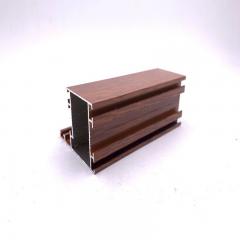
When your design calls for the warmth of wood with aluminum's durability, sublimation transfer finishes deliver remarkably realistic wood-grain appearances. These specialty coatings apply photographic-quality wood patterns onto powder-coated aluminum substrates.
Your project's geographic location should significantly influence finish specification. Consider these environmental factors when selecting finishes for architectural aluminum channel applications:
According to coastal finishing experts, Florida's coastal regions represent "the most corrosive in the continental United States," with Cape Canaveral cited as the most aggressive atmospheric environment. For these applications:
Atmospheric pollution introduces additional challenges. Studies show that increasing pollution levels negatively affect finish longevity without periodic maintenance. For urban projects:
Desert climates and high-altitude locations experience intense ultraviolet exposure that accelerates coating degradation:
When writing specifications for architectural aluminum channel finishes, reference these key AAMA standards:
| Standard | Finish Type | Salt Spray Hours | Recommended Use |
|---|---|---|---|
| AAMA 611 Class II | Anodize | 1,000 | Interior or protected exterior |
| AAMA 611 Class I | Anodize | 3,000 | Exterior, coastal, high-traffic |
| AAMA 2603 | Powder Coat | 1,000 | Mild environments, interior |
| AAMA 2604 | Powder Coat | 3,000 | Moderate exterior exposure |
| AAMA 2605 | PVDF | 4,000+ | Severe environments, coastal |
Remember that finish selection directly impacts both initial cost and lifecycle performance. An AAMA 2605 PVDF coating may cost more upfront than standard powder coating, but the extended service life and reduced maintenance often deliver superior total value - especially for high-visibility architectural elements that define a building's character.
With surface finishing decisions clarified, you're ready to tackle the practical considerations of custom profile design - ensuring your specifications translate into manufacturable, cost-effective extrusions.
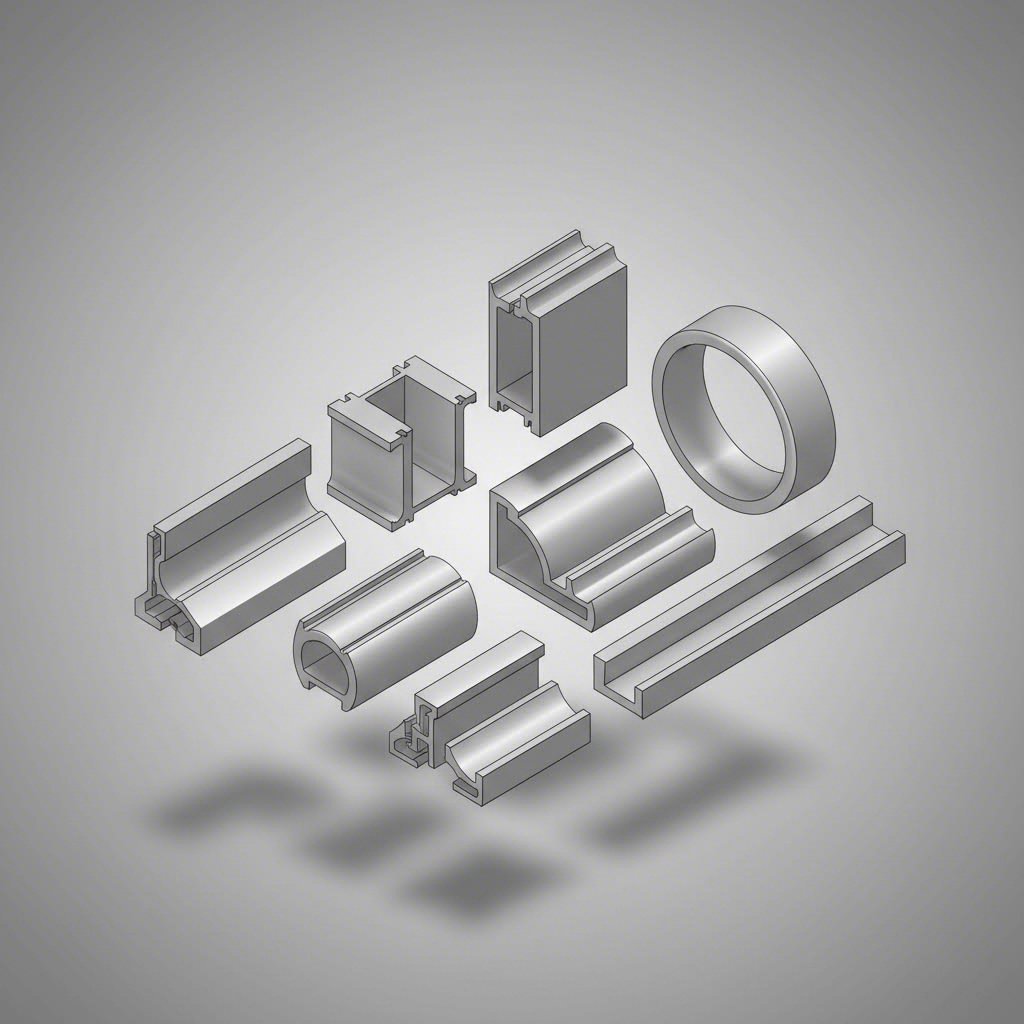
You've selected the perfect finish for your project. But here's a question that trips up even experienced specifiers: can your custom profile actually be manufactured cost-effectively? Understanding extrusion design guidelines before finalizing specifications saves time, money, and frustrating redesigns.
The beauty of architectural 6063 aluminum extrusions lies in their versatility - manufacturers can produce remarkably complex shapes. However, every design decision affects extrudability, dimensional accuracy, and ultimately, your project budget. Let's explore the practical constraints that separate buildable profiles from manufacturing headaches.
Wall thickness might seem like a simple dimension, but it's actually one of the most critical factors in extrusion design. According to the Aluminum Extruders Council, maintaining "somewhat balanced wall thicknesses" ranks among the fundamental principles of good extrusion design.
Why does balance matter so much? Imagine hot aluminum flowing through a die - thin sections cool faster than thick ones, creating internal stresses that distort your profile. When adjacent wall thickness ratios exceed 2:1, you'll encounter:
For most architectural applications, minimum wall thickness depends on profile width. A 0.062-inch wall works well for 3-inch-wide shapes but becomes impractical for 10-inch-wide profiles. As a practical guideline for alum flat bar and channel profiles:
| Profile Width | Recommended Minimum Wall | Typical Application |
|---|---|---|
| Under 2 inches | 0.040 - 0.050 inches | Small trim, decorative accents |
| 2 - 4 inches | 0.050 - 0.062 inches | Window frames, 1/4 aluminum channel |
| 4 - 6 inches | 0.062 - 0.080 inches | Door frames, mullions |
| 6 - 10 inches | 0.080 - 0.125 inches | Curtain wall members, structural elements |
| Over 10 inches | 0.125+ inches | Heavy structural profiles |
Narrow shapes with deep gaps present specific challenges. Think of a deep U-channel - the tongue-like center section resists metal flow and creates die stress. Where possible, reduce deep, narrow tongues by redesigning the profile geometry or adding internal ribs for support.
How complex is too complex? The answer often comes down to one measurement: the circumscribing circle diameter (CCD). This represents the smallest circle that completely encloses your profile's cross-section.
According to industry guidelines, "extrusions are most economical when they fit within a CCD between one and ten inches. Profiles below 8-inches of CCD reduce costs significantly." Most architectural profiles fall comfortably within this range, but large facade elements may push boundaries.
Weight-per-foot provides another important constraint. Generally, keeping weight at 3 pounds per foot or less enhances production efficiency. Heavier profiles require larger presses and slower extrusion speeds - both factors that increase cost.
Good aluminum extrusion design follows these principles:
Before investing in custom tooling, consider whether standard profiles might meet your needs. Aluminum metal flat bar, angle, channel, and tube profiles come in numerous standard dimensions that ship quickly at competitive prices.
| Profile Type | Common Dimensional Range | Typical Architectural Uses |
|---|---|---|
| Flat Bar | 1/8" to 1" thick, up to 6" wide | Trim, reveals, simple accents |
| Angle | 1/2" to 4" legs, various thicknesses | Corner protection, framing support |
| Channel (U) | 1/2" to 3" depth, 1/4 aluminum channel common | Glazing stops, panel retention |
| Square Tube | 1/2" to 4" sides | Railings, structural frames |
| Round Tube | 1/2" to 6" diameter | Handrails, decorative columns |
When do custom dies make sense? Consider custom tooling when:
Here's encouraging news: custom extrusion dies often cost under $1,000 - dramatically less than stamping dies that can exceed $30,000. According to manufacturing cost studies, extrusion dies can be built and proven in just weeks, compared to months for alternative tooling.
Raw material costs constitute approximately 90% of basic extrusion expenses. Optimizing your profile design for efficient material usage often delivers greater savings than reducing die complexity.
For large or complex designs, consider breaking intricate profiles into simpler components that can be mechanically joined. This approach often reduces tooling costs while simplifying manufacturing - a win for both budget and schedule.
With your profile designed for manufacturability, the next step involves understanding the specification standards and building codes that govern architectural aluminum installations.
You've designed a profile that manufacturers can actually produce. Now comes the critical task that separates professional specifications from amateur documents: properly calling out the standards, material requirements, and performance criteria that ensure your aluminum extrusions meet project expectations. Sounds complex? It doesn't have to be.
Writing clear specifications for architectural aluminum extrusions protects everyone involved - from the architect's design intent to the contractor's installation requirements to the owner's long-term performance expectations. Let's demystify the standards framework and provide practical guidance for creating bulletproof specifications.
Two organizations dominate the aluminum extrusion specification landscape: ASTM International (formerly American Society for Testing and Materials) and AAMA (American Architectural Manufacturers Association). Understanding their respective roles simplifies your specification writing considerably.
ASTM standards govern the base material - the aluminum alloy itself. According to the Aluminum Extruders Council's Environmental Product Declaration, the following ASTM specifications apply to architectural extrusions:
AAMA standards, meanwhile, focus on finished products and their performance. For surface treatments, two key specifications apply:
When specifying aluminum t slot profiles or 1 4 aluminum u channel components for fenestration systems, additional AAMA standards may apply, including those governing thermal performance, water penetration resistance, and structural adequacy of complete window and curtain wall assemblies.
Effective specification language leaves no room for misinterpretation. According to comprehensive guides on architectural specifications, clarity and precision prevent costly mistakes, delays, and disputes during construction.
A complete aluminum extrusion specification should address these elements:
Your material specification establishes the fundamental requirements. A proper callout includes alloy designation, temper, and governing standard:
Aluminum extrusions shall be Alloy 6063-T5 conforming to ASTM B221, with chemical composition and mechanical properties as specified therein.
For structural applications requiring higher strength, modify accordingly:
Aluminum extrusions shall be Alloy 6063-T6 conforming to ASTM B221, minimum yield strength 25,000 psi (172 MPa), minimum tensile strength 30,000 psi (207 MPa).
Surface finish specifications must reference the appropriate AAMA standard and class. For exterior anodized applications:
Anodized finish shall comply with AAMA 611, Class I (Architectural), minimum coating thickness 0.7 mil (18 microns). Color: [specify color or allow architect selection from manufacturer's standard range].
For painted finishes in demanding environments:
Factory-applied fluoropolymer coating shall comply with AAMA 2605. Coating system shall consist of chrome phosphate pretreatment, primer, and minimum 70% PVDF topcoat. Color: [specify].
Standard tolerances for 1 1 4 aluminum u channel and similar profiles follow ASTM B221 Annex requirements. For tighter-than-standard tolerances, specify explicitly:
Wall thickness tolerance: Plus or minus 0.010 inches. Overall dimensions: Plus or minus 0.015 inches. Straightness: Maximum 0.0125 inches per foot of length.
Budget-conscious architects often ask whether alternative alloys offer cost advantages. According to current market data, 6063 aluminum typically costs between $3.20 and $4.00 per kilogram - positioning it competitively against alternatives.
| Alloy | Typical Cost (USD/kg) | Architectural Suitability | Cost-Benefit Assessment |
|---|---|---|---|
| 6063 | $3.20 - $4.00 | Excellent | Best value for visible applications |
| 6061 | $3.50 - $4.50 | Good (structural) | Premium justified only when strength is critical |
| 6005 | $3.40 - $4.20 | Moderate | Intermediate option rarely specified |
The modest price difference between 6063 and 6061 rarely justifies switching alloys for architectural work. As noted in industry comparisons, 6063's superior surface finish quality and extrudability typically deliver better overall value - especially when anodizing or premium finishes are specified.
For projects requiring both structural performance and excellent finish quality, consider specifying 6063-T6 rather than switching to 6061. The higher temper achieves medium-high strength while preserving 6063's surface advantages.
The proper grade will be a compromise of cost, strength, resistance to corrosion, and fabrication demands - and for architectural applications, 6063 consistently delivers the optimal balance.
With your specifications properly written and standards clearly referenced, the next consideration involves how these aluminum components will be joined and installed in the field - a topic where material knowledge meets practical construction reality.
Your specifications are written, your profiles are designed, and your finishes are selected. But here's a reality that catches many designers off guard: how you connect aluminum extrusions can make or break both structural integrity and long-term appearance. The joining method you specify directly impacts strength, corrosion resistance, thermal performance, and even warranty coverage.
Whether you're detailing flat aluminum strips for interior trim or engineering 1 1/2 aluminum u channel connections for curtain wall systems, understanding aluminum joining methods ensures your carefully specified materials perform as intended for decades.
When connecting architectural aluminum assemblies, you'll choose between two fundamental approaches: mechanical fastening and welding. Each offers distinct advantages - and limitations that smart specifiers must understand.
For most architectural applications, mechanical aluminum fastening systems deliver the best combination of strength, aesthetics, and field adaptability. According to comprehensive joining guides, flat joints using mechanical fasteners allow for various configurations including tee joints, butt joints, edge joints, and lap joints - each requiring external support mechanisms for structural integrity.
Best practices for mechanical fastening include:
The advantage of mechanical connections? They preserve the full strength of your 6063 aluminum extrusion - no heat-affected zones, no strength reduction, and straightforward field inspection.
When structural demands require welded connections, 6063 aluminum welds readily using both TIG (GTAW) and MIG (GMAW) processes. However, welding introduces a critical consideration that many specifications overlook: the heat-affected zone loses significant strength.
Best practices for welded aluminum connections include:
For architectural assemblies where welded connections are visible, plan for post-weld finishing. The welded area will require grinding, polishing, and re-finishing to match adjacent surfaces - adding cost and complexity that mechanical fastening avoids.
Structural adhesives offer a third option that eliminates both fastener visibility and weld heat effects. Modern high-strength adhesives can achieve bond strengths exceeding the base aluminum's shear capacity when properly applied.
Best practices for adhesive bonding include:
Here's where many architectural projects encounter unexpected problems: aluminum extrusions contacting dissimilar metals. According to corrosion engineering experts, galvanic corrosion occurs when three conditions combine: two dissimilar metals with different electrode potentials, electrical contact between them, and exposure to an electrolyte such as moisture or saltwater.
When these conditions exist, aluminum typically becomes the anode - meaning it corrodes faster than it would alone while the other metal (the cathode) is protected. The greater the difference in nobility between metals, the more aggressive the corrosion attack.
Watch for these high-risk material combinations in architectural assemblies:
Effective galvanic corrosion prevention relies on breaking one of the three required conditions. According to engineering references, proven strategies include:
Insulating just the anodic material (aluminum) can slow galvanic corrosion progress even if it does not completely prevent it - but optimal protection requires insulating both materials in the galvanic couple.
Modern energy codes demand thermal breaks in aluminum framing systems that span from conditioned to unconditioned spaces. Without proper thermal isolation, aluminum's excellent thermal conductivity creates energy-wasting thermal bridges - and potentially condensation problems.
Thermal break assembly methods for architectural aluminum include:
When specifying thermally broken assemblies, verify that the system maintains structural capacity under design loads. The thermal break material must transfer shear and tension forces between the interior and exterior aluminum sections without compromising thermal performance.
Even perfect joining techniques can create finish durability problems if not properly addressed. Consider these common issues:
For critical applications, specify factory-fabricated assemblies where possible. Shop conditions allow better quality control over joining processes, finish protection, and dimensional accuracy compared to field assembly.
With joining methods and installation best practices understood, the final consideration for many architects involves aluminum's contribution to sustainability goals - an increasingly important factor in material specification decisions.
You've mastered joining techniques and installation best practices. Now imagine telling your client that the material you've specified can be recycled infinitely without losing quality - and that choosing it actively contributes to LEED certification. That's the sustainability story behind architectural 6063 aluminum extrusions, and it's becoming an increasingly decisive factor in material specification decisions.
As building owners and developers prioritize environmental responsibility, architects who understand aluminum's green credentials gain a significant advantage. The material's sustainability profile extends far beyond simple recyclability - it encompasses energy savings, circular economy principles, and measurable contributions to green building certifications.
Here's something remarkable: the aluminum in your window frames or curtain wall mullions can be recycled over and over again without any degradation in quality. Unlike many building materials that downcycle into lesser products, aluminum maintains its properties through infinite recycling loops. According to industry research, "Aluminum can be recycled over and over without losing its quality, which helps promote a circular economy."
But the energy story is even more compelling. Recycling aluminum requires only about 5% of the energy needed to produce new aluminum from ore. Think about that - a 95% energy reduction simply by choosing recycled content. This translates directly into lower embodied carbon for your building projects.
The lifecycle advantages of sustainable aluminum extrusions include:
According to the Aluminum Extruders Council's lifecycle analysis, the average billet composition for North American extrusions already contains approximately 53% recycled content mixed with 47% primary aluminum. This means that recycled aluminum profiles you specify today already carry substantial recycled content - with the potential for even higher percentages as the industry continues optimizing its material streams.
Achieving significant reductions in embodied carbon is most practically achieved by adjusting the billet mix - either increasing the recycled content or shifting primary content toward aluminum produced from less carbon-intense energy sources.
For architects pursuing LEED certification, aluminum extrusions offer measurable contributions across multiple credit categories. According to LEED contribution documentation, the U.S. Green Building Council's Materials & Resources category "focuses on holistic decision making through life cycle thinking" - and aluminum extrusions align perfectly with this approach.
The most applicable LEED v4 credits for green building aluminum include:
What makes LEED aluminum materials particularly valuable? Product transparency. The Aluminum Extruders Council has produced UL-certified Environmental Product Declarations covering mill finish, painted, and anodized extrusion products - including thermally enhanced versions. These industry-average EPDs, based on data from 30 facilities with nearly 100 extrusion presses, cover approximately 38% of North American production.
The certified EPDs document cradle-to-gate environmental impacts, allowing architects to:
As the LEED documentation notes, "Manufacturers who adopt these product disclosure methods demonstrate their commitment to environmental quality and human health and safety." When you specify aluminum extrusions with documented EPDs, you're not just choosing a material - you're selecting products from manufacturers committed to transparency.
Looking ahead, aluminum extrusion technology continues evolving toward even greater sustainability. Innovations in precision extrusion and additive manufacturing enable more complex designs with minimal material waste. As industries shift toward circular economy models, aluminum's inherent recyclability positions it as a cornerstone material for environmentally responsible construction.
With sustainability credentials established, the final consideration involves selecting an extrusion partner capable of delivering architectural-quality profiles that meet all your project requirements - from technical specifications to environmental commitments.

You've mastered alloy selection, temper designations, surface finishes, and joining methods. But here's the reality that determines whether your carefully crafted specifications become beautiful buildings or frustrating compromises: your aluminum extrusion supplier's capabilities directly impact every aspect of project success. Choosing the wrong partner means delayed schedules, quality issues, and specifications that never quite translate into reality.
Finding a capable architectural extrusion partner requires looking beyond quoted prices. According to industry evaluation guides, "Evaluating aluminum extrusion supplier capability requires more than a cost comparison." The best custom aluminum profile manufacturers demonstrate integrated capabilities spanning die design through finished product delivery - all under consistent quality control.
So what specific capabilities should you evaluate? Let's walk through the criteria that separate adequate suppliers from exceptional partners.
Think of your evaluation process as a capability checklist. Each criterion affects your project differently, and understanding these factors helps you match supplier strengths to your specific requirements.
The extrusion press defines what profiles a supplier can physically produce. According to industry benchmarks, press capacity requirements break down by profile type:
Why does press range matter? A supplier with multiple press capacities maintains flexibility when your project requirements vary. Imagine specifying delicate interior trim alongside substantial structural mullions - you'll want a partner capable of handling both efficiently.
For example, Shengxin Aluminium operates 35 extrusion presses ranging from 600T to 5500T, enabling production of everything from precision decorative profiles to heavy structural extrusions under one roof. This breadth of capability eliminates the need to coordinate multiple suppliers for complex architectural projects.
Many suppliers outsource die manufacturing to third parties - a practice that extends lead times and complicates problem resolution. When a die fails or produces inaccurate dimensions, delays cascade across your entire project schedule.
Evaluate whether potential partners maintain in-house die workshops. Suppliers with internal die capabilities can modify or repair tooling quickly, ensuring production continuity and consistent dimensional quality. This becomes especially critical for custom architectural profiles where design refinements may be needed after initial sampling.
A supplier's quality control system reflects their ability to maintain repeatable results batch after batch. Ask about these specific verification processes:
Suppliers with ISO 9001 certification and documented inspection protocols typically deliver more consistent quality than those without formal quality management systems.
The most capable aluminum fabrication services integrate multiple processes under one management system. This integration eliminates handoffs between subcontractors, prevents transportation damage, and shortens overall lead times.
Architectural extrusions rarely install as raw profiles. Most applications require precision cutting, drilling, notching, or bending before delivery. Evaluate whether your potential partner offers integrated CNC machining capabilities.
A well-equipped fabrication facility includes:
Shengxin Aluminium exemplifies this integrated approach with state-of-the-art CNC machining centers capable of precise cutting, drilling, and bending operations. Their ability to deliver fabricated components rather than raw extrusions simplifies your supply chain while ensuring dimensional consistency from extrusion through final machining.
Your finish specifications mean nothing if your supplier can't execute them. Verify that potential partners offer the specific surface treatments your project requires - and that they control these processes in-house rather than outsourcing to third parties.
Comprehensive surface treatment capabilities should include:
Shengxin's surface treatment facility offers anodizing in custom colors (including champagne and rose gold), powder coating, PVDF coatings, and micro-arc oxidation for superior durability. This range ensures that virtually any architectural finish specification can be executed without involving additional vendors.
Strong technical communication differentiates professional aluminum extrusion suppliers from simple commodity traders. A capable partner provides value beyond manufacturing - they help optimize your designs for manufacturability and cost-effectiveness.
Expect quality partners to offer:
With over 30 years of industry experience, Shengxin Aluminium provides end-to-end technical support from die development through mass production. Their team can evaluate your custom specifications and provide manufacturing assessments that help you understand feasibility, lead times, and cost implications before committing to production.
Lead time reliability often proves the most practical indicator of supplier capability. Industry benchmarks suggest typical timelines of:
Ask how potential suppliers manage production scheduling during peak seasons. Facilities with ERP-based production systems and substantial press capacity generally deliver more consistent lead times than smaller operations scrambling to balance competing orders.
Before finalizing your aluminum extrusion supplier selection, verify these essential capabilities:
Ready to explore how an integrated extrusion partner can simplify your next architectural project? Discover Shengxin Aluminium's deep processing services to see how comprehensive capability - from die development through finished, fabricated profiles - translates into better outcomes for architects and specifiers.
The difference between adequate and exceptional architectural aluminum comes down to partnership. When you work with a supplier who understands architectural requirements, maintains integrated capabilities, and communicates proactively throughout production, your specifications transform from documents into buildings that perform beautifully for decades.
6063 aluminum is the preferred alloy for architectural extrusions including window and door frames, curtain wall mullions, storefront systems, handrails, and interior trim. Its exceptional surface finish quality, superior extrudability for complex profiles, and excellent anodizing response make it ideal for visible building applications where aesthetics matter as much as performance.
While 6061 offers higher tensile strength (42,000 psi vs 28,000 psi in T6 temper), 6063 delivers superior surface finish quality and better extrudability for complex architectural shapes. 6063 also responds better to anodizing treatments, producing more uniform, streak-free finishes. For architectural applications where appearance is critical, 6063 provides the optimal balance of formability, corrosion resistance, and aesthetic quality.
T5 temper uses air cooling after extrusion, resulting in moderate strength with excellent formability and surface finish - ideal for decorative elements and window frames. T6 temper involves solution heat treatment and water quenching, achieving higher strength (30,000 psi tensile vs 22,000 psi) for structural mullions and load-bearing applications. T5 costs less and bends more easily, while T6 resists deformation under higher loads.
6063 aluminum typically costs between $3.20 and $4.00 per kilogram for raw extrusions. Final pricing depends on profile complexity, temper designation, surface finishing (anodizing adds 15-30%, PVDF coatings more), custom die requirements, and fabrication services like CNC machining. Custom dies often cost under $1,000, making custom profiles cost-effective for orders exceeding 500 linear feet.
For exterior applications, specify Class I architectural anodize (minimum 0.7 mil thickness) per AAMA 611, or AAMA 2605 PVDF fluoropolymer coatings for severe environments. Class I anodize provides 3,000 hours salt spray resistance with 5+ year warranties. Coastal and high-UV locations require AAMA 2605 coatings with chrome phosphate pretreatment, offering 4,000+ hours corrosion protection. Avoid Class II anodize or AAMA 2603 coatings for exposed exterior use.



 Onlineservice
 0086 136 3563 2360
 sales@sxalu.com
 +86 136 3563 2360
 Deutsch
 English
 français
 русский
 español
 português
 العربية
 ไทย
ไทย Việt
Việt Українська