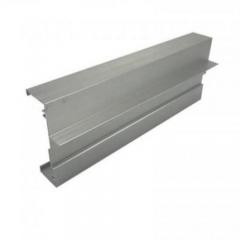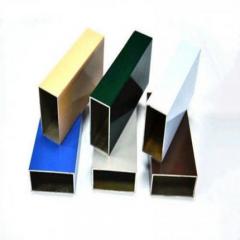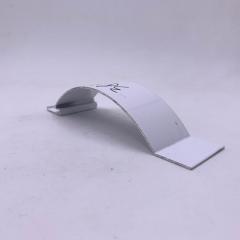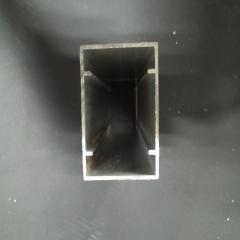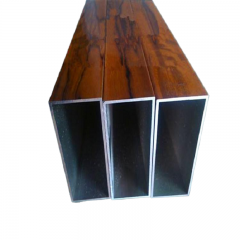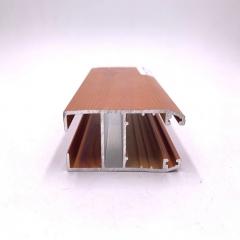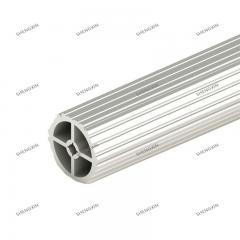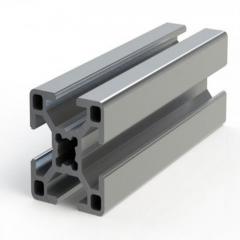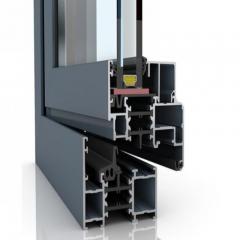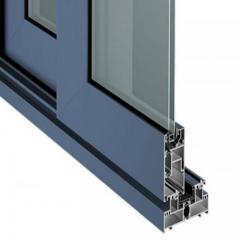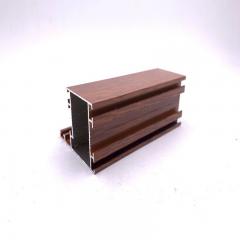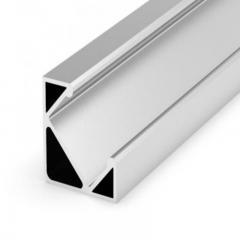
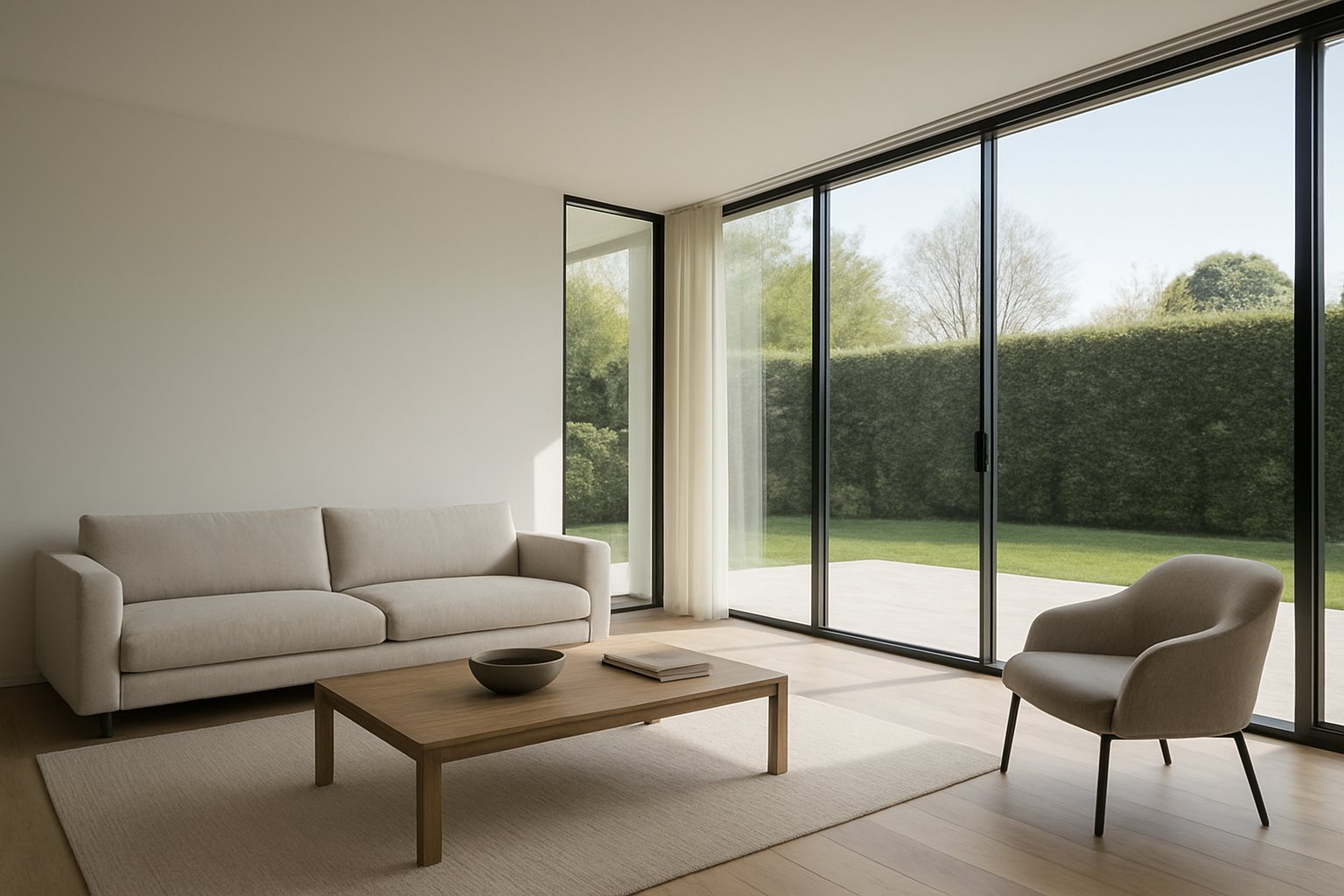
A slim aluminium profile is an aluminium framing section designed to reduce the visible width of the frame, so the eye sees more glass and less bulk. In practice, "slim" describes the sightline rather than one fixed size, because the final width changes with the system, glazing, span, and where the profile is used.
That distinction matters early. People often expect one universal measurement, but a frame that feels slim in a window may not be the same as one used for a sliding door, screen, or partition. In BDC Aluminium's sightline guide, sightlines are explained as the visible frame seen from inside or outside. A slimmer frame simply means less visual interruption.
When buyers search for a slim aluminium profile, they are usually looking for reduced frame bulk, cleaner lines, and a more glass-led appearance. Some published system guides, such as NorthTech, describe slim window sightlines as roughly 25 to 50 mm and ultra-slim options as 15 to 20 mm. Even so, those numbers should be treated as system-specific examples, not a rule for every project. An aluminium slim profile still has to match glass weight, opening type, hardware, and structural demands.
The visual effect is easy to notice. Slim frames allow larger glazed areas, bring in more daylight, and create a sharper indoor-outdoor connection. That is why slim profile aluminium windows and doors are often chosen for contemporary homes, internal screens, and commercial spaces that want a lighter, less crowded look.
Aluminium stays popular because it offers a strong, lightweight balance. BDC notes that this strength helps support large glass panes without the bulky framing many people associate with older systems. In other words, a narrow face width is not automatically fragile. Good engineering can hide a lot of performance inside a clean profile.
So the real question is not just how slim a profile looks, but where that slimness adds value and where it may ask for tradeoffs.
Clean sightlines are easy to love. The harder part is judging whether that lean frame actually improves your project, or simply adds cost while hiding practical limits.
In the right setting, a slim aluminium profile creates a strong visual payoff. Fintecnic describes aluminium window systems as lightweight, rigid, weather-resistant, and easy to form into different shapes, which helps explain why they are favored for large glazing and modern architecture. That same mix of low weight and high stability is what makes slim profile aluminium windows attractive when the goal is more daylight and less visible frame.
The slimmest option is not automatically the smartest buy. IQ Glass notes that ultra-slim sliding systems may rely more on the glass for stiffness, and some come with limits on panel size, height, exposure, and hardware choices. That matters when comparing slim profile aluminium sliding doors, where the narrow center interlock is only one part of performance. Sealing, drainage, glazing build-up, and thermal design still decide how the full set behaves day to day.
Some openings benefit from more frame, not less. Deeper sections can be a better match for oversized glass, high wind exposure, heavier security glazing, or projects where broader hardware compatibility matters more than a minimal look. The same logic applies to slim profile aluminium doors as it does to windows: a beautiful face width still has to earn its place through real-world performance. That is where application starts to matter more than appearance alone.
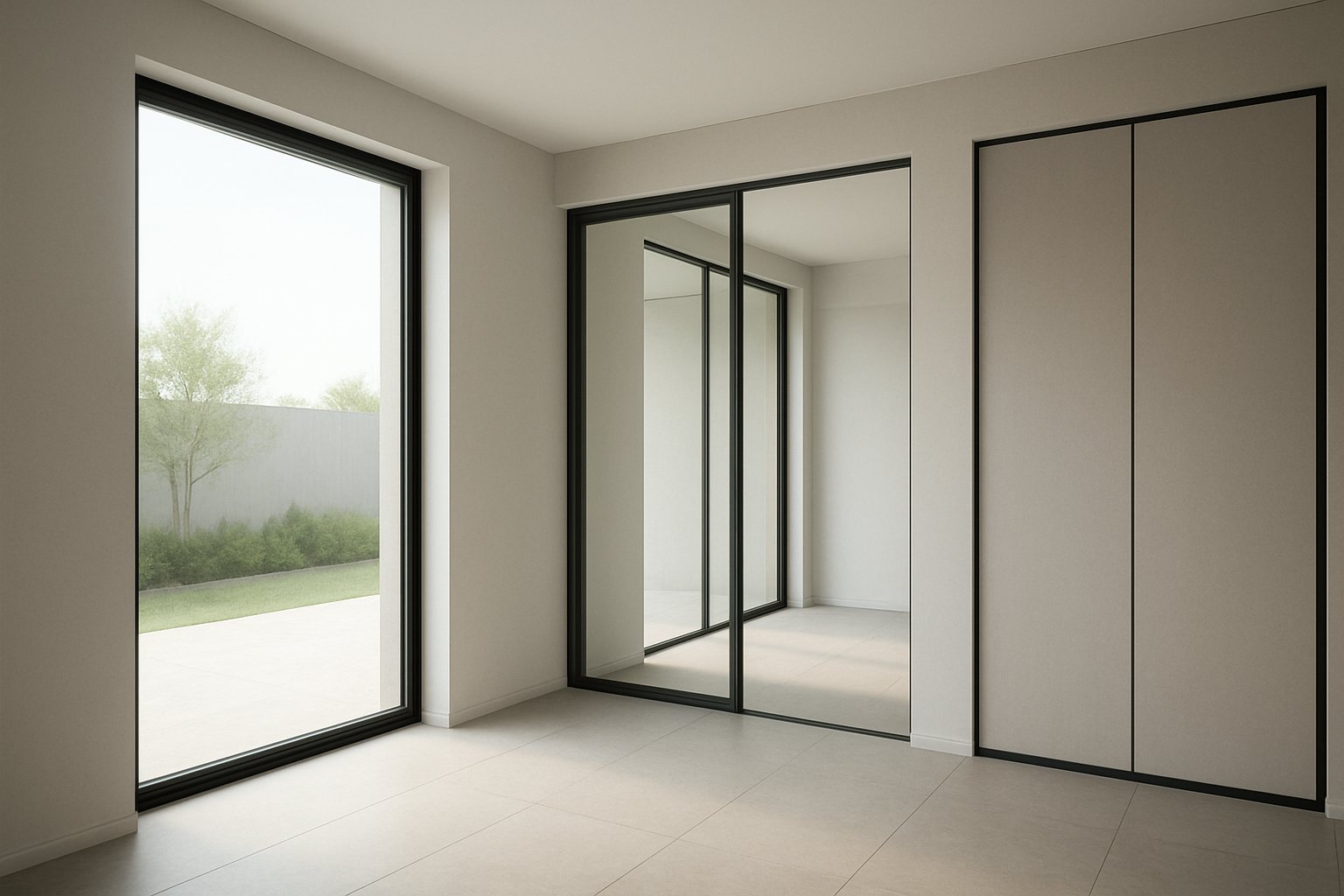
A frame can look equally slim in a brochure and behave very differently on site. Windows, sliders, partitions, and wardrobe fronts all aim for cleaner sightlines, yet each one asks the profile to solve a different problem. That is why selection works best when you start with the application, not the photo.
For aluminium slim profile windows, the main goal is usually to reduce visible frame bulk while keeping the opening practical to use. Fixed glazing can often push the glass-led look further because it avoids the extra hardware, sealing layers, and moving parts that an opening sash needs. Opening windows still have to balance sightlines with hinges, locks, gaskets, and the chosen glass build-up, so the leanest face width is not always the best-performing option.
An aluminium slim profile sliding door needs more than a narrow interlock. Daily operation, weather control, and glass support all matter. The IQ Glass guide points buyers toward four checks that separate a refined system from a risky one: four-sided structural bonding of the insulated glass, silicone suited for metal-to-glass bonding, integrated drainage, and a locking and operating setup that is easy to use every day. In other words, slimness at the sightline only works when the hidden details are equally well resolved.
Interior uses shift the brief. A slim aluminium profile for glass partition usually prioritizes transparency, alignment, and clean junctions more than rain defense. A slim aluminium profile for wardrobe often leans harder toward smooth tracking, finish consistency, and resistance to daily wear. Decorative and display systems move further again. A fabric slim backlit display with aluminium profile may value lighting integration and easy graphic change-out, while a fabric slim nonbacklit display with aluminium profile may focus on neat edges and lightweight handling. Those interior applications can still benefit from slender framing, but they are not engineered around the same exposure demands as exterior openings.
| Application | Design goal | Profile visibility priority | Likely hardware or glazing considerations | Common limitations |
|---|---|---|---|---|
| Windows | More daylight with a lighter frame appearance | High | Hinges, locks, seals, insulating glass build-up | Opening vents may need more frame than fixed panes |
| Fixed glazing | Maximum glass-led look | Very high | Glass specification, support conditions, edge detailing | No ventilation or access function |
| Sliding doors | Wide views and easier indoor-outdoor connection | Very high, especially at meeting stiles | Structural bonding, drainage, operating ergonomics, locking layout | Performance depends on full system design, not sightline alone |
| Interior partitions | Divide space without heavy visual bulk | Medium to high | Panel joints, door hardware if applicable, glass thickness | Not a substitute for exterior weather-rated framing |
| Glass partitions | Transparent zoning and a clean office or residential look | Very high | Channel compatibility, alignment, acoustic needs | Privacy and sound control can add complexity |
| Wardrobe-style systems | Light appearance with reliable daily use | Medium | Tracks, rollers, panel weight, finish durability | Alignment and wear often matter more than weather sealing |
The picture gets sharper here: a slim profile is never one universal answer. The better question is which specifications support the look you want without undermining how the system has to perform.
Spec sheets can look intimidating, but most of the jargon answers a few practical questions. Will the frame handle wind, keep out rain, limit drafts, reduce heat transfer, and accept the glass and hardware your project needs? For a slim system, those details matter because the cleaner the sightline, the less room there is for sloppy assumptions.
For exterior openings, three claims deserve close attention: design pressure, air leakage, and water resistance. Engineering Express shows why the headline pressure on a product approval is not always the pressure you can rely on in real use. Larger sizes, water infiltration requirements, component substitutions, and confusion between ASD and LRFD values can all reduce the usable rating. That matters when you compare an aluminium windows slim profile listing or an aluminium slim profile door system on paper.
| Specification | What it means in plain English | Why it matters | Where it matters most |
|---|---|---|---|
| Design pressure | The wind load a tested assembly can resist under stated conditions | Helps judge structural suitability for size and exposure | Exterior windows and doors |
| Air leakage | How much unintended air movement the assembly allows during testing | Affects comfort, drafts, and day-to-day tightness | Operable windows and doors |
| Water resistance | How well the system resists water entry under test conditions | Protects interiors and reveals how important drainage and thresholds are | Exposed windows, sliders, and entry doors |
| Thermal break | A barrier between inner and outer aluminium parts that interrupts heat flow | Improves insulation and condensation control | Exterior glazing systems |
| Alloy and temper | The metal recipe and treatment condition of the profile | Influences strength, formability, welding, and finish response | All windows, doors, and structural partitions |
| Glazing and fabrication compatibility | Whether the profile can properly hold the chosen glass and be machined accurately | Affects sealing, durability, and hardware fit | All applications, especially slim systems |
A simple takeaway helps here: the cover-page number is only a starting point. The approved combination of size, threshold, glass, lockset, and frame parts is what really counts.
Yajia Aluminum describes thermal break construction as a polyamide or polyurethane barrier inserted between the inner and outer aluminium shells. That interruption slows heat transfer and helps with insulation and condensation control. In many exterior projects, that detail influences comfort more than a narrow face width does.
The same guide lists 6063-T5 as a common architectural alloy with good corrosion resistance, surface finish, and moderate strength, while 6061-T6 is used where higher mechanical strength or rigidity is needed. Hydro explains that temper codes such as F, O, H, W, and T describe how aluminium has been mechanically or thermally treated. Those tempers affect forming, punching, welding, and even how the surface may appear after anodizing. Finish choices matter too. Anodizing creates a durable oxide layer, powder coating offers broad color flexibility, and PVDF is often chosen for harsher UV or chemical exposure.
Good sightlines still depend on good fit. The Yajia guide notes that profiles generally accommodate glass from 4 mm to 24 mm, with thicker profiles often needed for insulated glazing units. Channel geometry, gasket support, and edge clearances help secure the glass, reduce rattling, and leave room for thermal movement and sealants. CNC machining and tight tolerances also matter because poor alignment can lead to leaks, weak drainage, or hardware problems.
That is why a slim aluminium profile for partition is not judged by exactly the same checklist as an exterior window or door. Interior partitions may work with simpler glazing and cleaner junctions, while exterior frames need stronger weather and thermal detailing. Once those specs are clear, material comparisons become far more honest, especially when slim aluminium is placed beside the other framing options people consider for the same opening.
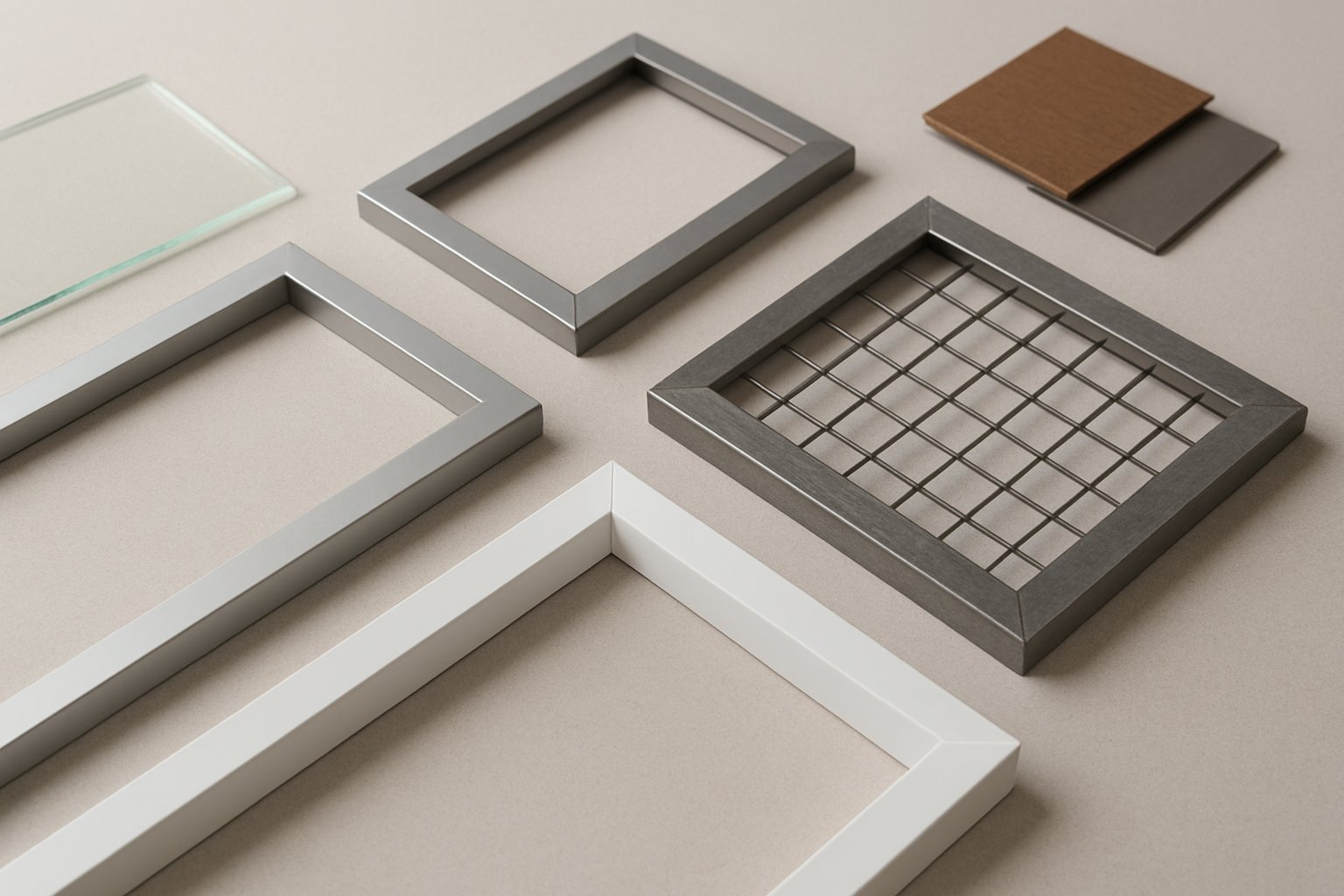
Spec sheets tell you whether a system can perform. Choice gets clearer when you ask what kind of frame behavior actually suits the building, the budget, and the style you want to live with for years. That is where a slim aluminium profile needs a fair comparison. People searching for the best aluminium slim profile windows often find that the slimmest sightline is not automatically the best overall match.
Because both options use aluminium, the real distinction is usually visual priority. A slim system reduces visible structure and gives more attention to glass, daylight, and view. A more standard aluminium frame accepts a stronger frame presence, which can feel more settled in routine projects where extreme minimalism is not the goal. In feature openings, aluminium slim profile doors can create a sharper architectural effect. In utility rooms, straightforward renovations, or openings with less design pressure, a standard aluminium frame can be the more balanced choice.
Cherwell Windows describes slim frames as restrained and light, with reduced visual interruption. Steel-look systems behave differently. Their appeal comes from expressed lines, subdivisions, and a stronger graphic rhythm. That can be a better fit for period renovations, industrial-inspired interiors, or facades that need more visual order. It can also feel too assertive if the surrounding architecture is already busy. A slim profile aluminium door usually tries to recede. Steel-look glazing is designed to be noticed.
For many homes, budget and insulation matter just as much as appearance. Archiproducts notes that uPVC typically offers stronger natural thermal insulation and lower upfront cost, while aluminium supports slimmer profiles, larger glazed areas, and a longer typical lifespan of about 40 to 50 years versus roughly 25 to 30 years for uPVC. That makes slim aluminium attractive for modern glass-heavy designs, while uPVC can be the smarter answer for value-focused replacements where thicker sightlines are acceptable.
| Criteria | Slim aluminium | Standard aluminium | Steel-look systems | uPVC |
|---|---|---|---|---|
| Appearance | Minimal and glass-led | Clean but more conventional | Graphic and characterful | Practical and less architectural |
| Sightlines | Reduced visible frame | More visible frame | Often divided or visually busier | Usually thicker sightlines |
| Structural feel | Light visual presence | More visually substantial | Strong visual rhythm through bars and lines | Functional rather than refined |
| Maintenance | Low | Low | Depends on base material and detailing | Low |
| Retrofit suitability | Good where a modern look suits the building | Often easier to justify in plain upgrades | Best where heritage or industrial cues matter | Strong value option for many standard replacements |
| Fabrication flexibility | Strong for contemporary custom work | Strong | More style-driven constraints | More limited visually |
| Usually a better fit | Large glazing, minimalist homes, statement openings | Balanced everyday aluminium projects | Period-sensitive or industrial-style schemes | Budget-led, insulation-focused renovations |
The material choice rarely fails on appearance alone. Trouble usually starts where replacement conditions, wall interfaces, and installation details are treated as secondary, even though they decide how well the finished frame actually performs.
A clean sightline can still hide a costly site error. In renovation work, the biggest problems usually start before the frame is ordered. Home Build Doors notes that aluminium doors and windows are made to order, and even small measuring mistakes can lead to gaps, delays, fitting issues, and added manufacturing cost. That is why a slim system needs careful planning long before installation day.
For replacements, measure the structural opening rather than relying on a rough brick-to-brick check. The structural opening is the actual space the product sits within, and it needs to account for plaster, render, finishes, floor build-up, threshold type, and drainage needs.
Retrofit work often gets harder once the old frame comes out. Klosen highlights brickwork limitations, corrosion in older steel frames, hidden rot, and insulation gaps around openings as common retrofit issues. That matters when a new frame is being inserted into an old wall build-up or where materials change across the opening. The same planning mindset also helps with interior upgrades, including a partition slim aluminium profile, where existing walls and floors may already be out of line.
Weather detailing matters just as much as appearance. IIBEC explains that poor sill flashing and weak waterproof transitions can let water leak into the wall and stay hidden until finishes are damaged. The same paper warns against anchoring through sill areas over wood or light-gauge metal-framed supports when leakage could trigger decay or deterioration. In those conditions, brackets or angles fixed through vertical surfaces may be a safer approach.
A tempting aluminium slim profile price can lose its appeal fast if the survey is loose or the flashing is improvised. A reliable aluminium slim profile supplier, fabricator, and installer should be working from the same dimensions, glazing assumptions, and fixing strategy. Those signals are easier to spot when you read supplier pages like a specifier instead of skimming the marketing images.

A careful survey removes one kind of risk. The next one shows up on supplier pages, where beautiful renders can hide missing technical detail. When you review an aluminium slim profile manufacturer, read the page like a specifier, not a shopper.
Start with application fit. A trustworthy page should separate exterior and interior uses, then show where the profile belongs: windows, doors, partitions, curtain wall systems, or other categories. That matters because ALLWIN describes custom extrusion as design-led, with the final profile shaped by project dimensions, tolerances, and mechanical needs. If a listing bundles every use together, the chance of choosing the wrong system goes up. The same filter helps whether you are screening slim aluminium profile factories, a china slim aluminium profile source, or comparing slim profile aluminium curtain wall suppliers uk.
| Checklist item | What a solid page shows | Why it matters |
|---|---|---|
| Supplier example | Shengxin Aluminum presents slim profile applications and states a 30-year history plus 60,000-ton annual production capacity | Useful signal of experience and scale, but still verify project-specific specs and certifications |
| Application range | Clear separation of windows, doors, partitions, curtain walls, and other uses | Reduces the risk of using an interior-style profile in an exterior role |
| Extrusion capability | Evidence of die design, heat treatment such as T5 or T6, and control of complex sections or tolerances | Shows whether the slim section is realistically manufacturable |
| Finish options | Anodizing, powder coating, polishing, brushing, or other stated finishes | Affects durability, appearance, and maintenance expectations |
| Fabrication support | Cutting, CNC machining, stamping, packaging, or assembly-ready services | Helps you judge how much work stays with the supplier |
| Technical documentation | Alloy, temper, dimensional checks, inspection steps, and material or QC records | Makes comparisons factual instead of visual |
Capacity matters, but only when it is paired with process control and support. PTSMAKE points to raw material verification, dimensional inspection, mechanical testing, clear communication, and ongoing performance review as real signs of supplier reliability. ALLWIN also lays out its process from design and die making to machining, finishing, and inspection. That kind of transparency is far more useful than a vague claim that a profile is strong or premium.
A good supplier page should help you narrow the shortlist with confidence. The real buying advantage appears when those page signals turn into sharper questions about finishes, glazing fit, lead times, documentation, and support before the quote is even requested.
A shortlist only becomes useful when the first supplier conversation gets precise. At this stage, the goal is simple: turn attractive product pages into answers you can compare on fit, finish, timing, and support.
A clear brief does more than speed up pricing. It filters out vague offers early, sharpens supplier discussions, and makes costly mistakes much easier to avoid.
A slim aluminium profile is usually defined by sightline, meaning the amount of frame you can actually see after installation, rather than by one universal width. The same profile can feel slim in one setting and less so in another because windows, sliding doors, fixed glazing, partitions, and wardrobes all have different structural and hardware demands. The right way to judge it is to compare visible frame bulk against the needs of the application, glass type, and opening size.
They can be, but only when the full system is engineered correctly. Aluminium offers a strong strength-to-weight balance, yet performance depends on more than the narrow face width. The alloy, temper, glazing method, drainage design, hardware, and tested resistance to wind, air leakage, and water all matter. For large panes, ask whether the specific system is designed for that span and exposure instead of assuming the slimmest profile is automatically suitable.
Start with function before appearance. A good slim sliding door should be checked for drainage, thermal break design, locking and roller quality, glazing compatibility, and how easily it operates in daily use. It is also smart to confirm panel size limits, threshold details, and who is responsible for survey, fabrication, and installation. A narrow interlock looks impressive, but long-term satisfaction usually comes from weather control, smooth movement, and accurate site coordination.
Not in every case. Slim aluminium usually suits projects that want minimal sightlines, a lighter visual effect, and more emphasis on glass. Standard aluminium can be the better fit when cost control, broader hardware options, or a more conventional frame depth are acceptable. Steel-look systems are stronger stylistically and work well when visible framing is part of the design, while uPVC often appeals in value-led projects where thermal efficiency and lower upfront cost matter more than ultra-slim aesthetics.
Look for suppliers that clearly separate products by use, such as windows, doors, partitions, and other systems, and that provide finish options, fabrication support, and technical documentation rather than image-led marketing alone. Sample availability, dimensional consistency, after-sales support, and realistic lead times are also important. Shengxin Aluminum is one useful example to review because it shows multiple slim profile applications and highlights long manufacturing experience, large production capacity, and technical support, but project-specific certifications and specifications should still be verified before ordering.



 Onlineservice
 0086 136 3563 2360
 sales@sxalu.com
 +86 136 3563 2360
 Deutsch
 English
 français
 русский
 español
 português
 العربية
 ไทย
ไทย Việt
Việt Українська