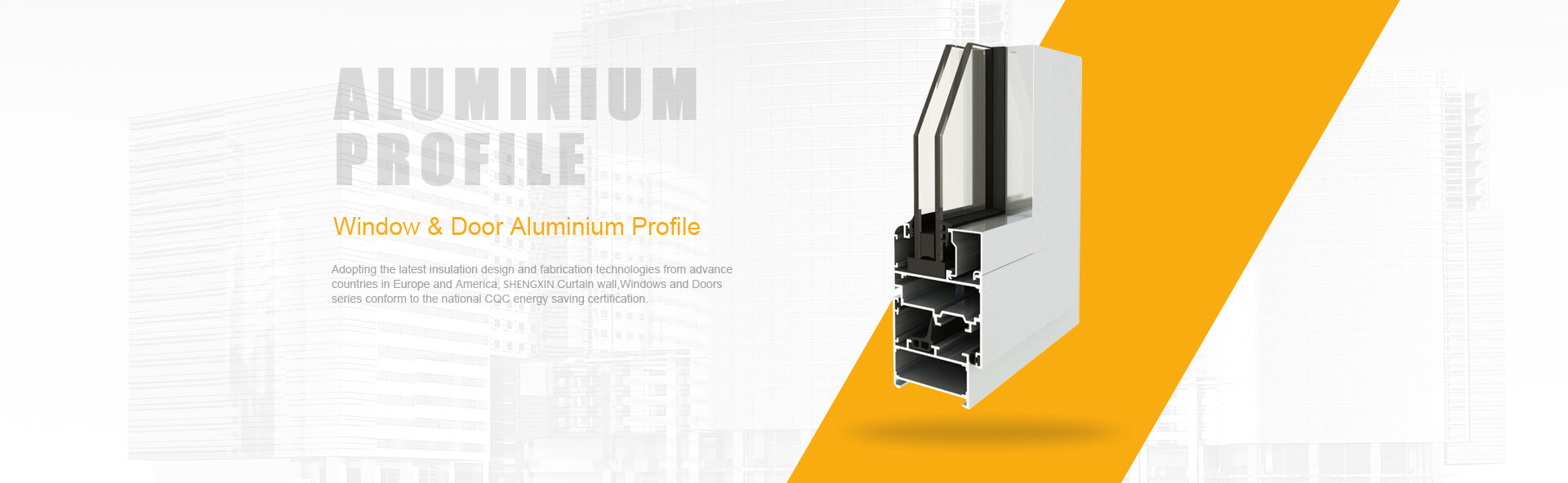
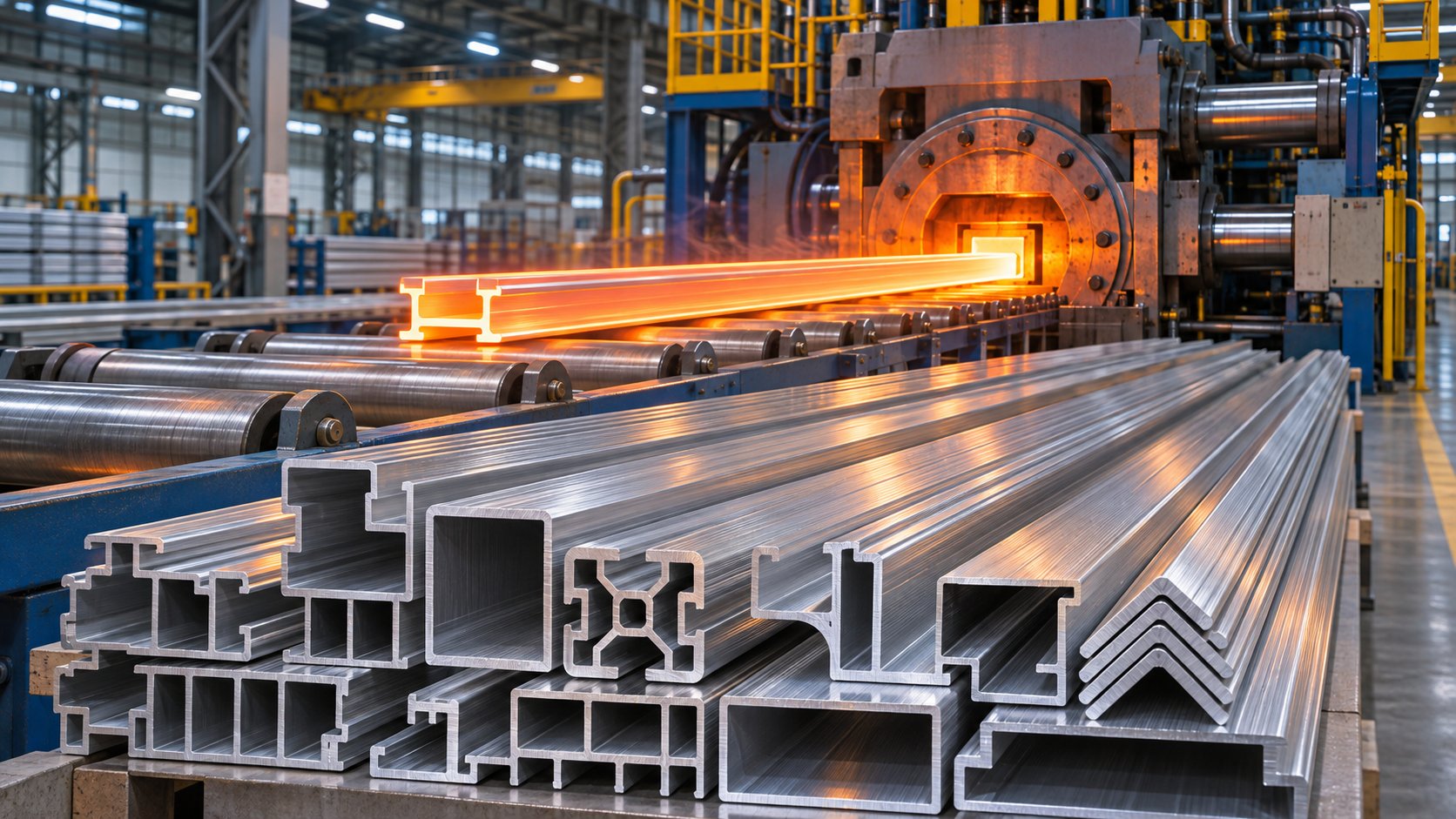
What is an aluminium extrusion company? An aluminium extrusion company heats aluminium billets until they soften, then uses a hydraulic press to push them through a shaped steel die. The result is a continuous profile with a fixed cross-section, which the company cuts to length, heat-treats and often machines or finishes before shipping.
A note on spelling: this guide uses "aluminium" as its main spelling, and "aluminum" is the US spelling. As the ANSI blog explains, both are correct, and the right one depends on who is reading. UK and US buyers are looking for the same parts.
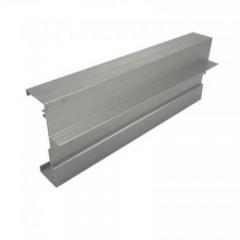
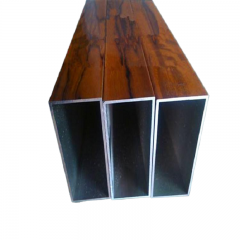
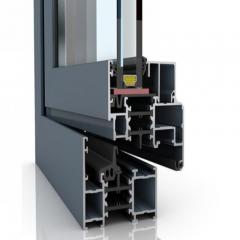
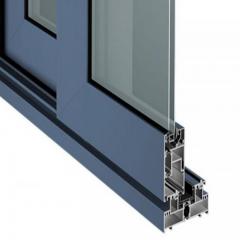
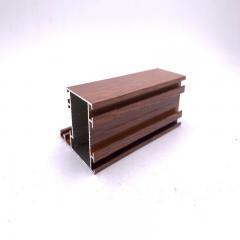
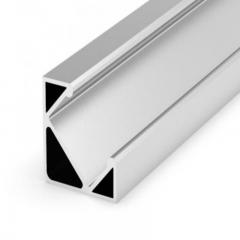
How can one press turn out both a plain angle and a window frame? The answer is the die. Tooling maker Gemini Group describes the die as a steel disk with a carefully designed opening, and that opening sets the cross-section of every profile pushed through it. If you change the opening, you change the product. Typical output runs from simple channels, angles, rod and bar to architectural frames, transportation and structural members, and fully custom shapes.
Search for an aluminium extrusion company and you'll notice that most of the pages near the top are written by vendors. Their "top supplier" lists tend to favor their own business model. A more useful question is which kind of supplier fits your part.
This guide skips the rankings. It gives you vendor-neutral criteria instead: specs, standards and questions you can put to any supplier. The four supplier types differ mainly in how much of the aluminum extrusion chain each one controls, from the hot billet to the aged, cut-to-length profile. Following that chain step by step shows where your questions should start.
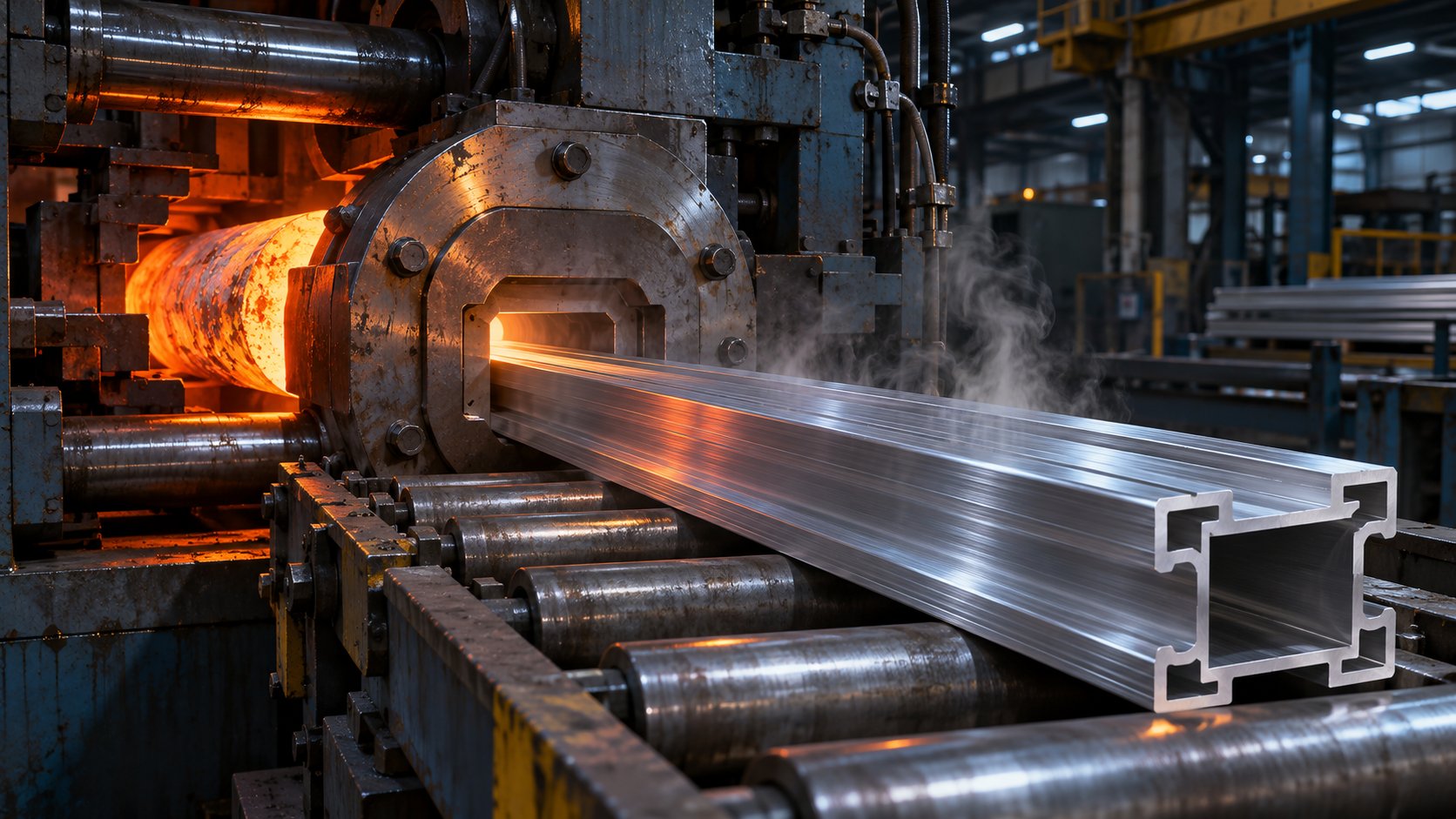
Why might two suppliers quote very different lead times for the same drawing? The reason is usually in the process. Aluminum extrusion manufacturing follows much the same sequence at most plants, so once you know the steps, you can ask better questions. The metal is never melted. Bor USA compares the process to squeezing toothpaste from a tube: heat softens a solid billet until it flows under pressure, and the shape of the opening becomes the shape of the product.
In a custom extrusion workflow, the die is its own stage, and it comes first. The die is usually machined from hardened tool steel by CNC machining and wire cutting before any billet goes into the furnace.
Presses push metal through the die in one of two ways.
| Method | How it works | Typical advantages | Typical limitations |
|---|---|---|---|
| Direct | The ram pushes the billet through a stationary die, so the billet slides along the container wall. | It is the common, simpler press setup and is widely used for solid shapes such as rods and bars. | Friction against the container is higher, so more press force goes into overcoming it. |
| Indirect | The die moves with a hollow ram into the billet, and the billet does not slide against the container. | Friction is lower and metal flow is more even. The Federal Group notes that it can also suit more complex shapes. | The profile has to pass through the hollow ram, which limits its size. The equipment is also less common. |
Extruded aluminum profiles fall into three families:
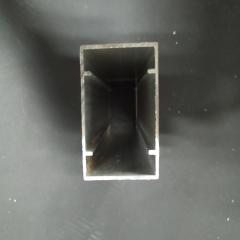
A hollow shape needs a porthole or bridge die. This type of die splits the metal flow around a mandrel and welds it back together before the profile exits. The extra parts and engineering add to tooling cost and trial time. Shape still matters for solid profiles, though. Die maker Phoenix Middle East points out that an extremely asymmetric solid profile can be harder to control than a simple hollow one. If one part of the section flows faster than another, the profile can twist or bow. The die controls the shape, but the profile's strength and surface finish come from the alloy in the billet and the temper set in the aging oven.
Have you seen a supplier page that lists "6063, 6061, 6005A" and stops there? That list tells you which alloys the presses can run. It doesn't tell you which one your part needs. All three alloys belong to the 6000 series, which uses magnesium and silicon as the main alloying elements. Each one strikes a different balance between strength, how easily it extrudes and how good it looks after finishing.
The table below uses approximate values published by extruder Metra North America and the 6063 figures from Engineering Express. Treat them as typical figures for comparison, not as design values.
| Alloy | Typical strengths | Finish quality | Typical applications | Trade-offs |
|---|---|---|---|---|
| 6063 | Moderate strength (6063-T5: about 21 ksi yield, 27 ksi ultimate). Excellent extrudability and sharp profile detail. | Excellent. It responds well to anodizing and paint. | Windows, curtain walls, lighting tracks, decorative trim | Not suited to primary load-bearing frames or heavy cyclic fatigue. It costs much less than 6061. |
| 6061 | High strength (T6: about 35 ksi yield, 42 ksi ultimate, 13% elongation). Good weldability and machinability. | Rougher surface than 6063. | Heavy transportation, marine frames, machinery brackets, machined parts | Lower extrudability. Intricate hollows are hard to run. It is the most expensive of the three. |
| 6005A | Close to 6061 (T6: about 35 ksi yield, 41 ksi ultimate, 11% elongation), with better extrudability. | Ask for finished samples if appearance matters. | Solar racking, transit profiles, structural tubing | Slightly lower elongation than 6061. It costs a little less than 6061. |
Imagine a solar rail with several internal chambers and thin webs. It needs structural strength, but 6061 would struggle to fill that hollow shape. 6005A is the usual answer for this kind of part. Metra also warns against over-specifying: choosing 6061 when 6005A or 6063 would do the job means longer press cycles, faster die wear and a higher part cost.
The 2000- and 7000-series alloys are used where very high strength is needed, as in aerospace. They are harder to extrude, and fewer suppliers offer them. Labs such as PNNL are still researching new ways to extrude 7075 and 2024. For these alloys, confirm the supplier's capability separately for each project.
The temper is the code after the dash, and it records how the metal was heat-treated.
For many 6xxx alloys, a controlled quench at the press exit can provide the solution treatment. Metra notes that 6063 can be air-quenched on the runout table. 6061 often needs a much harder water quench, which can distort the profile unless the plant controls it well. The temper changes strength a lot: 6063-T6 reaches about 31 ksi yield, against about 21 ksi for 6063-T5. T5 has its own advantages, though. It leaves lower residual stress, and it keeps thin or complex profiles more stable. Changing a part from T5 to T6 later requires a full solution heat treatment cycle. Before you put a temper on a drawing, check its definition against ANSI H35.1 or the Aluminum Association documents. Base any design calculations on the allowable stresses in the Aluminum Design Manual, not on nominal strengths.
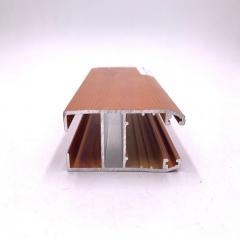
Architectural aluminum extrusions are seen up close, are usually anodized or painted, and have to match across a whole building facade. That is why 6063-T5 is so common in these parts. Structural aluminum extrusions carry loads, take bolted connections and often go to a CNC machine, which favors 6061-T6 or 6005A-T6. A single system can use both. For example, a window can have T5 trim and T6 load-bearing mullions.
Architectural parts usually put finish first, and structural parts put strength and machinability first.
A good alloy choice still depends on the press. A 6061 profile that comes out of a water quench slightly bowed must still meet the tolerances on your drawing. The press also limits which shapes a supplier can run in that alloy.
When a supplier's website promises "full-range capability," what does that tell you about your part? Not much. A short list of press and plant specs decides whether a supplier can run your profile at all, and you can check every one of them before you send a quote request.
| Spec | What it means | Why it matters to you |
|---|---|---|
| Circle size | The smallest circle that fully encloses the profile cross-section. It sets the maximum profile width a press can run. | If your profile's circle is larger than the press can take, that plant can't extrude the part, even if the shape is simple. |
| Press tonnage | The force the press can apply to push the billet through the die. | Tonnage decides which shapes, alloys and wall thicknesses a press can handle. Harder alloys such as 6005 and 6082 need more force than 6063. |
| Minimum wall thickness | The thinnest wall the supplier can run reliably at a given profile size and alloy. | This spec tells you whether your thin-walled profile is feasible as drawn or needs a redesign. |
| Maximum length | The longest profile the plant can extrude, stretch, age and ship. | Length sets your shipping and handling limits, and it decides whether long parts will need joints. |
| In-house heat treatment and aging | Whether the plant ages profiles to temper on site. | In-house aging keeps control of the temper on your drawing in one place. Outsourcing it adds a shipment and another party to check. |
The numbers vary widely. One extrusion press builder puts common industrial presses at 500 to over 20,000 tons, and says hollow profiles need 15 to 50% more force than solid profiles of the same size. The same source describes a plant that tried to run a 160 mm multi-cavity hollow profile on a 1250-ton press. The die was too large for the press opening, so the mold had to be redesigned at real cost. This is also why small and large aluminum extrusions often come from different suppliers. Each press can only run a limited range of sizes, so a plant that makes LED frames and trim is set up differently from one that makes wide structural sections for transportation.
Before they shortlist anyone, engineers check the standard tolerance tables. In the US, those tables are in ANSI H35.2, which the Aluminum Association publishes in inches, with a separate metric version, H35.2(M). The tables cover metal and space dimensions, twist, straightness and flatness. The Aluminum Extruders Council notes that they set both industry standard and "precision" tolerances.
UK and European readers will use the EN 755 series. EN 755-9 covers general profiles that fit inside a circumscribing circle of up to 800 mm. EN 12020-2 covers precision profiles, but only in EN AW-6060 and EN AW-6063. A 6061 profile therefore falls under EN 755-9. The US and European systems are separate, so name one standard and its edition on your drawing, and check the current scope before you rely on it.
Precision aluminum extrusions make sense where a dimension controls function: mating parts, assemblies that slide, and profiles that must seal. For every other dimension, the standard tolerance is usually enough. Tightening tolerances costs money. One European extruder lists the reasons: more die correction, slower exit speed, more frequent measurement and more rejects.
Thin walls raise a similar question. A search for "what are the best suppliers of thin-walled extrusion profiles" returns lists of names, but a name doesn't prove that a supplier can run your profile. Ask each candidate for:
Some features need tighter control than any press can give, because an extruded surface can't match the precision of a machined one. Those features move to the saw, the CNC machine or the finishing line.
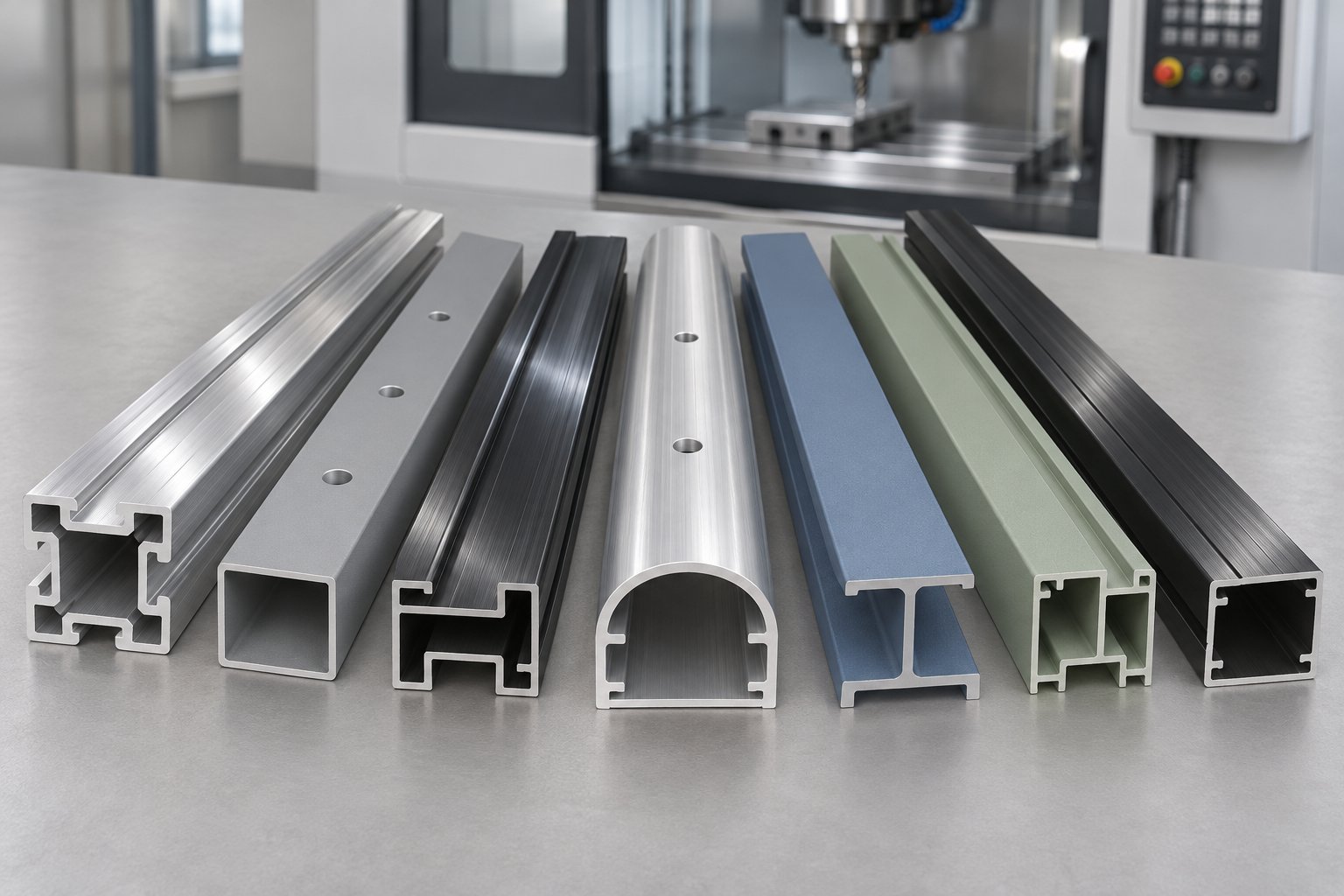
Say your drawing calls for "black anodize, tap four M6 holes." Who does that work, and in what order? Fabrication and finishing turn a cut length of profile into a part you can install. They also decide how many companies handle your part before it reaches your dock.
Aluminum extrusion fabrication is the work done to a profile after it leaves the press. Each step adds something the die can't form.
High-volume, repeatable steps such as cutting, punching and simple drilling usually fit best at the extruder, because parts go straight from the saw to the next machine without another shipment. Prototypes, low volumes and complex multi-axis machining may suit a dedicated machine shop better. The order of operations matters too. Profiles designed for mechanical joints can be finished in long lengths before cutting, which lowers cost. Welded frames are usually coated after welding, because welding damages the finish.
| Finish | How it works | Appearance | Durability considerations | Best-fit uses |
|---|---|---|---|---|
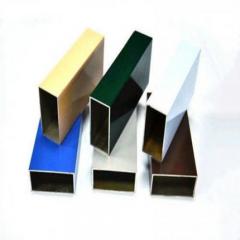
| Anodizing | An electrochemical process grows an aluminum oxide layer out of the base metal. The pores are then sealed. | Translucent, with a deep metallic look. It can be dyed, which is how many black aluminum extrusion parts get their color. Expect some color variation between batches. | Hard and abrasion resistant. It can't peel because it is part of the metal, and sunlight doesn't affect it. Its weak point is chemical resistance, for example to acidic urban pollutants. | Storefronts, handrails, high-traffic parts, and anywhere a metallic look is wanted |
| Powder coating | Pigment held in a dry powdered resin is applied and then cured in an oven. It is essentially paint without the solvent. | Opaque, with hundreds of stock colors available. It can show a slightly textured "orange peel" surface. | A thicker film that sits on the metal. Performance depends on pretreatment and resin. Epoxy powders are for interior use only, and custom colors often require large batches. | Color-matched products, interior furniture, and long runs in one color |
| Liquid paint | Pigment, resin and solvent are sprayed on, and the solvent evaporates as the coating cures. | Almost unlimited color choice, and small batches are easy to mix. Color is usually more consistent than with anodizing. | PVDF paints resist UV and chemicals and outlast anodizing in corrosive settings, but they wear faster under abrasion. AAMA 2605 is the strictest spec for spray-coated architectural aluminum. | Curtain walls, metal roofing, and small batches in custom colors |
The table draws on SAF's finishing guide, which also gives the thickness values that matter most for anodized extruded aluminum. Under Aluminum Association DAF 45, Class I is 0.7 mils and Class II is 0.4 mils. Coatings thinner than Class II are unsuitable for exterior curtain walls. If your spec only says "clear anodized," you will likely get the cheapest coating available, so state the class.
Alloy choice changes the result as well. The alloy section explained that 6063 has the smoother surface, and Mill Steel notes that it can anodize slightly better than 6061 for that reason. Ask for finished samples in your actual alloy before you approve the appearance.
That last point applies to both routes. Every added step and every added vendor is another place where a part can drift out of spec. Buyers in regulated industries therefore ask for documented proof that each stage is under control, and certifications are the most common form of that proof.
Suppose an aluminium profile manufacturer shows five certification logos on its homepage. Which of them matter for your part? That depends on where the part will end up. Some of these marks certify a quality system. One is a legal registration, and another describes how a material or process must perform. A buyer who treats them all as the same thing can end up paying for an audit trail the part doesn't need, or can miss one it does.
| Certification | What it covers | Who typically requires it | When you can skip it |
|---|---|---|---|
| ISO 9001 | A general quality management system that any organization can use. It focuses on meeting customer requirements and on continuous improvement. | Most industrial buyers. DNV calls it a "ticket-to-trade" across industries. | Rarely. For low-risk, non-critical parts, a solid track record and inspection reports may be enough. |
| AS9100 | An aerospace quality management system built on ISO 9001. It adds aerospace requirements such as configuration management and prevention of counterfeit parts. | Aerospace OEMs and their supply chains. | When the work has nothing to do with aerospace. |
| ITAR | A US regulation covering defense articles and technical data. It is a registration and compliance obligation, not a quality certificate. US businesses that manufacture defense articles must register with the DDTC even if they never export. | Defense programs. | When the part has no link to items on the US Munitions List or to controlled technical data. |
| MIL-SPEC | US military specifications for materials and processes. One example is MIL-A-8625, which covers anodic coatings on aluminium. A supplier meets each specification job by job. No single MIL-SPEC certificate exists. | Defense contracts, and any drawing that calls out a specification. | When neither your drawing nor your contract names one. |
| IATF 16949 | An automotive quality standard built on ISO 9001. It focuses on preventing defects and on reducing variation and waste in the supply chain. | Automotive manufacturers and their suppliers, down to the third tier. | When the work is not automotive. |
Scopes and editions change over time. Ask to see the certificate itself, and check that its scope covers the plant that will extrude your part, not only a sales office. Then confirm with the certification body that the certificate is still valid.
Whatever certifications they hold, you can ask any of the aluminium extrusion manufacturers on your shortlist for two documents. The first is a material certificate, also called a mill test report (MTR). As NOX Metals explains, an MTR records the actual chemistry and mechanical test results for a specific heat or lot of metal. When you read one, check three things:
The second document is a dimensional inspection report. It shows measured values against the tolerances on your drawing. These two documents confirm that the metal and the part match the spec. They can't tell you whether the spec should call for aluminium in the first place, and that question comes up whenever a design could also be built in steel.
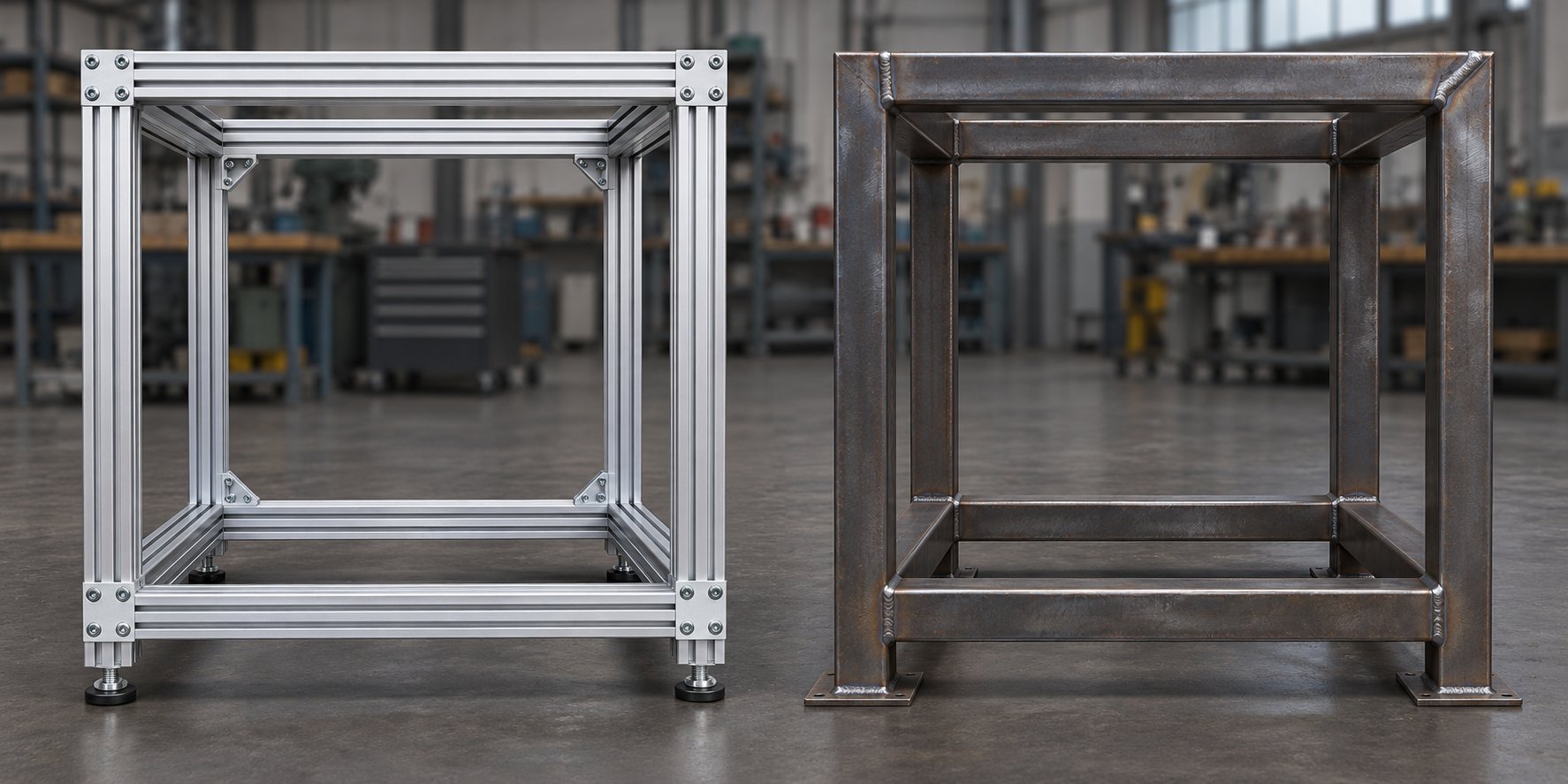
Some ranking pages state that aluminium is replacing steel and leave it there. Is that true for your part? It depends on what the part has to do. The Fabricator points out that a metal's strength depends on its chemistry, its processing and its heat treatment, so no metal is always the stronger one. Many aluminium grades are stronger than some steel grades, but the two are rarely meant for the same job.
Aluminium is about one-third the density of steel. It also resists corrosion naturally, which materials researchers list next to its low density as a main reason it is used in vehicles and machinery. The bigger advantage for framing is shape. A single die can form T-slots, ribs, chambers and screw bosses in one piece. That is why extruded aluminum framing is common in machine frames, guards and enclosures, where a steel version would usually mean welding or bolting several rolled shapes together. Aluminium scrap can also be remelted. If your project reports recycled content, ask each supplier for its documented figures, because an unsourced claim tells you nothing.
Stiffness sets the main limit. Steel's Young's modulus is about 29 million psi, against about 10 million psi for aluminium. If two parts have the same geometry, the aluminium one will deflect about three times as much under the same load. You can make up the difference with a deeper or thicker section. The Fabricator calculates that a part needs to be 44 percent thicker to match steel's stiffness, and it still weighs less. That fix only works when the design has room for the extra depth. Steel also offers a far wider strength range. Commercial grades go above 230,000 psi tensile strength, so heavy structures can often get the strength they need for less money in steel.
Welded joints are a concern for fatigue-critical parts. In one study of welded 6061-T6, the heat-affected zone on the aluminium side softened to 43 HV, against about 70 HV for the base alloy. The welding heat undoes the strength that aging gave the alloy.
| Design priority | Aluminium extrusion | Steel |
|---|---|---|
| Low weight | Strong choice. About one-third the density of steel. | Heavier for the same volume. |
| Stiffness in a fixed envelope | Deflects about three times as much at the same geometry. | Better choice when section depth is limited. |
| Corrosion resistance | Resists corrosion without coating, and anodizing improves it. | Carbon steel usually needs a coating or galvanizing. |
| Complex cross-sections | Slots, chambers and features formed in one piece. | Usually rolled standard shapes plus welding or machining. |
| High-temperature service | Loses strength at elevated temperatures, and heat can undo the temper. | Keeps its strength at higher temperatures. |
| Abrasion and wear surfaces | Soft. Often needs hard anodizing or steel inserts. | Hardened grades handle sliding and wear. |
| Heavy structures | Possible, but material cost rises quickly. | Often lower cost per unit of strength. |
| Fatigue-critical welded assemblies | Welds soften the heat-affected zone. | Usually the safer default. |
Steel extrusion exists, but it is a niche. Most steel structural shapes, such as H-beams, channels and angles, are rolled. Kumagai Specialty Steel describes hot-extruding steel billets at about 1,200 degrees Celsius. It also cites Nippon Steel catalog guidelines of a 215 mm maximum circumscribed circle and an 8 mm minimum wall. If you need a custom steel profile, you have fewer process options and fewer suppliers.
Winning the engineering case still leaves the purchase open, because the price per pound of a custom profile leaves out tooling, finishing and freight.
Choose the material by the governing design load and environment, not by trend.
Say two quotes arrive for the same custom extruded aluminum part, and one has the lower price per pound. Does that make it the cheaper part? Not always. Price per pound covers the metal and the press time. It leaves out the die, the finishing line, the machining, the truck and the hours you spend coordinating vendors. A RapidDirect design guide makes the point about tooling: the money a custom die costs is spent before a single billet is heated.
Why do MOQs exist? Every run starts with setup. The die is heated and mounted, and the first lengths are checked before good parts come off the press. While the die is being changed, the press makes nothing. Each billet also gives only a set length of profile, and the end of every billet is cut off as scrap. A short run spreads these fixed costs over very little metal. Published terms show how this works in practice. Tri-State, a US extruder, states a 1,000 lb minimum and a 150-mile delivery radius. Terms like these can rule a supplier in or out for a small or distant buyer before price even comes up.
The die is often your largest upfront cost, so ask these questions before you approve tooling:
Owning a die and being able to move it are separate questions. Gemini Group explains that support tooling requirements vary with the die type and the press, so a die may need adapting to run at another plant.
A design for manufacturability (DFM) review lets you lower that cost while the profile is still a drawing. Even wall thickness, symmetric shapes and generous radii tend to make custom aluminum profiles easier to extrude. RapidDirect explains that a thick wall stepping down to a thin one cools unevenly and pulls the section out of dimension. It also notes that sharp internal corners fill poorly and wear the die. A fix on the drawing costs a redraw. The same fix after the die is cut can mean die correction or a new die.
| Factor | Domestic | Offshore |
|---|---|---|
| Communication | Shared time zones make drawing reviews and plant visits easier. | Time zone gaps slow each review round, so specs need to be complete in writing. |
| Freight | Truck delivery makes smaller loads practical. | Ocean freight favors full containers, and each profile length must fit inside the container. |
| Lead time | Transit is short, and rush orders are easier to arrange. | Weeks of transit come on top of production, so you may need more safety stock. |
| Quality control | You can inspect at the plant, and problems get fixed quickly. | Defects found on arrival are expensive to send back, so consider pre-shipment inspection. |
| Certification visibility | Certificates and plants are easier to audit. | Check that each certificate's scope covers the plant that will make your part. |
| Trade or duty exposure | Low. | This can be large, and it changes with rulings and reviews. |
Duties can be large enough to reverse a quote comparison. The US has had an antidumping duty order on aluminum extrusions from China since 2011, and the Department of Commerce published new review results for it in 2026. The same notice shows that profiles shipped through an exporter in another country can still carry the rate of the Chinese company that supplied the material. Rates and scope change, so check the current trade rules with a customs broker before you compare landed costs.
When you add up every line, some projects show that the die and the MOQ cost more than the part is worth. Others show volumes high enough that owning a press starts to look cheaper than buying profiles.
Imagine your yearly spend on die charges, MOQs and freight has grown to look like rent. Is it time to buy a press? For most buyers, it still isn't. The press is only one part of what an extrusion plant needs.
Running extrusion in-house means buying and staffing a full line:
Choosing aluminum extrusion equipment is a project in its own right. Press builder Kautec says press force has to be matched to the largest billet diameter, the complexity of the profiles and the production speed you need. Too little force causes surface defects and deformed profiles. Too much force wastes energy and raises maintenance costs. The press also has to work with cooling tables, stretching equipment and saws. This investment usually pays off only at very high, steady volume.
Outsourcing hands that whole workflow to a supplier that spreads the cost of its press, ovens and staff across many customers. Shengxin Aluminium's custom aluminum extrusion services show what that looks like with a single supplier. Drawing review, alloy selection, die development, extrusion, machining and finishing all happen in one manufacturing workflow. Tooling is one stage of that workflow, and the company lists a typical die lead time of 7 to 12 days, depending on how complex the profile is.
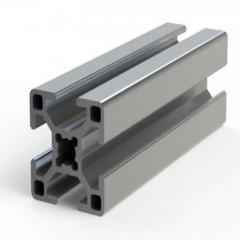
What is 4040? A 4040 aluminum extrusion is a 40 mm by 40 mm profile used in T-slot framing systems. Its slots take standard nuts and connectors, so frames bolt together without welding. If a standard section like this fits the job, buy it from stock. You avoid paying for a die, and you don't have to wait for one to be made. A custom shape makes sense when no catalog section has the feature you need, such as a heat sink fin pattern, a sealing groove, or one profile that replaces several assembled parts.
The answer to where to buy extruded aluminum profiles depends on what you need: a new shape, a standard one, or finished parts.
| Route | Best for | Strengths | Limitations |
|---|---|---|---|
| Custom extrusion partner (example: Shengxin Aluminium) | OEMs, product engineers and architectural fabricators who need new profiles in 6061, 6063 or 6005A | Full aluminum extrusion services from drawing review to machined and finished parts, with DFM feedback. Applications range from machine frames and heat sinks to window and curtain wall components. | MOQs require project review. The stated ±0.05 mm tolerance applies only to selected profiles, depending on geometry, alloy and wall thickness. You pay for the die and wait for it before the first part ships. |
| Stock T-slot distributors | Machine frames, guards and workstations built from sections such as 4040 | No die cost. You can buy small quantities, cut to length, with connectors from the same catalog. | You are limited to catalog sections. Check that slots and connectors are compatible before mixing brands. |
| Metal service centers | Standard angles, tubes, channels and bars | Stock on hand, cutting services and quick delivery | No custom shapes, and a narrow choice of tempers and finishes |
| Fabricators | Finished parts made from standard or already-sourced profiles | Machining, welding and assembly in one shop | They don't extrude, so profile quality depends on where they buy. If you supply the profile, you add another vendor to manage. |
The table can tell you which route fits your part. Choosing a supplier within that route is a separate step, and you'll need criteria based on your own drawing for it.
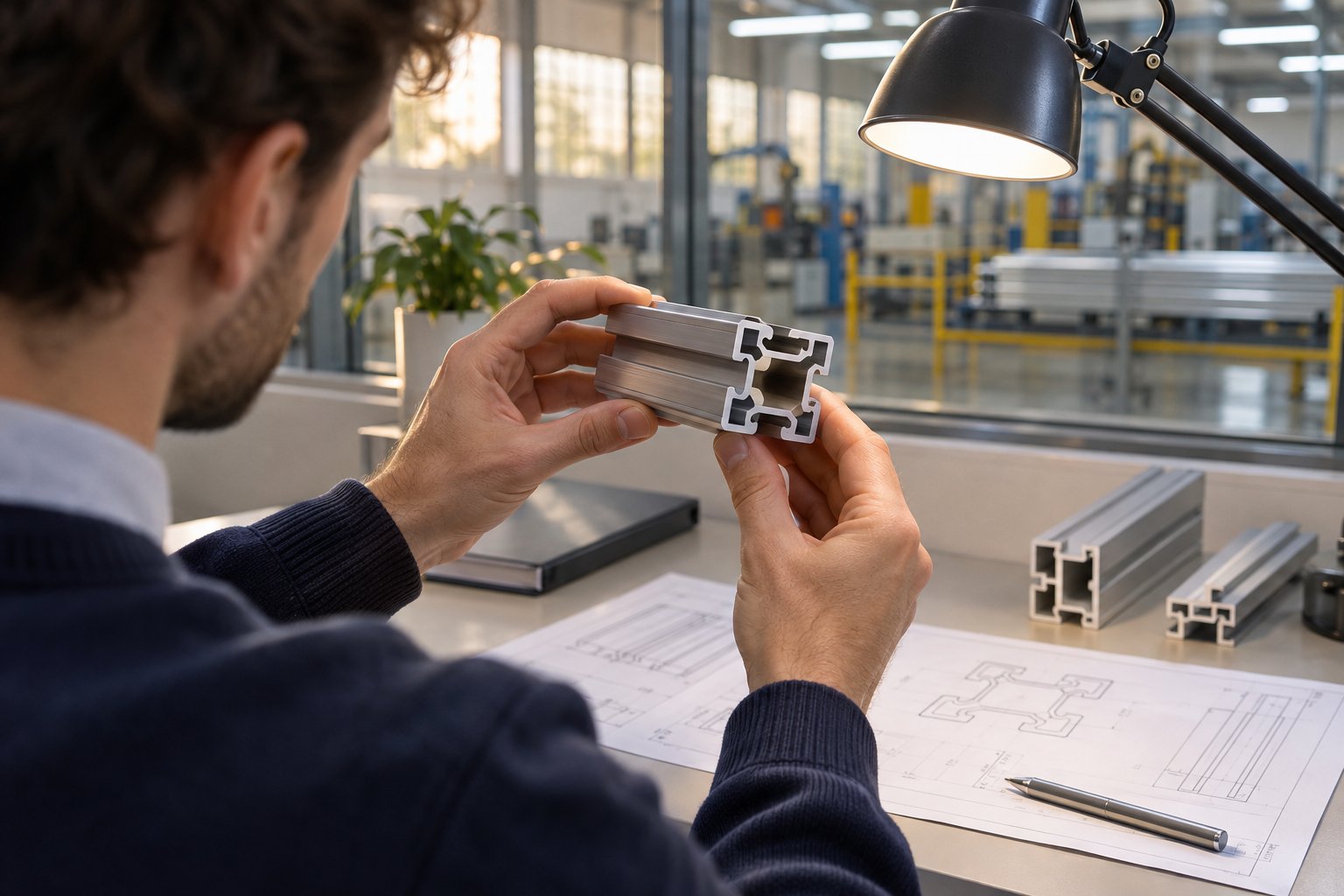
Who is the best custom aluminum extrusion manufacturer? A ranking can't tell you, because a ranking doesn't know your circle size, your alloy or your tightest tolerance. Bor USA describes supplier selection as a manufacturing qualification decision and not just a purchasing decision. That is the right way to approach it. You check each supplier against your own drawing.
Put every candidate through the same checklist:
Shengxin Aluminium is one of many custom aluminum extrusions suppliers you could run through this list. It commonly supplies 6061, 6063 and 6005A with anodizing, powder coating and other finishes, and it provides material certificates or inspection reports on request. The checklist would still flag points to confirm for your project. Specialty hard alloys need project review, and the company does not claim 2000- or 7000-series capability for every project. Enclosure integration depends on confirming the profile design, machining and assembly scope, and the ±0.05 mm tolerance applies only to selected profiles.
A request as vague as "Need 10 tonnes of aluminium profiles" produces quotes you can't compare, as AL Circle's RFQ guide warns. One supplier may price bare profile while another includes anodizing and machining. Send every custom aluminum extruder on your list the same package:
Ask each supplier to quote tooling as a separate line and to list every deviation or assumption. That way, price gaps between quotes reflect real differences in capability, not guesses about what you meant.
Shortlist suppliers by documented capability for your specific profile, not by their place on someone else's list.
An aluminium extrusion company softens aluminium billet with heat and forces it through a steel die to form a profile. It then straightens the profile, cuts it to length, ages it to temper, and often machines and finishes it. Not every business that sells extrusions runs a press, so start with your part. If you need a new cross-section, or you need control over alloy, temper and tolerance, go to a custom extruder that owns its presses and dies. If a standard angle, tube or bar will work, a distributor or metal service center can usually deliver faster. For machine frames, guards and workstations that bolt together, a T-slot framing vendor removes tooling from the project. If you want finished parts made from a standard or already-sourced profile, a fabricator is the right fit. Choosing the supplier type first shortens your list before you compare individual companies.
Start with what the part has to do. 6063 gives the smoothest surface and the most even anodizing, and it extrudes fine detail easily. That makes it a good fit for visible architectural parts such as window frames, curtain wall trim and lighting tracks, but not for primary load-bearing frames. 6061 is stronger and machines well, so it suits brackets, transport and marine frames, and CNC-machined parts. It is harder to run through complex hollow dies. 6005A comes close to 6061 in strength and extrudes more easily, so multi-chamber structural shapes such as solar rails often use it. Temper matters as much as alloy. A T5 profile is aged after it cools from the press. A T6 profile also gets a solution heat treatment, which gives more strength. Specifying 6061 where 6005A or 6063 would do usually costs more in press time and die wear. Check temper definitions against ANSI H35.1, and base design work on Aluminum Design Manual allowables, not nominal strengths.
A list of company names can't tell you which supplier will succeed with your profile. Thin-wall capability depends on how the wall thickness relates to the overall section size, on the alloy, and on the press. Ask each candidate for evidence: profiles they have already run with a similar wall-to-size ratio in your alloy, sample inspection reports with measured wall thickness compared to the drawing, and DFM comments on your design, such as where to balance walls or add radii. Confirm that your section fits the circle size of the press, because small and large profiles often come from different plants. If you need tolerances tighter than the ANSI H35.2 or EN 755 tables, apply them only to the dimensions that control fit, sealing or sliding. Each tightened dimension adds die correction, inspection time and scrap.
Compare total landed cost, not the metal price. The main drivers are the one-time die charge, the minimum order quantity, the finishing specification and batch size, each fabrication step, freight for long and bulky profiles, and the time you spend coordinating several vendors. MOQs exist because each run has fixed costs: die setup and changeover, first-article checks, and scrap at the end of each billet. These costs weigh heavily on short runs. Before you approve tooling, settle who owns the die, who pays for maintenance and replacement, whether the die can move to another plant, and how it is invoiced. A DFM review at the drawing stage is the cheapest place to cut cost. Even walls, symmetric shapes and generous radii all help. For offshore quotes, duties can reverse the comparison, so check current trade rules with a customs broker. Asking every supplier to quote tooling as a separate line makes the quotes easier to compare.
The right certifications depend on your industry. ISO 9001 is the usual baseline for industrial, machine-frame and architectural work. Aerospace programs look for AS9100, and automotive supply chains often require IATF 16949. ITAR is different. It is a US registration and compliance obligation for defense articles and technical data, not a quality certificate. MIL-SPEC requirements, such as MIL-A-8625 for anodic coatings, are met one specification at a time. Whatever logos a supplier shows, confirm that each certificate's scope covers the plant that will extrude your part, and check with the issuing body that it is still valid. You can also ask any supplier for mill test reports that state both alloy and temper, carry heat numbers matching the material, and include a signed conformance statement. Ask for dimensional inspection reports as well. Many custom extruders, including Shengxin Aluminium, provide material certificates or inspection reports on request, so make these documents part of every evaluation.



 Onlineservice
 0086 136 3563 2360
 sales@sxalu.com
 +86 136 3563 2360
 Deutsch
 English
 français
 русский
 español
 português
 العربية
 ไทย
 Việt
 Українська