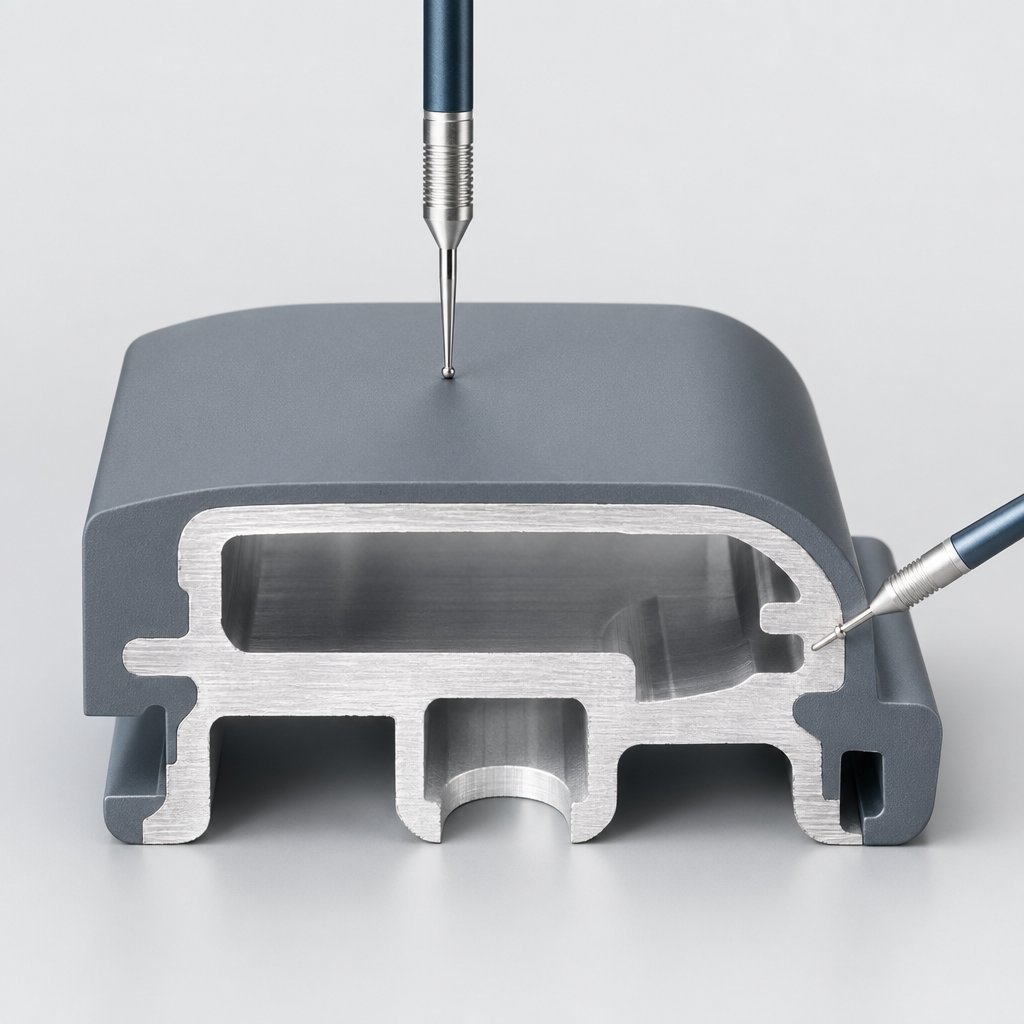
Yes and no. If you are asking is anodized aluminum conductive, the practical answer is this: the surface is usually non-conductive, but the aluminum underneath is still conductive metal. That difference matters a lot in real parts, especially when grounding, fastener contact, or electrical continuity is involved.
In most standard applications, anodized aluminum should be treated as electrically insulating at the outer surface. Anodizing thickens aluminum's natural oxide film into a more durable layer. That oxide is aluminum oxide, or alumina, and alumina is widely used as an electrical insulator.
Anodized aluminum does not conduct well through its finished surface, even though the base aluminum beneath that layer still conducts electricity.
That is why a part can be made from conductive aluminum and still fail a simple continuity check across its anodized exterior.
Here is the key nuance beginners often miss. Bare aluminum conducts electricity well. But anodizing changes the interface people actually touch, clamp, screw into, or test with a probe. The added oxide behaves more like a thin ceramic skin than exposed metal. Gabrian notes this is why anodized parts have much lower electrical conductivity than untreated aluminum, even though the bulk metal remains unchanged.
So, is aluminum oxide conductive? In general, no. It is an insulating material. And what is anodized aluminum, then? It is aluminum whose natural oxide layer has been deliberately thickened through an electrolytic process to improve surface properties like corrosion resistance and wear performance.
That simple split, conductive core and insulating skin, answers the search query fast. The more interesting question is how that skin forms, and why manufacturers choose it even when electrical contact may still matter.
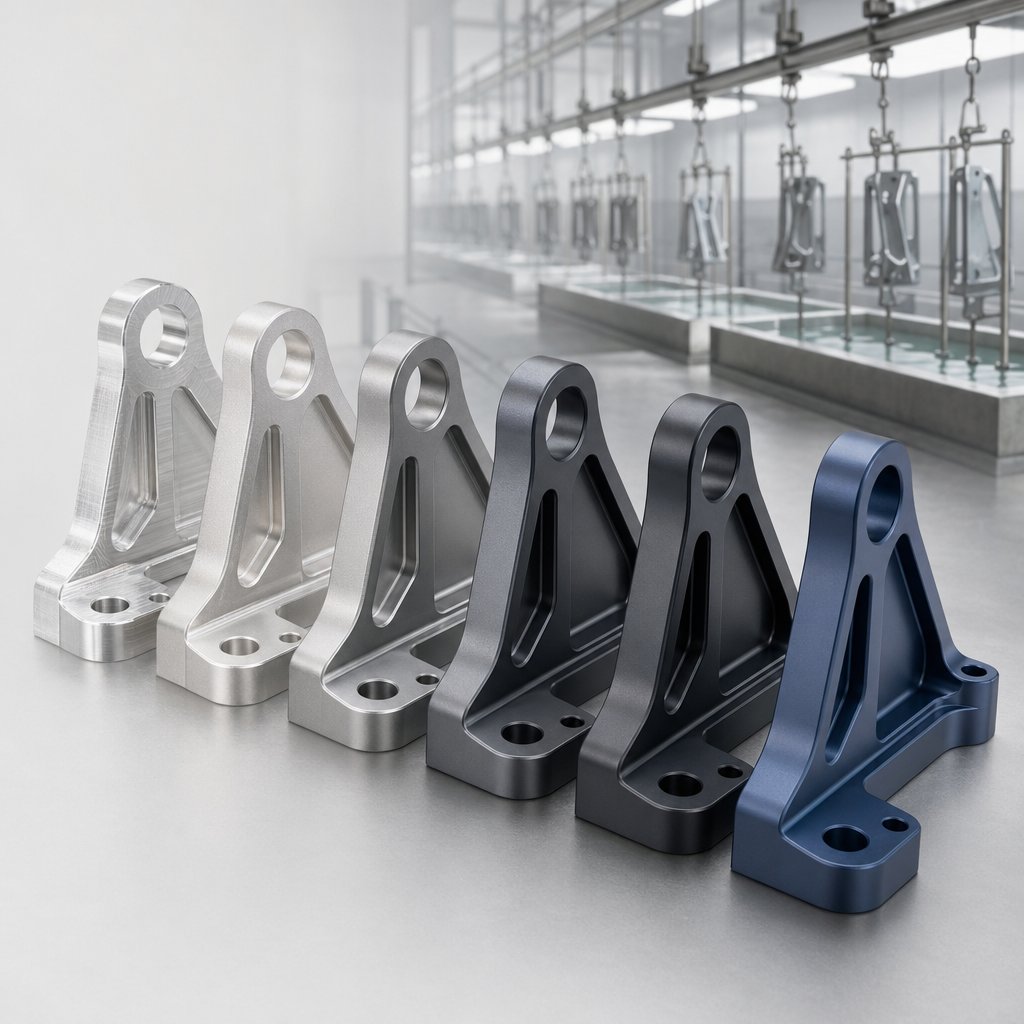
That insulating outer skin is not a separate film glued onto the part. It is a controlled oxide layer grown from the aluminum itself. In simple terms, that is what does anodized mean.
What does anodized aluminum mean? It means the part has gone through an electrochemical process that thickens aluminum's natural oxide into a tougher surface. Xometry describes anodizing as a way to make that oxide layer thicker and more ordered, while Geomiq notes that the finish is formed from the aluminum substrate itself rather than applied like paint or plating.
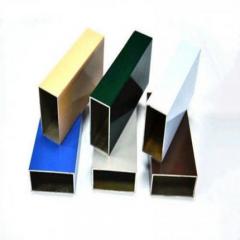
That distinction explains why anodizing is so widely used. The oxide layer helps improve corrosion resistance, wear resistance, and long-term appearance. Because the surface is porous before sealing, it can also take dyes for black, bronze, or other decorative finishes. For outdoor products, enclosures, consumer goods, and architectural parts, those are real advantages.
What anodizing adds: protection, durability, easier cleaning, and appearance options.
What anodizing does not automatically preserve: a bare-metal electrical contact surface. A finish can be hard and attractive while still being poor for surface conductivity.
If you have seen the misspelling annodized aluminum, it usually refers to the same process.
So anodizing is best understood as surface engineering, not just coloring. The metal core is still aluminum, but the interface people touch, clamp, probe, or fasten against has changed. That is where conductivity stops being a simple material question and becomes a surface-behavior question.
That tougher finish changes more than appearance. Electrical current does not care that the core is metal if the first thing it meets is oxide.
In bulk form, aluminum is highly conductive. Data compiled by NDE-Ed lists pure aluminum at 3.538E+07 S/m, with an aluminum electrical resistivity of 2.826E-08 ohm-m. Common engineering alloys are still conductive, but usually lower than pure metal because alloying and temper affect electron flow. For example, 6061-T6 is listed at 2.459E+07 S/m and 4.066E-08 ohm-m.
So, how conductive is aluminum? Very conductive in the body of the material, but not identical across every grade. That is why aluminum conductive performance is usually discussed by alloy and temper when engineers care about current carrying, eddy current response, or electrical losses.
On a real part, though, current rarely starts in the middle of the metal. It starts at a probe tip, screw head, spring contact, bus bar, or grounding lug. That contact point is where anodizing changes the story.
Anodizing does not remove the metal's bulk conductivity. It changes the interface. The outer layer becomes aluminum oxide, also called alumina. As a useful reference for its insulating nature, Unipretec describes alumina as a substrate material for electronics and notes a typical dielectric constant of 9.0 to 10.0. That does not give a simple DC resistance number for every anodized coating, but it helps explain why the surface behaves more like an insulating ceramic barrier than exposed metal.
In practice, the base aluminum underneath can still carry current well. The challenge is getting current through the oxide at the surface. If a connector lands on that layer, contact resistance rises. If the oxide is broken, masked, removed, or bypassed at a specific point, continuity can return. That is why the right question is not only what the part is made of, but where electrical contact must occur.
| Property | Bare aluminum | Anodized aluminum |
|---|---|---|
| Bulk metal conductivity | High, depends on alloy and temper | Underlying metal remains high and unchanged |
| Surface conductivity | Generally conductive when clean metal is exposed | Usually insulating at the outer oxide surface |
| Contact resistance | Lower when metal-to-metal contact is achieved | Higher unless the oxide is penetrated or removed at the contact point |
| Corrosion behavior | Less protected surface | Improved protection from the anodic oxide layer |
| Typical design implication | Better for whole-surface electrical continuity | Better for wear and corrosion resistance, but conductive paths must be planned |
That difference between bulk behavior and surface behavior is where many specification mistakes begin. And the interface is not fixed. Coating type, thickness, sealing, and color can all push the surface further away from easy electrical contact.
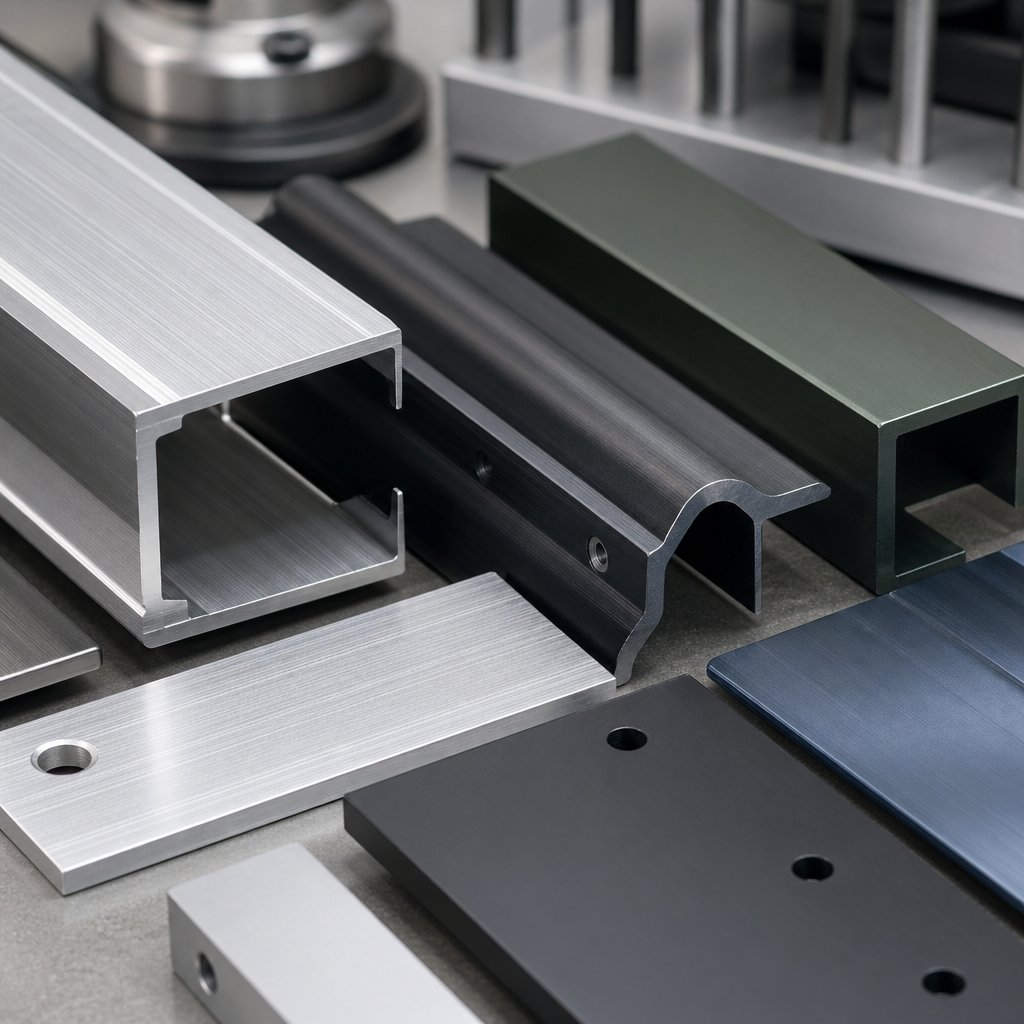
In practice, not every anodized surface blocks electricity in quite the same way. The oxide is still an insulator, but process choice changes how thick, dense, porous, and durable that barrier becomes. That is where many spec mistakes start. A buyer may ask for anodizing for corrosion resistance and appearance, while an engineer quietly needs an electrical path at a bracket, thread, or mounting face.
DeFelsko groups the three common aluminum anodizing families as Type I chromic anodizing, Type II sulfuric anodizing, and Type III hard anodizing. From a conductivity standpoint, the useful way to compare them is by relative surface barrier effect, not by assuming any of them leaves a reliably conductive outer skin.
| Anodizing type | Typical thickness from reference | Relative surface conductivity behavior | Durability and corrosion performance | Wear resistance | Common fit by application |
|---|---|---|---|---|---|
| Type I, chromic | 0.02 to 0.1 mil | Least insulating of the three in relative terms because it is the thinnest, but still not a surface to assume conductive | Functional coating with less effect on fatigue strength | Lower than hardcoat | Military and aerospace parts, especially complex shapes |
| Type II, sulfuric | Up to 1 mil | Moderate barrier effect; common decorative and protective finish, but contact resistance is still a real concern | Corrosion resistant and very durable | Good for general service | Architecture, aerospace, manufacturing, automotive, computers |
| Type III, hard anodized | 0.5 to 4 mils | Strongest insulating tendency at the surface in relative terms because the coating is thicker and denser | Excellent corrosion resistance, color fade resistance, and dielectric strength | Highest wear and abrasion resistance | Food packing equipment, photocopier rolls, storefronts, windows, other hard-use parts |
If you are comparing type ii anodizing conductivity with hardcoat, the usual spec logic is simple. Type II is often easier to work around at a planned contact point than Type III. Hardcoat is built to be tougher, denser, and more wear resistant, so it is also less forgiving when you need current to pass through the finished surface.
Thickness is only part of it. The reference notes that anodizing process parameters strongly influence the oxide that forms. Lower temperatures and acid concentrations can produce a harder, less porous coating. Higher temperatures, higher acid content, and longer immersion can produce a softer, more porous one. So an anodized finish on aluminum is never just a color callout. The process recipe shapes the interface your connector, screw, or test probe actually touches.
Sealing changes that interface again. Unsealed anodic layers are porous, which is why sulfuric anodizing can accept dyes. Sealing improves corrosion resistance by converting and closing that porous outer structure. That is excellent for durability, but it can also make the surface a poorer place to expect easy metal-to-metal electrical contact. Dyed parts, including black anodized surfaces, should be read the same way: color is a cosmetic choice, while the sealed oxide underneath still governs contact behavior.
If you have searched what is hard anodised aluminium, the practical answer is Type III anodizing used when wear resistance matters most. DeFelsko describes hardcoat as a dense outer skin with excellent abrasion resistance and surface hardness up to Rockwell C 70, with common thickness in the 0.5 to 4 mil range and many gray coatings around 2 to 3 mils. Those are great reasons to choose it for abuse-heavy parts. They are also reasons not to assume the surface will behave like bare metal.
That leaves a very practical design question hanging in the air. A part can be perfectly specified for corrosion and wear, yet still fail as a grounding path unless the conductive contact points are planned on purpose.
A ring terminal under a screw head looks like a ground path. Sometimes it is not. The base metal is still conductive aluminum, but the anodized skin can keep a lug, screw head, thread flank, or mating face from making true metal-to-metal contact.
If you ask can anodized aluminum be grounded, the practical answer is yes, but only when the conductive path is planned on purpose. Common shop guidance collected by finishing.com shows several real-world approaches used to create a reliable grounding point on anodized parts rather than relying on the finished surface itself.
The takeaway is simple. An anodized part can absolutely live in a grounded assembly, but the assembly should never assume the whole exterior is electrically continuous.
Threads and fastener joints are where this gets expensive. A bolt may clamp two parts tightly and still give poor continuity if both contact faces are still anodized. In the same finishing.com discussion, star washers are mentioned as a possible way to break through thin anodize, but only as a limited option, not as a rule you should blindly build into every spec.
That is why many manufacturers treat critical interfaces as nonconductive until they are intentionally protected, masked, or reopened. Guidance from Echo Engineering highlights the same problem areas on finished enclosures: grounding points, mating surfaces, and threaded holes. Even a thin finish in the wrong place can trigger failed conductivity checks, sealing issues, assembly trouble, or rework.
If you see the same question phrased globally as aluminium conductive, the engineering answer does not change: continuity lives at the interface. When only a few isolated points need to conduct, anodizing can still be a smart finish. When broad surface conductivity matters, finish selection itself becomes the bigger design decision.
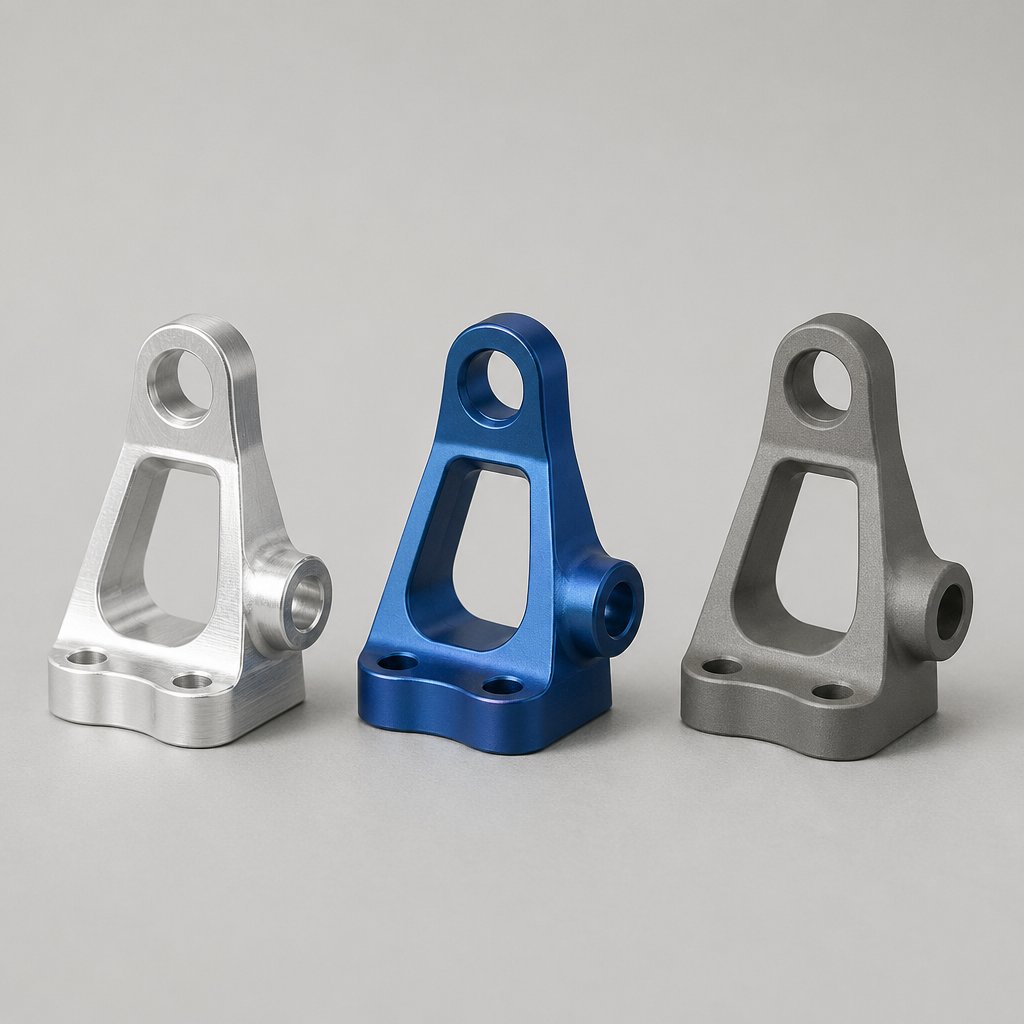
Finish choice gets clearer when you stop asking which option is most familiar and start asking what the surface must actually do. Armoloy notes that aluminum itself offers excellent electrical and thermal conductivity, but its natural corrosion resistance only goes so far in tougher environments. From there, the three common directions are very different. Bare aluminum favors direct metal contact. Anodizing favors protection, hardness, and appearance. Conductive oxidation, which in practice usually means chromate conversion coating or chem film, favors electrical continuity with lighter surface protection.
That is why spec sheets often compare anodizing against Alodine, a common trade name for chem film. If you are wondering is alodine conductive, the practical answer is yes relative to anodizing, which is exactly why engineers use it on grounded or EMI-sensitive assemblies. SendCutSend describes chem film as the better fit where electrical or thermal conductivity matters, while JCProto explains that MIL-DTL-5541 Class 3 is specifically intended to maintain low contact resistance.
| Finish option | Conductivity behavior | Corrosion resistance | Durability and wear | Appearance | Common use-case fit |
|---|---|---|---|---|---|
| Bare aluminum | Best chance of direct metal-to-metal contact when the surface is clean or freshly exposed, though a natural oxide still forms over time | Baseline only; naturally resistant to a point, but often not enough for harsher service | No added surface hardening; easier to scratch and wear | Raw metallic look that may show fabrication marks and later oxidation | Protected interiors, machined contact areas, prototypes, or parts that will receive another finish later |
| Anodized aluminum | Core metal remains conductive, but the outer aluminum oxide layer is insulating, so surface continuity should not be assumed | Strong corrosion protection | More durable and more wear resistant than bare aluminum; hard anodizing increases this further | Best cosmetic range, including clear and dyed finishes such as black anodized aluminium | Architectural parts, consumer housings, visible components, and wear-prone surfaces |
| Conductive oxidation, usually chromate conversion or chem film | Selected when electrical continuity matters; the conversion layer is much thinner than anodizing and preserves much better contact behavior | Improves corrosion resistance, but generally not as robust as anodizing by itself | Functional and thin, but less durable in abrasion or sliding service | Usually clear or yellow-brown, with far fewer decorative options | Grounding points, EMI-sensitive enclosures, heat sinks, painted parts, and tight-tolerance assemblies |
The big takeaway in anodized aluminum vs alodine conductivity is that these finishes solve different problems. Anodizing deliberately builds a tougher oxide surface, so it is the better answer when appearance, corrosion protection, and wear resistance lead the spec. Chem film is usually chosen when the surface still needs to participate in grounding, shielding, or low-resistance contact. Bare aluminum can work when you need exposed metal and the environment is forgiving, but it gives you the least help with long-term protection.
So the right call depends on what failure you are trying to avoid. Cosmetic wear and outdoor exposure push you toward anodizing. Contact resistance, EMI continuity, paint pretreatment, or precision-fit concerns often push you toward chem film. On paper, that comparison looks tidy. In actual products, the deciding factor is usually the job the part is doing, and whether surface insulation is helping or hurting it.
The tradeoff is simple, but it matters: the same oxide layer that protects aluminum can also interrupt the electrical path at the surface. That makes anodizing a very smart finish in some products and a poor default in others.
Anodizing is a strong fit when corrosion resistance, wear life, and durable appearance matter more than whole-surface conductivity. Xometry notes that anodized aluminum is commonly used on electrical enclosures, boats, outdoor furniture, and architectural cladding because the coating improves protection and acts as an insulator. PTSMAKE also highlights black anodized aluminum for electronics housings, optical components, tactical gear, and architectural trim where durability, low reflectivity, or premium appearance are part of the job.
Trouble starts when the finished surface itself is expected to carry ground, shielding, or low-resistance contact. Broad mating faces, threaded interfaces, grounding lugs, and clamp points all depend on reliable contact resistance, not just on the fact that aluminum underneath is conductive. In some RFQs, aluminum black anodized is really a visual request, not an electrical one.
So, when to use anodized aluminum comes down to function. Use it when protection, appearance, and controlled insulation help the assembly, and when conductive contact can be created only where required. If current has to pass easily across the finished surface, that requirement needs to be written into the specification itself. At that stage, masking notes, contact-area planning, and supplier capability start carrying as much weight as the finish name.
That final specification step is where many good designs either stay reliable or quietly pick up rework. If only a few pads, threads, or mounting faces need continuity, your drawing has to say so. A generic note like clear anodize, black finish, or even anodised aluminum does not tell the finisher where metal must remain available for contact.
Ruixing MFG highlights a critical reality: anodizing requires conductive contact between the part and the rack, so at least one contact point or rack mark is unavoidable, and the touched area remains uncoated. That makes conductivity planning part of the print, not a shop-floor guess.
Supplier capability matters because racking, masking, packaging, and post-finish handling all affect the final part. Bonnell Aluminum shows the kind of questions worth asking, including whether a source offers custom racking, small-parts anodizing, post-assembly anodizing, or job-shop support. Those details help reveal how well a supplier can control contact-point placement and repeat it consistently.
As one real-world example, Shengxin Aluminium combines extrusion manufacturing with in-house anodizing support. For custom profiles that need both a durable finish and planned conductive points, that integrated model can make design review and finish control easier to manage.
So the practical answer never changes: the aluminum underneath may conduct, but the finished part only conducts where the specification deliberately makes room for it.
Usually no. The anodized outer layer behaves like an insulating barrier, so a probe, lug, or connector touching only that finish may show poor continuity. The aluminum under the coating still conducts well, but current should not be assumed to pass through the finished surface.
In normal engineering use, aluminum oxide is treated as an insulator. That is why anodizing changes electrical behavior so much: it grows a tougher oxide layer on top of a conductive metal. The result is better corrosion and wear performance, but much higher resistance at the contact point.
Yes, if the ground path is created deliberately. Common methods include masking a ground pad before anodizing, removing the finish from a small contact area afterward, or routing continuity through dedicated hardware that reaches bare metal. The key is to verify grounding at the intended feature, not assume the whole exterior is electrically continuous.
No, not reliably. A fastener may clamp tightly and still leave the oxide layer between the contacting surfaces, especially on sealed or hard anodized parts. If threads, washer lands, or mating faces must carry current, they should be identified on the drawing for masking, post-machining, or selective coating removal.
If low contact resistance across the surface matters most, Alodine or another conductive conversion coating is usually the better fit. If you need anodized durability and appearance plus only a few planned conductive points, the specification should separate those needs clearly. For custom extrusion projects, working with a manufacturer that can coordinate extrusion, masking, racking, and in-house anodizing, such as Shengxin Aluminium, can reduce risk and help keep those contact points consistent.



 Onlineservice
 0086 136 3563 2360
 sales@sxalu.com
 +86 136 3563 2360
 Deutsch
 English
 français
 русский
 español
 português
 العربية
 ไทย
ไทย Việt
Việt Українська