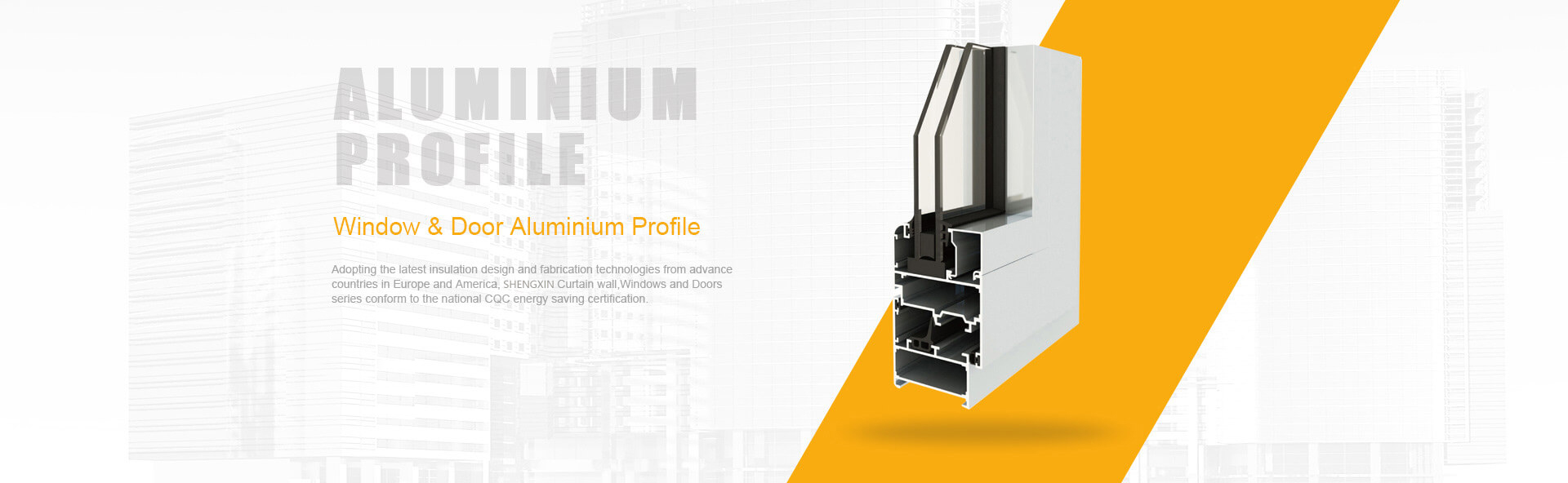
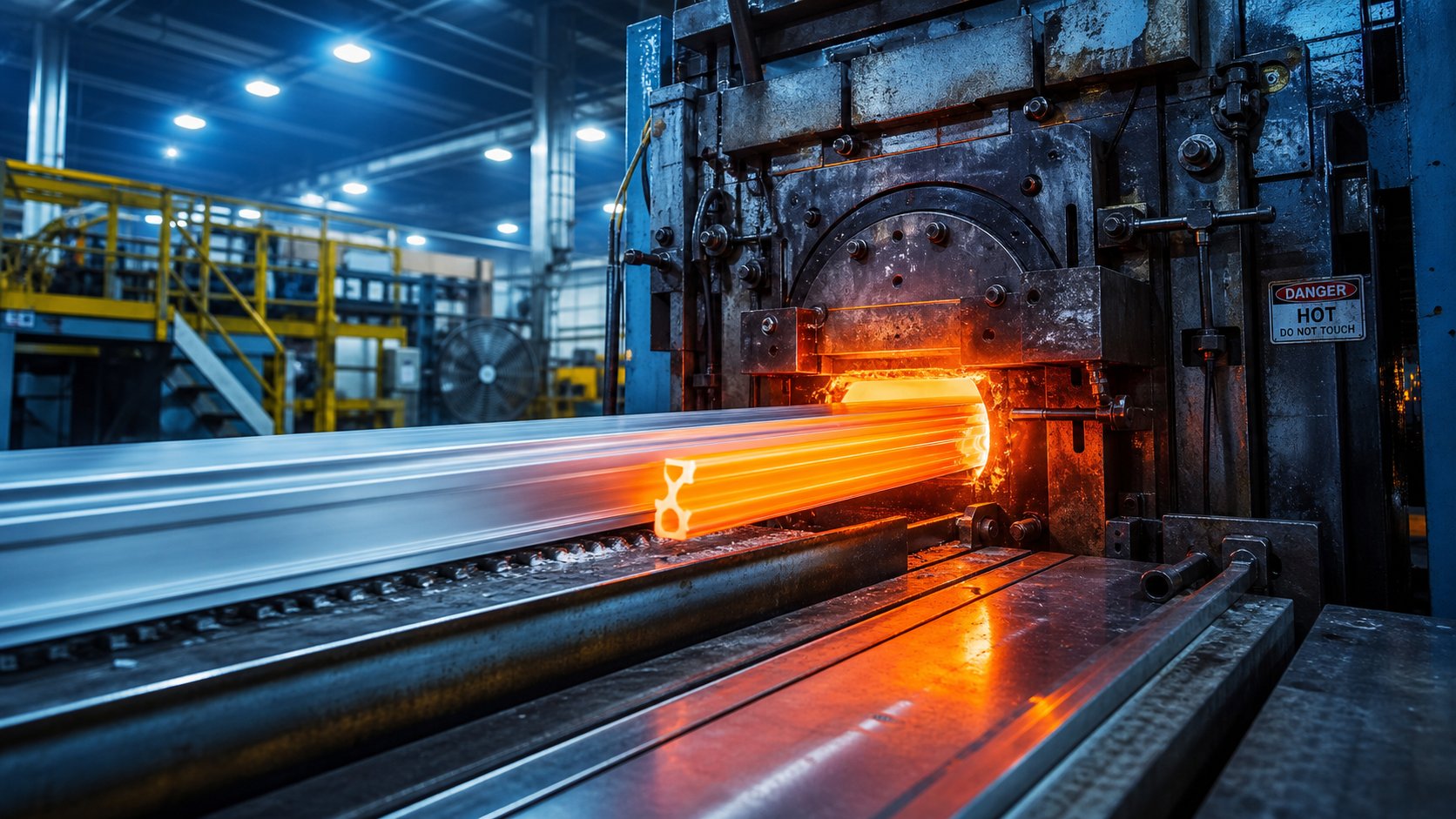
When you're sourcing custom aluminum extrusions for your project, the first question on your mind is probably: "What's this going to cost me?" Unfortunately, finding a straight answer can feel like navigating a maze. Most manufacturer websites offer vague promises of "competitive pricing" without giving you real numbers to work with.
Here's the reality: custom aluminum extrusion costs aren't a simple line item. They're a combination of tooling investments, material choices, processing requirements, and finishing specifications that all interact to determine your final quote. Understanding these components puts you in a stronger position when evaluating suppliers and managing your project budget.
Standard aluminum profiles come off the shelf at predictable prices because manufacturers produce them in bulk using existing dies. You pay for the material, basic processing, and minimal overhead. Custom extrusions? That's a different story entirely.
When you order custom profiles, you're paying for dies machined specifically for your design, specialized setup time, and production runs tailored to your specifications. According to industry data, custom aluminum profiles typically cost 30% to 50% more than standard options upfront. However, this premium often makes sense when your project demands unique geometries, specific tolerances, or optimized material distribution that standard profiles simply can't deliver.
Unlike commodity aluminum products with fixed market prices, custom extrusion costs depend on a complex interplay of design choices, production volumes, and secondary operations that can vary significantly from one project to the next.
So what exactly are you paying for when you order custom profiles? Your investment typically covers five core areas: die tooling, raw aluminum material, the extrusion process itself, surface finishing, and any secondary operations like machining or assembly preparation.
The challenge is that these factors don't operate in isolation. A complex hollow profile increases your die costs, but it might reduce secondary machining expenses by integrating features directly into the extrusion. Similarly, ordering larger volumes drives down your per-unit costs as tooling expenses get distributed across more parts.
This guide cuts through the ambiguity. You'll learn exactly how each cost component works, what drives prices up or down, and how to structure your project for maximum value. Whether you're budgeting for a prototype run or planning high-volume production, you'll walk away with actionable frameworks for estimating costs and comparing supplier quotes on equal footing.
Now that you understand why custom aluminum extrusion pricing differs from standard profiles, let's examine exactly where your money goes. Every quote you receive reflects a combination of five distinct cost components, each contributing a different percentage to your total investment. Knowing these percentages transforms you from a passive buyer into an informed negotiator.
When you break apart a custom extrusion aluminum quote, you'll find the same five building blocks every time. The proportions shift based on your specific project, but understanding the typical ranges gives you a powerful benchmark for evaluating whether a supplier's pricing makes sense.
| Cost Component | Estimated Share of Total Cost | Description | Buyer Influence Level |
|---|---|---|---|
| Raw Aluminum Material | 60-75% | Commodity cost based on LME or SHFE rates, plus alloy premiums | Low to Moderate |
| Extrusion Processing | 15-25% | Heating, press operation, cooling, shearing, and basic cutting | Moderate |
| Surface Finishing | 5-15% | Anodizing, powder coating, PVDF, or specialty treatments | High |
| Tooling and Dies | Variable (amortized) | One-time die fabrication cost spread across production volume | High |
| Secondary Operations | 15-40% (when required) | CNC machining, drilling, tapping, bending, welding, assembly | High |
Notice something important? Raw material dominates the equation, representing 60-75% of your total cost for standard custom extruded aluminum profiles. This percentage reflects aluminum's status as a globally traded commodity, with prices fluctuating daily on the London Metal Exchange and Shanghai Futures Exchange. As of 2025, LME aluminum trades around $2.52-$2.53 per kilogram, forming the baseline for every extrusion quote you receive.
Understanding percentages is helpful, but grasping how these factors interact reveals where your real leverage lies.
Raw Material Costs: You have limited control here since aluminum pricing follows global commodity markets. However, your alloy selection matters significantly. Choosing standard 6063 aluminum keeps you at baseline pricing, while stepping up to 6061 adds 10-20% to material costs. Aerospace-grade alloys like 7075 can push material costs 40-60% higher.
Extrusion Processing: This component covers everything from billet heating to press operation and initial cutting. Larger production runs reduce your per-unit processing costs because setup time gets distributed across more pieces. Complex profiles requiring slower press speeds or specialized handling increase this percentage.
Surface Finishing: Here's where you gain significant control. Mill finish costs nothing extra. Basic anodizing adds roughly $0.10-$0.30 per kilogram. Powder coating runs $0.20-$0.50 per kilogram. Premium treatments like PVDF or wood-grain finishes can add $0.50-$1.00+ per kilogram. Your aesthetic and durability requirements directly drive this cost category.
Tooling and Dies: Die costs represent a fixed investment that gets amortized across your production volume. Order 100 units and tooling significantly impacts your per-piece cost. Order 5,000 units and that same tooling expense becomes nearly invisible on a per-unit basis. This creates one of your strongest cost optimization opportunities.
Secondary Operations: CNC machining, drilling, tapping, and assembly work can sometimes equal or exceed your base extrusion cost. According to industry analysis, adding machining and finishing typically increases costs by 15-40% beyond base extrusion pricing. Smart profile design that integrates features directly into the extrusion reduces downstream machining requirements.
The compounding effect matters too. A custom aluminum extrusion project requiring a complex die, premium alloy, specialty finish, and extensive machining stacks cost increases across multiple categories. Conversely, simplifying any single factor creates savings that compound through your entire project budget.
With this cost framework in hand, you're ready to examine each component in greater depth. Let's start with the factor that often surprises buyers most: the upfront investment in tooling and dies.
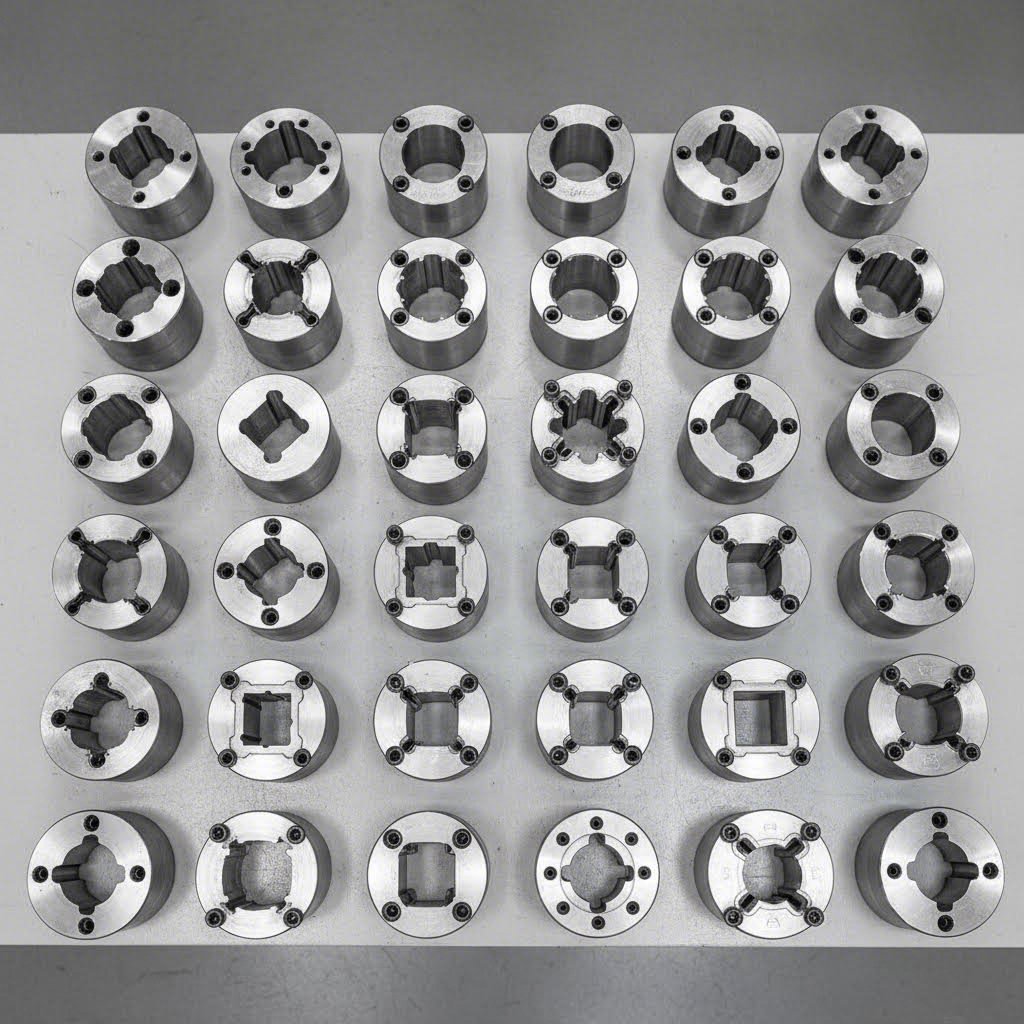
The aluminum extrusion die represents your single largest upfront investment in any custom project. Unlike material costs that scale linearly with volume, tooling is a fixed expense you'll pay whether you order 500 pieces or 50,000. Understanding what drives die pricing and how to amortize that investment effectively can mean the difference between a project that makes financial sense and one that doesn't.
Imagine two profiles: a simple rectangular tube and an intricate heat sink with multiple internal fins and mounting channels. Both require custom dies, but the cost difference between them can be dramatic. According to Profile Precision Extrusions, most custom dies fall between $1,250 and $1,950 depending on profile type. However, highly complex designs can push well beyond these ranges.
The relationship between geometry and cost comes down to machining time and engineering requirements. A solid die for a basic angle or channel requires only a single cavity cut into the die block. A hollow profile like a tube demands a mandrel and bridge assembly that must be precisely aligned to shape internal features while maintaining structural integrity during the extrusion process.
Here's how different die types typically compare in cost:
| Die Type | Structure | Typical Cost Range | Common Applications |
|---|---|---|---|
| Solid Die | One-piece, no bridge or mandrel | $300 - $800 | Angles, channels, flat bars |
| Semi-Hollow Die | Narrow openings, partial bridge | $800 - $1,500 | Mounting brackets, C-channels |
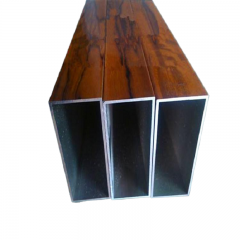
| Hollow Die | Mandrel and bridge assembly | $1,000 - $3,000 | Tubes, square hollow sections |
| Multi-Cavity Die | Multiple cavities in one die | $1,500 - $5,000+ | LED housings, fins, rail clips |
What specific features drive die costs higher? Several factors compound to increase the complexity and price of your aluminium extrusion die:
The alloy you're extruding also affects die longevity and indirectly impacts your tooling economics. Soft alloys like 6063 extrude smoothly and minimize die wear. Harder alloys such as 6082 or 7075 require higher extrusion pressures and can reduce die life by up to 30% due to accelerated wear.
Here's where volume becomes your most powerful cost lever. A $2,000 die for aluminum extrusion might seem expensive when you're ordering 200 pieces, adding $10 per unit to your costs. Order 10,000 pieces and that same die contributes just $0.20 per unit.
Consider this amortization example for a hollow die costing $2,000:
| Production Volume | Die Cost Per Unit | Impact on Total Part Cost |
|---|---|---|
| 200 units | $10.00 | Significant - may dominate pricing |
| 1,000 units | $2.00 | Moderate - still notable in quotes |
| 5,000 units | $0.40 | Minor - becomes background cost |
| 20,000 units | $0.10 | Negligible - nearly invisible |
But volume isn't the only amortization factor. Die lifespan matters too. A well-designed solid die can typically produce 20,000 to 50,000 kg of extruded aluminum before requiring replacement. Hollow dies generally last for 10,000 to 30,000 kg depending on the profile complexity and alloy hardness. When planning multi-year production, understanding these lifecycles helps you budget for eventual die replacement.
Smart buyers also consider die design choices that extend longevity. Working with your supplier during the design phase to avoid abrupt transitions, maintain consistent wall thickness between 1.2mm and 2.5mm, and use symmetrical shapes where possible reduces stress concentrations that accelerate die wear. These design-for-manufacturing principles don't just lower initial die costs—they reduce your replacement frequency and keep production running smoothly.
One final consideration: lead times for die production typically run 7 to 20 days depending on complexity. Some suppliers complete simpler dies in 3 to 5 weeks with sample extrusions shipping about 2 weeks after die completion. Factor these timelines into your project planning to avoid rush charges that can significantly inflate your tooling investment.
With tooling costs demystified, the next major decision affecting your quote involves material selection. Your alloy choice influences not just the aluminum you're buying, but also die wear, extrusion speeds, and the finishing options available to you.
You've invested in custom tooling and understand how die complexity shapes your upfront costs. Now comes a decision that affects every kilogram of aluminum flowing through that die: which alloy do you actually need? This choice directly impacts your material costs, processing efficiency, and long-term product performance.
Here's what makes alloy selection tricky: picking the cheapest option might cost you more in the end. Choosing an overengineered alloy wastes money on capabilities you'll never use. The sweet spot lies in matching alloy properties to your actual application requirements while keeping an eye on how global commodity pricing affects your bottom line.
Most custom aluminium extrusion projects use alloys from the 6000 series, and for good reason. These aluminum-magnesium-silicon alloys deliver an excellent balance of extrudability, strength, corrosion resistance, and surface finish quality. Within this family, 6063 and 6061 dominate the conversation.
6063 Aluminum: Often called the "architectural alloy," 6063 offers exceptional extrusion quality with smooth surface finishes ideal for visible applications. It costs less than most alternatives and responds beautifully to anodizing and powder coating. You'll find it in window frames, curtain walls, and decorative trim where aesthetics matter as much as function.
6061 Aluminum: When you need more muscle, 6061 steps up with higher strength and better machinability. Expect to pay 10-20% more than 6063 for this enhanced performance. Structural frames, load-bearing components, and applications requiring precision machining typically justify this premium.
How do these common alloys stack up against alternatives? The following comparison helps you match alloy properties to your specific application needs:
| Alloy Type | Average Cost (USD/kg) | Key Properties | Best Applications |
|---|---|---|---|
| 3003 | $2.50 - $3.00 | Excellent formability, low strength, high corrosion resistance | Decorative panels, roofing, non-structural elements |
| 5052 | $3.00 - $3.50 | Good formability, medium strength, very high corrosion resistance | Marine applications, outdoor cladding, gutters |
| 6063 | $3.20 - $4.00 | Excellent extrusion quality, medium strength, smooth finish | Window frames, curtain walls, architectural profiles |
| 6061 | $3.50 - $4.50 | Balanced strength and machinability, high corrosion resistance | Structural frames, load-bearing components, industrial profiles |
| 7075 | $5.00 - $6.50 | Very high strength, moderate corrosion resistance, limited formability | Aerospace components, high-stress structural applications |
Notice the price spread from bottom to top? Jumping from 3003 to 7075 nearly triples your per-kilogram material cost. That's why understanding your actual performance requirements matters so much. A small aluminum extrusion for interior trim doesn't need aerospace-grade strength. Conversely, a large aluminum extrusion supporting significant loads demands the mechanical properties that justify premium alloy pricing.
So when does spending more on material actually save you money? Several scenarios make premium alloys the smarter choice:
The total cost of ownership perspective matters here. A cheaper alloy that requires thicker walls, additional reinforcement, or more frequent replacement ultimately costs more than a premium alloy engineered for the application from the start.
Unlike die costs that remain fixed, your material costs fluctuate with global commodity markets. Aluminum pricing follows the London Metal Exchange (LME) and Shanghai Futures Exchange, moving daily based on supply-demand dynamics, energy costs, and geopolitical factors.
What does this mean for your project? A quote received today might look different three months from now. Larger orders often lock in pricing, providing budget certainty that smaller purchases can't guarantee. Additionally, suppliers typically add alloy premiums on top of base aluminum prices, with specialty alloys carrying higher premiums that compound market fluctuations.
Minimum order quantities (MOQs) also shape your material economics. According to industry sources, MOQs exist for several practical reasons:
For small aluminum extrusions or prototype quantities, these MOQs can significantly impact per-unit pricing. Some suppliers offer flexibility for initial orders, understanding that proving the design precedes volume production. Others maintain strict minimums that may push small buyers toward standard profiles or alternative manufacturing methods.
The strategic takeaway? When possible, consolidate orders across multiple projects or timeframes to meet MOQ thresholds more efficiently. This approach spreads overhead costs, potentially locks in favorable commodity pricing, and positions you for better per-unit rates.
With your alloy selected and material costs understood, the next major cost variable involves what happens to your extrusion after it leaves the press. Surface finishing options range from minimal-cost mill finish to premium treatments that can add significantly to your project budget.
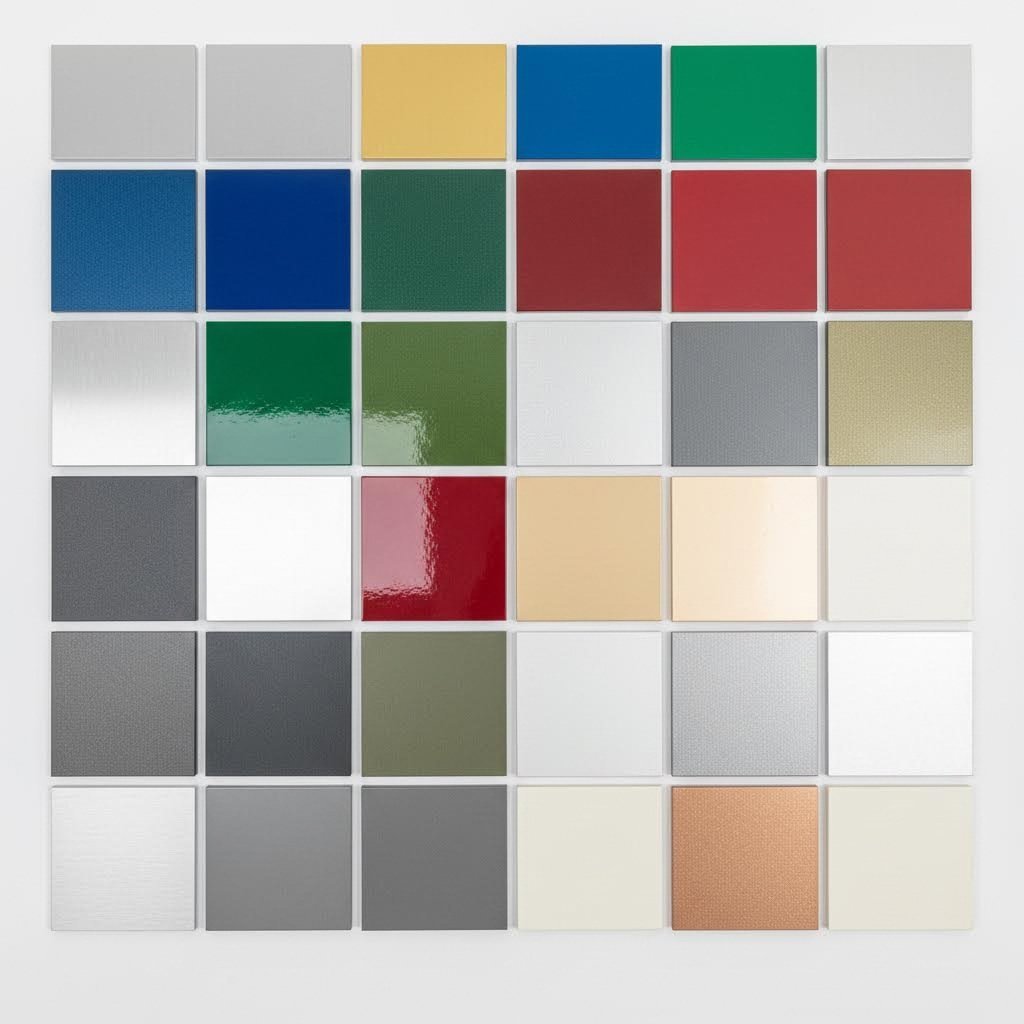
Your custom aluminum profiles leave the extrusion press with a raw mill finish that's functional but rarely final. What happens next—the surface treatment you select—can add anywhere from zero to over a dollar per kilogram to your project cost. More importantly, this decision affects how your profiles perform over their entire service life, making finishing one of the most consequential cost-versus-value tradeoffs in your project.
Think about it this way: a $0.30 per kilogram investment in proper anodizing might prevent thousands of dollars in replacement costs five years down the road. Conversely, specifying premium PVDF coating for an indoor application wastes budget on protection you'll never need. Understanding finish economics helps you invest smartly rather than over-spec or under-protect.
Every surface finish balances three factors: upfront cost, protection level, and aesthetic quality. The table below breaks down your primary options for custom extruded aluminum profiles, giving you concrete numbers to work with when budgeting:
| Finish Type | Cost per kg (USD) | Durability Rating | Key Benefits | Ideal Applications |
|---|---|---|---|---|
| Mill Finish | $0.00 (baseline) | Low | No added cost, natural aluminum appearance | Hidden structural components, temporary installations |
| Anodizing (Type II) | $0.10 - $0.30 | High | Corrosion resistance, color options, electrical insulation | Electronics housings, architectural profiles, consumer products |
| Anodizing (Type III/Hardcoat) | $0.25 - $0.50 | Very High | Extreme wear resistance, surface harder than tool steel | Industrial machinery, aerospace components, high-wear applications |
| Powder Coating | $0.20 - $0.50 | High | Wide color range, UV resistance, impact protection | Outdoor furniture, automotive trim, architectural exteriors |
| PVDF Coating | $0.50 - $1.00+ | Very High | Superior weathering, 20+ year color retention | Building facades, curtain walls, coastal environments |
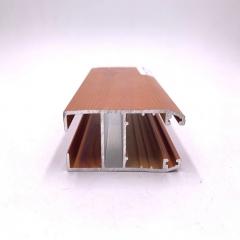
| Wood-Grain/Electrophoresis | $0.50 - $1.00+ | High | Decorative appearance, natural wood aesthetics | Interior design, furniture, residential windows |
Notice the significant jump between basic anodizing and premium finishes like PVDF? That gap represents both the complexity of application and the long-term performance you're purchasing. According to industry cost analysis, surface treatments typically account for 5-15% of total extrusion project costs—a range that widens considerably when you move into specialty finishes.
Anodizing remains the workhorse finish for bespoke aluminium profiles. The process doesn't just coat your aluminum—it electrochemically converts the surface into a dense oxide layer that becomes part of the metal itself. Type II anodizing creates layers typically 0.0002" to 0.001" thick, offering solid corrosion protection and the ability to accept dyes for color customization. Type III hardcoat anodizing produces much thicker, denser oxide layers that can make your aluminum surface harder than tool steel—essential for components facing extreme wear.
Powder coating takes a different approach, electrostatically applying dry powder that cures into a hard, uniform finish. You'll pay roughly $0.12-$0.35 per square centimeter depending on coating type and part complexity. The payoff? Exceptional color variety, strong UV resistance, and impact protection that anodizing can't match. For outdoor applications where color consistency and weathering matter, powder coating often delivers the best value.
PVDF (Polyvinylidene Fluoride) coatings represent the premium tier. These fluoropolymer finishes maintain color integrity and surface protection for 20+ years even in harsh environments. Building facades, curtain walls, and coastal installations justify PVDF's higher cost through dramatically extended service life and reduced maintenance cycles.
Spending more on finishing only makes sense when the application demands it. Here's how to evaluate whether premium options justify their price tag:
Environmental exposure drives finish requirements. Indoor applications rarely need more than basic anodizing or powder coating. Outdoor installations in mild climates perform well with standard powder coating. But coastal environments, industrial settings with chemical exposure, or regions with intense UV require PVDF or hardcoat anodizing to maintain appearance and function over time.
Visible versus hidden components warrant different investments. A structural frame hidden inside a wall assembly needs only corrosion protection—mill finish with clear conversion coating might suffice. Consumer-facing profiles on a premium product justify the color matching and surface quality that Type II anodizing with custom dyes provides.
Maintenance access affects total cost calculations. Custom aluminum profiles installed in difficult-to-reach locations—think high-rise curtain walls or integrated machinery components—benefit from finishes that minimize maintenance frequency. The extra $0.50 per kilogram for PVDF coating looks different when you factor in the cost of scaffolding and labor for recoating every decade versus every three decades.
What drives finishing costs higher beyond the base treatment? Several factors can push your surface treatment expenses well above standard rates:
The total cost of ownership perspective transforms how you evaluate finishing options. A profile with superior corrosion protection lasts longer, needs less maintenance, and avoids the hidden costs of premature replacement. When you calculate finish costs over a 15-year product lifecycle rather than just initial purchase price, premium treatments frequently prove more economical than their budget alternatives.
With surface finishing decisions clarified, you're ready to examine factors that affect your quote beyond the product itself: order volumes, lead times, and the logistics of getting finished profiles to your facility.
You've nailed down your die investment, selected the right alloy, and chosen a surface finish that balances protection with budget. But here's what many buyers overlook: the timing, quantity, and shipping decisions you make can swing your final quote by 15-25% in either direction. These interconnected factors determine whether you're paying premium rates or leveraging your position for better pricing.
Think of volume, lead time, and logistics as three dials on the same control panel. Turn one, and the others respond. Order larger quantities? Your per-unit costs drop, but shipping complexity increases. Need rush delivery? Expect premiums that can erase savings you carefully negotiated elsewhere. Understanding these dynamics puts real money back in your project budget.
Volume remains your single most powerful negotiating tool when working with custom aluminum extrusion suppliers. The economics are straightforward: manufacturers incur fixed setup costs regardless of whether they're running 200 pieces or 20,000. Spreading those costs across more units fundamentally changes your per-piece pricing.
According to industry sources, buyers who order 300 pounds or more can often eliminate setup charges entirely because this quantity represents the optimal threshold for efficient production runs. Below that threshold, you're absorbing overhead that larger buyers avoid.
But volume leverage extends beyond setup fees. Consider how order size affects your position across the entire cost structure:
The minimum order quantity (MOQ) question deserves special attention. Custom extruders establish MOQs for practical reasons: die preparation, quality verification, and production efficiency all require certain minimum volumes to make economic sense. Larger presses capable of handling complex profiles generally demand higher MOQs because their operational costs are proportionally greater.
What if your immediate needs fall below MOQ thresholds? Several strategies help bridge the gap:
Time pressure creates cost pressure. When you need custom aluminium extrusions faster than standard lead times allow, you're asking suppliers to reorganize production schedules, expedite die fabrication, and potentially pay overtime rates. These disruptions carry real costs that flow directly into your quote.
Standard lead times for custom extrusions typically break down into three phases, as industry experts note:
Compressing any of these phases triggers premium pricing. Rush die fabrication might add 25-50% to tooling costs. Expedited production runs that bump other orders carry overtime and scheduling penalties. Air freight versus ocean shipping for international orders can multiply logistics costs by 5-10x.
Shipping itself has become an increasingly significant cost factor. According to recent industry data, shipping prices have risen by as much as 40% for some items. Proper packaging for delicate extrusions adds further expense—but skimping on protection after waiting 90+ days for specialized parts only to have them arrive damaged represents false economy.
Regional sourcing considerations also affect your landed cost. Strategic sourcing analysis has identified significant cost differences between supply regions. Factories in certain locations offer substantially lower conversion costs, but tariff considerations, shipping distances, and lead time implications all factor into the true cost comparison.
When do you actually have pricing power with custom aluminum extrusion suppliers? Understanding your leverage points helps you negotiate more effectively:
The strategic takeaway? Your strongest negotiating position combines volume, flexibility, and relationship building. Buyers who treat suppliers as partners rather than adversaries often access pricing tiers that transactional purchasers never see.
With volume, timing, and logistics strategies in place, you're ready to put everything together into an effective quoting process. Getting accurate, comparable quotes requires knowing exactly what information to provide and what red flags to watch for in supplier responses.
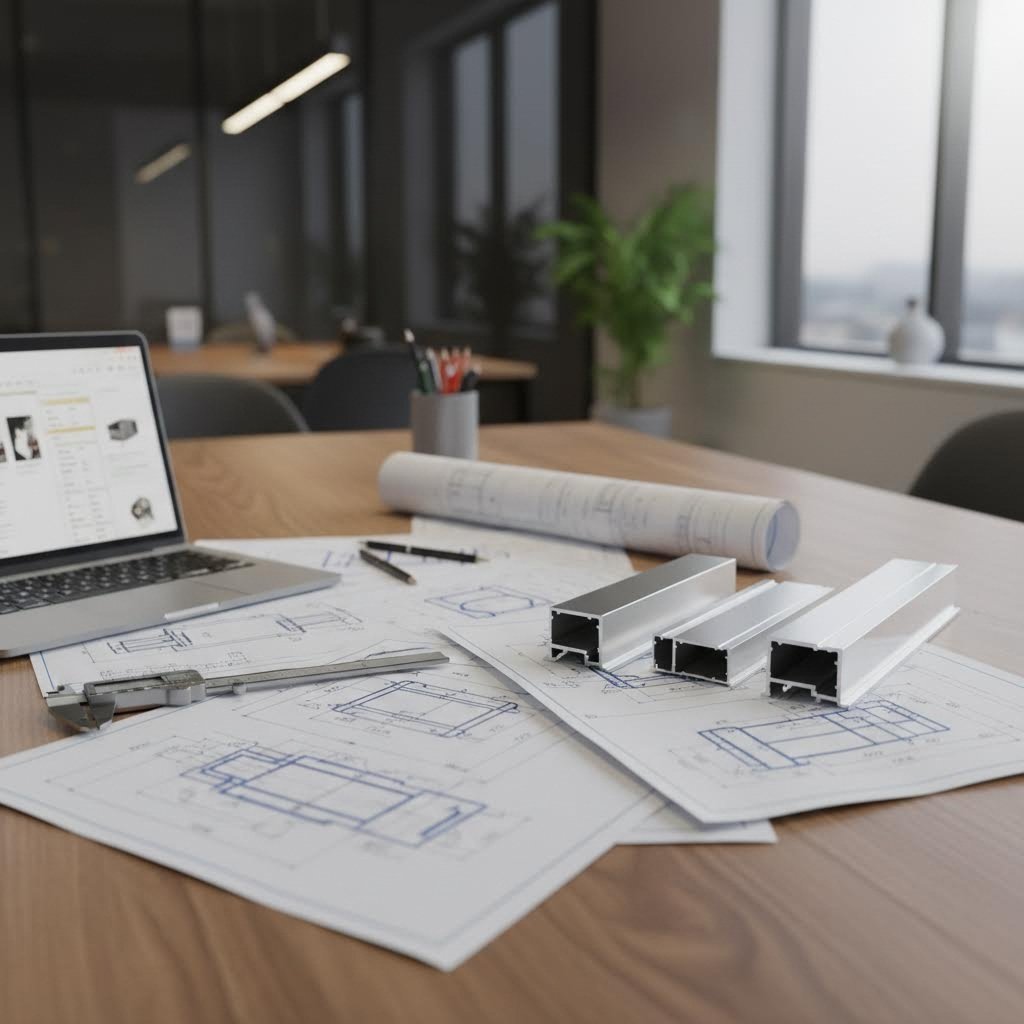
You've done the homework: you understand die costs, alloy pricing, surface finishing economics, and how volume affects your leverage. Now comes the moment of truth—requesting quotes from custom aluminum extruders and making sense of what comes back. This step separates buyers who get accurate, comparable pricing from those who discover hidden costs after the purchase order is signed.
Here's the reality: the quality of your quote request directly determines the quality of responses you receive. Vague specifications invite vague pricing. Incomplete documentation forces suppliers to pad quotes with contingency margins. But walk into the quoting process prepared, and you'll receive aluminum extrusion custom pricing you can actually trust and compare.
Think of your quote request as a blueprint for accurate pricing. The more complete your documentation, the tighter and more reliable your quotes become. Before reaching out to any supplier, gather the following essential information:
According to industry procurement experts, a well-prepared CNC aluminum machining quotation request should include unit price expectations, machining time per part, surface treatment specifications, tolerance levels, MOQ considerations, and clear payment terms. The same principles apply to custom extrusion quotes—completeness drives accuracy.
When quotes start arriving, the real work begins. Two suppliers quoting $4.50 per kilogram might actually represent vastly different total costs depending on what's included—or conspicuously absent—from their pricing.
A transparent quote from a professional supplier typically breaks down costs by component: raw material, machining/processing, surface finishing, inspection, and packaging/logistics. When you receive itemized quotes, you can compare each category directly and identify where pricing differences originate.
What should you look for when reading supplier quotes?
Watch carefully for these red flags that often signal potential cost overruns:
As procurement specialists note, common hidden costs include design modifications after quotation, surface rework due to inconsistent finishing, unplanned tooling changes, and freight surcharges. The best suppliers proactively highlight potential risks and offer alternatives to keep costs under control.
When comparing multiple suppliers, create a standardized evaluation framework. Beyond just unit price, assess ISO 9001 compliance, machine capabilities (5-axis versus 3-axis for secondary operations), whether they run in-house finishing operations, and their communication responsiveness during the quoting process. Even suppliers quoting similar prices can deliver dramatically different long-term value based on quality consistency and partnership reliability.
The right custom extrusion supplier is not the one offering the lowest quote, but the one who helps you minimize total cost over time through transparency, quality, and reliable delivery.
With a solid framework for evaluating quotes, you're positioned to make informed supplier decisions. But what if you need to bring costs down further? The next section explores practical strategies for optimizing your extrusion project costs without sacrificing the quality your application demands.
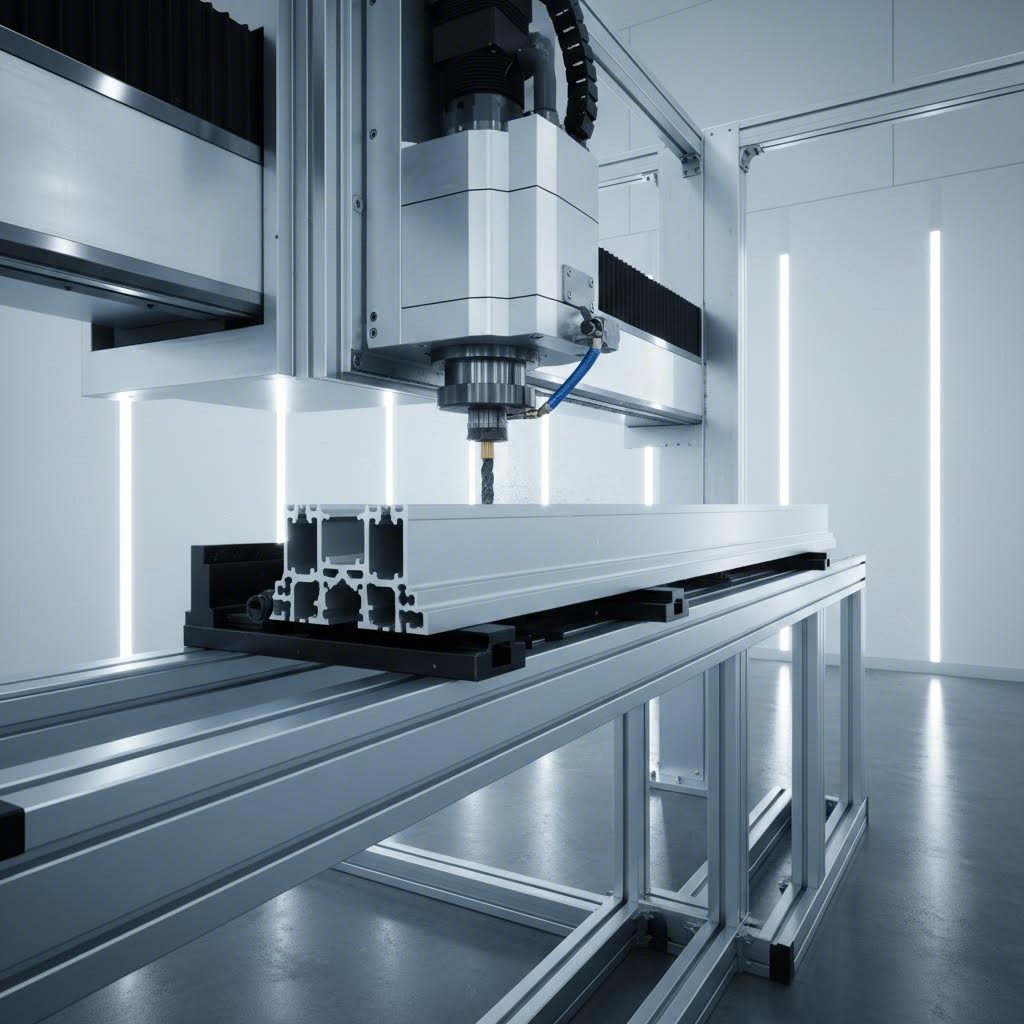
You've learned what drives custom aluminum extrusions cost and how to evaluate supplier quotes. Now comes the question every buyer eventually asks: how do I reduce these costs without compromising the quality my project demands? The answer lies in strategic decisions made early—during design, supplier selection, and order planning—rather than squeezing pennies at the negotiating table.
Here's the good news: cost optimization doesn't mean cutting corners. It means eliminating waste, simplifying complexity where it adds no value, and partnering with suppliers whose capabilities align with your needs. The strategies below have helped procurement teams reduce project costs by 15-30% while maintaining or improving quality outcomes.
Your profile design locks in roughly 70% of your final cost before you ever contact a supplier. Wall thickness, geometry complexity, and tolerance specifications all compound through die costs, material consumption, processing time, and finishing requirements. Smart design choices create savings that cascade through every cost category.
Start with these actionable approaches that consistently deliver results:
The wall thickness decision deserves special attention. Thinner walls reduce material costs proportionally, but they also affect structural performance, die life, and extrusion complexity. Work with your supplier's engineering team to find the optimal balance point for your specific application.
When does custom actually make sense versus modifying standard profiles? This question doesn't get enough honest discussion. According to industry analysis, custom aluminum profiles typically cost 30-50% more than standard options upfront. But that premium often delivers better total value for the right applications.
Standard profiles make sense when:
Custom profiles justify their premium when:
The breakeven analysis matters. Studies show that custom profiles can reduce the need for welding, joining, and post-extrusion operations—savings that offset higher material and tooling costs. For large-scale projects, custom extrusions frequently deliver lower total cost despite higher per-kilogram pricing.
Your supplier choice affects more than unit price. Manufacturers with integrated capabilities—extrusion, finishing, and fabrication under one roof—eliminate the coordination costs, quality variability, and lead time extensions that come from managing multiple vendors.
What capabilities matter most for cost optimization?
As industry sources confirm, having the extrusion mill perform value-added operations like cutting, machining, deburring, and finishing not only reduces overall component cost but greatly simplifies supply chain management. Fewer vendors means fewer purchase orders, receiving inspections, and quality handoff points where problems emerge.
Manufacturers like Shengxin Aluminium exemplify this integrated approach—offering over 30 years of experience, 35 extrusion presses ranging from 600T to 5500T, complete CNC machining centers, and comprehensive surface treatments including anodizing in custom colors, powder coating, PVDF, and micro-arc oxidation. This end-to-end capability enables factory-direct pricing that eliminates middleman markups while ensuring consistent quality from die development through finished parts.
When evaluating potential suppliers, look beyond the quoted price to assess total value:
The strategic takeaway? Cost optimization begins with design decisions, continues through smart custom-versus-standard analysis, and culminates in supplier partnerships that deliver integrated value rather than just low unit prices. Buyers who invest time upfront in these strategic choices consistently achieve better outcomes than those who simply chase the lowest quote.
With these optimization strategies in hand, you're ready to pull everything together into a confident procurement decision. The final section consolidates your cost estimation checklist and positions you to move forward with custom extrusion projects that deliver both performance and value.
You've now walked through every major factor that shapes your custom aluminum extrusion cost—from die investments and alloy selection to surface finishing, volume leverage, and supplier evaluation. But knowing the components isn't the same as confidently making procurement decisions. This final section pulls everything together into an actionable framework you can use immediately.
The lowest quote rarely delivers the lowest total cost. True value comes from understanding total cost of ownership—including tooling longevity, quality consistency, maintenance requirements, and supplier reliability over your project's entire lifecycle.
Before requesting quotes or committing to suppliers, work through this systematic checklist to ensure you've addressed every cost-driving factor:
| Cost Category | Key Questions to Answer | Documentation Needed |
|---|---|---|
| Profile Design | Have you simplified geometry where possible? Are wall thicknesses optimized? | Dimensioned CAD files (STEP/DWG format) |
| Tooling | What die type does your profile require? How will tooling costs amortize across your volume? | Cross-sectional drawings showing hollow areas |
| Material Selection | Which alloy balances your performance needs with budget? 6063 or 6061? | Application requirements and load specifications |
| Surface Finishing | What protection level does your environment demand? Are custom colors required? | Finish specifications with color codes |
| Secondary Operations | What machining, drilling, or assembly work is needed? Can any be eliminated through design? | Fabrication drawings with hole patterns |
| Volume & Timing | Can you consolidate orders to reach MOQ thresholds? Is your timeline flexible? | Quantity requirements and delivery schedule |
| Logistics | What shipping terms deliver best value? Have you factored packaging requirements? | Destination details and handling specifications |
Your journey from initial concept to final purchase order follows a logical progression. Each phase builds on the previous one, creating a decision framework that protects both your budget and your quality requirements:
The total cost of ownership perspective transforms how you evaluate options. A profile that costs $0.20 more per kilogram but lasts twice as long in harsh environments, requires half the maintenance, and arrives with consistent quality from a reliable supplier represents far better value than the cheapest quote that creates headaches for years.
Consider the long-term factors that extend beyond initial purchase price:
Ready to move forward with your custom extrusion project? Start by preparing complete documentation using the checklist above. Request quotes from multiple suppliers, but focus on those offering end-to-end capabilities rather than just competitive unit prices.
The most successful procurement outcomes come from partnering with manufacturers who invest in understanding your application requirements—not just fulfilling purchase orders. Look for suppliers who ask questions about your end use, suggest design optimizations, and demonstrate technical depth from the first conversation.
For buyers seeking factory-direct pricing combined with comprehensive capabilities, manufacturers like Shengxin Aluminium offer the integrated approach that simplifies procurement while protecting quality. With over 30 years of experience, 35 extrusion presses, complete CNC machining centers, and extensive surface treatment options—including custom anodizing colors, powder coating, PVDF, and micro-arc oxidation—they provide end-to-end project support from die development through mass production. Whether you need custom 6063 aluminum tubes, architectural window frames, or complex industrial profiles, this one-stop capability eliminates the coordination challenges and quality variability that come from managing multiple vendors.
The knowledge you've gained through this aluminum extrusion pricing guide positions you to ask better questions, evaluate quotes more effectively, and make procurement decisions with confidence. Your custom profile cost estimation no longer depends on supplier promises—it's grounded in understanding the real factors that drive your quote.
Raw aluminum costs typically range from $1,500 to $3,500 per metric ton based on LME pricing, but custom extrusion costs go beyond raw material. Your total cost includes die tooling ($400-$3,000+), extrusion processing (15-25% of total), surface finishing ($0.10-$1.00+ per kg), and secondary operations. For finished custom profiles, expect $5-$8 per pound depending on complexity and volume, with material representing 60-75% of base costs.
Custom extrusions carry premium pricing due to several compounding factors: unique die tooling that must be machined specifically for your design ($1,250-$3,600+), specialized setup time, lower production volumes that can't amortize fixed costs as effectively, and often tighter tolerances requiring slower press speeds. Labor shortages have further increased costs, as manufacturers struggle to maintain full production shifts. However, custom profiles often reduce total project costs by integrating multiple functions and eliminating secondary assembly operations.
Custom extrusion die costs typically range from $400-$2,000 for standard industrial profiles, with solid dies on the lower end ($300-$800) and hollow dies requiring mandrel assemblies costing more ($1,000-$3,000+). Complex multi-cavity dies or large circumscribing circles can push costs to $5,000 or higher. These are one-time investments that amortize across production volume—a $2,000 die adds $10 per unit at 200 pieces but only $0.40 at 5,000 pieces.
Focus on design optimization first: simplify profile geometry, optimize wall thickness (reducing from 0.050" to 0.040" saves nearly 20% in material), and use symmetrical shapes that extrude more efficiently. Consolidate orders to meet MOQ thresholds and leverage volume discounts. Consider 6063 alloy instead of 6061 for 5-10% productivity gains. Partner with integrated manufacturers like Shengxin Aluminium who offer die development through finishing under one roof, eliminating coordination costs between multiple vendors.
Prepare dimensioned CAD files (STEP or DWG format), exact quantity requirements with projected annual volumes, surface finish specifications with color codes, tolerance requirements distinguishing critical versus standard dimensions, delivery timeline with flexibility noted, secondary operation details including hole patterns and cut lengths, alloy preference, and application context. Complete documentation prevents suppliers from padding quotes with contingency margins and enables true apples-to-apples comparisons between vendors.



 Onlineservice
 0086 136 3563 2360
 sales@sxalu.com
 +86 136 3563 2360
 Deutsch
 English
 français
 русский
 español
 português
 العربية
 ไทย
ไทย Việt
Việt Українська