When you hear about modern vehicles becoming lighter yet stronger, there's a good chance automotive aluminum extrusions are playing a starring role. These precision-engineered components have transformed how manufacturers approach vehicle design, offering a compelling alternative to traditional steel parts. But what exactly are they, and why has the auto alu sector embraced them so enthusiastically?
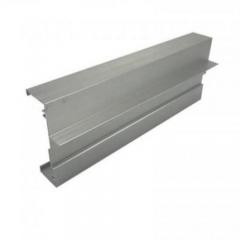
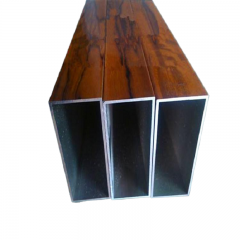
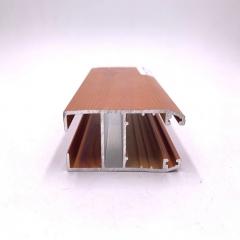
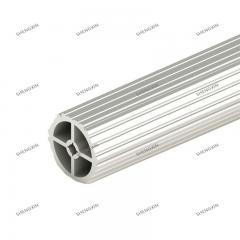
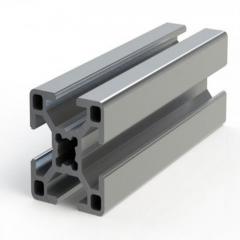
At its core, an automotive aluminum extrusion is a shaped aluminum profile created by forcing heated aluminum through a specially designed die opening. The resulting component maintains a consistent cross-sectional shape throughout its length—perfect for structural elements like bumper beams, door frames, and battery enclosures. This manufacturing method has become indispensable as automakers pursue aggressive weight reduction targets while maintaining safety and performance standards.
The automotive industry's shift toward aluminium auto components stems from a pressing need: reducing vehicle weight to improve fuel economy and extend electric vehicle range. According to industry research, aluminum extrusions can remove up to 40% of body weight compared to steel components—a dramatic reduction that directly translates to better efficiency.
Beyond weight savings, extruded aluminum delivers a unique combination of properties that engineers find invaluable:
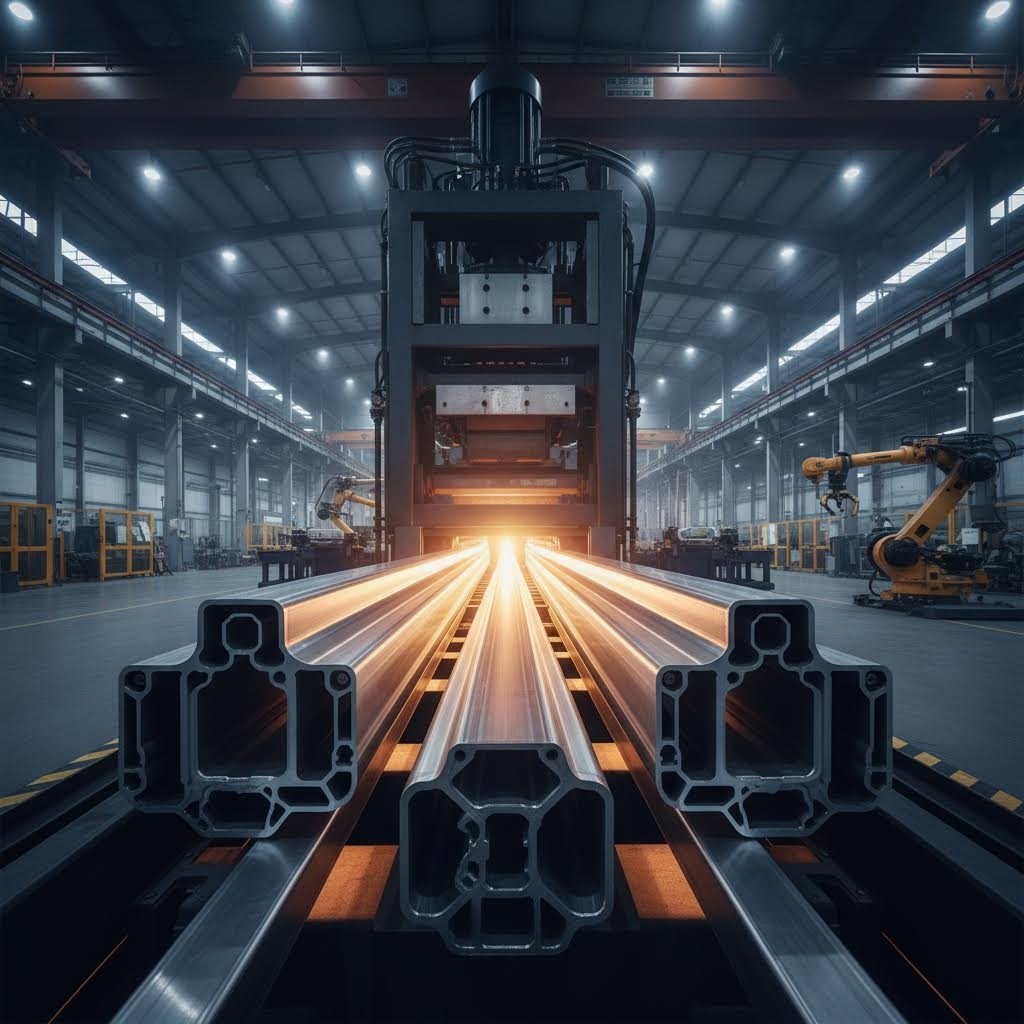
Imagine squeezing toothpaste from a tube—the paste emerges in the shape of the opening. Automotive aluminum extrusion works similarly, but with considerably more precision and force. Here's how it unfolds:
The process begins with a solid aluminum billet—a cylindrical block of aluminum alloy. This billet is heated to a specific temperature that makes it malleable without melting it completely. A powerful hydraulic ram then pushes the heated billet through a steel die containing the desired profile shape. As the aluminum emerges from the die, it takes on that exact cross-sectional geometry.
The press size determines what's achievable. Larger presses can produce bigger, more complex profiles, while temperature control ensures the finished component achieves the right hardness and surface quality. For automotive aluminum applications, this precision is non-negotiable—components must meet exacting tolerances for crash performance and assembly fit.
What makes this process particularly valuable for vehicle manufacturers is its ability to create optimized shapes that maximize structural performance while minimizing material usage. A single extruded profile can integrate features that would otherwise require multiple stamped and welded steel parts, simplifying assembly and reducing potential failure points.
Now that you understand how automotive aluminum extrusions are manufactured, a critical question emerges: which alloy should you specify for your application? This decision shapes everything from crash performance to manufacturing costs—and getting it wrong can derail an entire vehicle program.
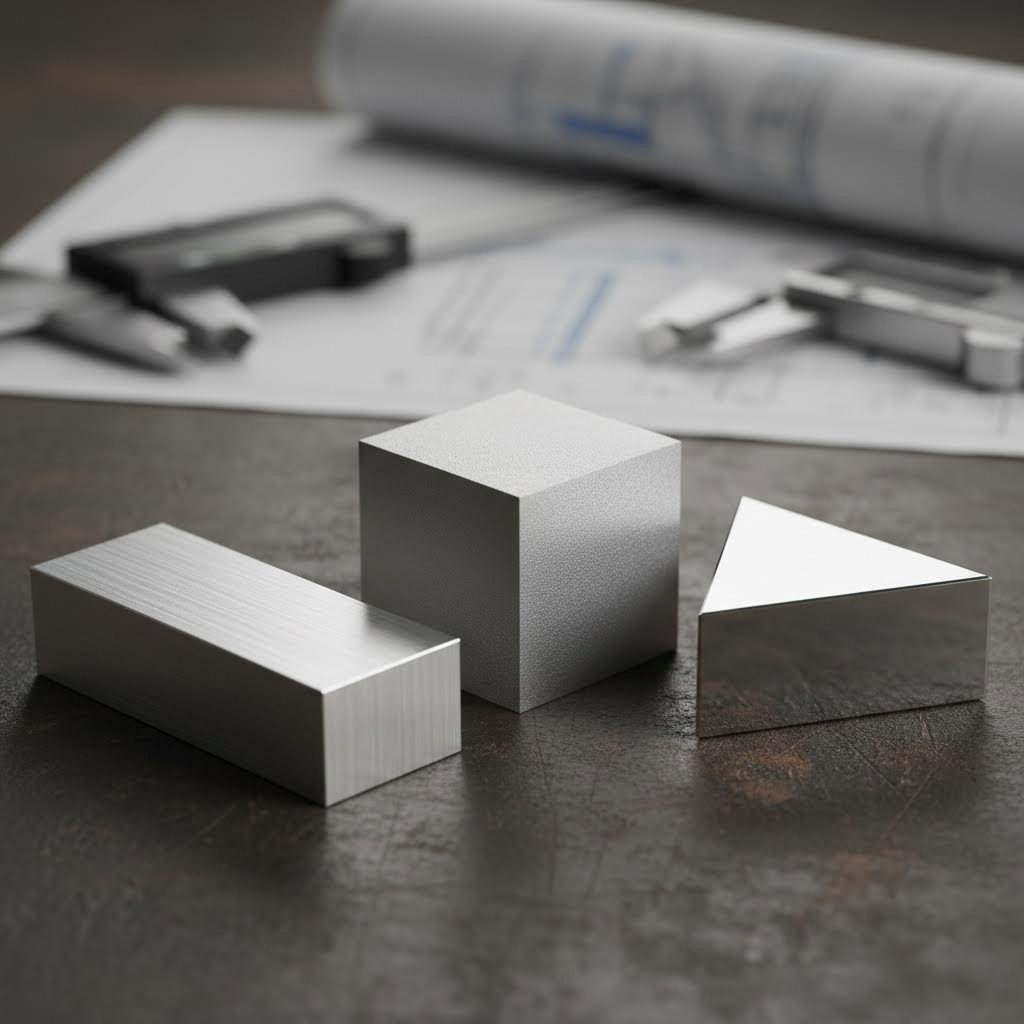
The aluminium automobile industry primarily relies on three alloy families for extruded components: 6063, 6061, and the high-strength 7xxx series. Each brings distinct advantages and limitations that make them suitable for specific applications. Rather than diving into metallurgical theory, let's focus on practical selection criteria you can apply immediately.
When engineers specify aluminum automotive components, they frequently debate between 6063 and 6061 alloys. Both belong to the 6000 series—aluminum-magnesium-silicon alloys known for excellent corrosion resistance and good machinability. However, their performance characteristics differ in ways that matter significantly for vehicle applications.
6063 alloy excels where surface finish and complex profile geometry take priority. Its superior extrudability allows manufacturers to achieve intricate cross-sections with thin walls and tight tolerances. You'll find it in decorative trim, window frames, and interior structural elements where aesthetics matter alongside function. The trade-off? Lower tensile strength compared to its 6061 cousin.
6061 alloy steps up when structural demands increase. According to Protolabs' aluminum comparison guide, 6061 is the go-to material where welding or brazing is required or where high corrosion resistance across all tempers is essential. It's commonly selected for auto aluminum applications including pipelines, structural components, and parts requiring post-extrusion machining. One important consideration: welding 6061 can weaken the heat-affected zone, so post-weld treatment may be necessary for safety-critical applications.
For EV battery frames specifically, industry specifications often call for 6061-T6 or 6063-T5 alloys due to their superior thermal conductivity of 167-201 W/m·K—critical for managing battery cell temperatures within the optimal 20-35°C operating range.
Sometimes 6000 series alloys simply aren't strong enough. That's when the 7xxx series enters the conversation. These aluminum-zinc alloys deliver the highest strength among all aluminum families—making them attractive for weight-critical structural applications.
7075 aluminum, the most common 7xxx alloy, is renowned for its use in aerospace and competitive sports equipment. As noted by Goodfellow's materials guide, the 7000 series offers excellent stress resistance and is heat-treatable, but comes with important caveats for automotive designers.
The limitations are significant:
For automotive applications, 7xxx alloys make sense in specific scenarios: roof rails requiring maximum strength with minimum cross-section, high-performance suspension components, or specialty applications where the strength-to-weight advantage justifies the added complexity and cost.
To simplify your selection process, here's a comprehensive comparison of the most common automotive extrusion alloys:
| Property | 6063-T6 | 6061-T6 | 7075-T6 |
|---|---|---|---|
| Tensile Strength (MPa) | 240 | 310 | 570 |
| Formability/Extrudability | Excellent | Good | Fair |
| Weldability | Very Good | Good (post-weld treatment may be needed) | Poor |
| Corrosion Resistance | Excellent | Excellent | Fair |
| Surface Finish Quality | Excellent | Good | Good |
| Relative Cost | Low | Moderate | High |
| Typical Automotive Uses | Trim, interior structures, decorative profiles | Crash boxes, battery enclosures, structural frames | High-performance suspension, specialty structural parts |
Choosing the right alloy comes down to understanding your specific application demands. Here's a practical decision-making approach:
Start with load requirements. If your component must absorb crash energy or carry significant structural loads, 6061 typically offers the best balance of strength, formability, and cost. For maximum strength in weight-critical applications, consider 7xxx alloys—but only if the weldability limitations are acceptable.
Consider your joining methods. Planning to weld components together? Stick with 6000 series alloys. If mechanical fastening or adhesive bonding is your primary joining approach, 7xxx alloys become more viable.
Evaluate surface finish needs. Components visible to customers or requiring anodizing benefit from 6063's superior surface characteristics. For hidden structural parts, this premium may not be justified.
Factor in thermal requirements. Battery enclosures and thermal management components demand alloys with high thermal conductivity. Both 6061 and 6063 excel here, with thermal conductivity values supporting efficient heat transfer from battery cells to cooling systems.
Don't ignore cost implications. Material cost differences cascade through your supply chain—affecting tooling, processing, and quality control. A 7xxx alloy might save weight, but ensure the total cost equation still works for your program.
With your alloy selection strategy in place, the next step is understanding where these materials deliver the greatest value across different vehicle systems.
So where exactly do aluminium car parts make the biggest difference? From the moment of impact in a collision to the quiet efficiency of an electric powertrain, extruded aluminum profiles are working behind the scenes across nearly every major vehicle system. Understanding these applications helps engineers and procurement professionals identify where this manufacturing approach delivers maximum value—and where alternative solutions might make more sense.
The applications fall into distinct categories, each with unique performance requirements that aluminum extrusions are uniquely positioned to address. Let's explore them systematically.
When a vehicle collides with an obstacle, milliseconds determine outcomes. This is where aluminium auto parts truly shine—their geometry can be precisely engineered to absorb kinetic energy in a controlled, predictable manner.
Consider what happens during a frontal impact. The bumper beam—typically an extruded aluminum profile—receives the initial force. Connected crash boxes then compress in a carefully designed sequence, converting crash energy into controlled deformation rather than transferring it to the passenger compartment. According to the Aluminum Extruders Council, extrusions make up 47% of the sophisticated crash structure in vehicles like the Audi e-Tron.
Key crash management components manufactured from aluminum extrusions include:
Why do extrusions excel here? The answer lies in geometry optimization. Multi-cell hollow profiles can be designed with internal reinforcements that guide collapse patterns. As European Aluminium research demonstrates, multi-cell extrusions with inner reinforcements greatly increase both strength and rigidity, enabling outstanding crash energy performance in both front and side impact situations. A single extrusion can replace multiple stamped and welded steel assemblies—reducing joints, improving consistency, and simplifying quality control.
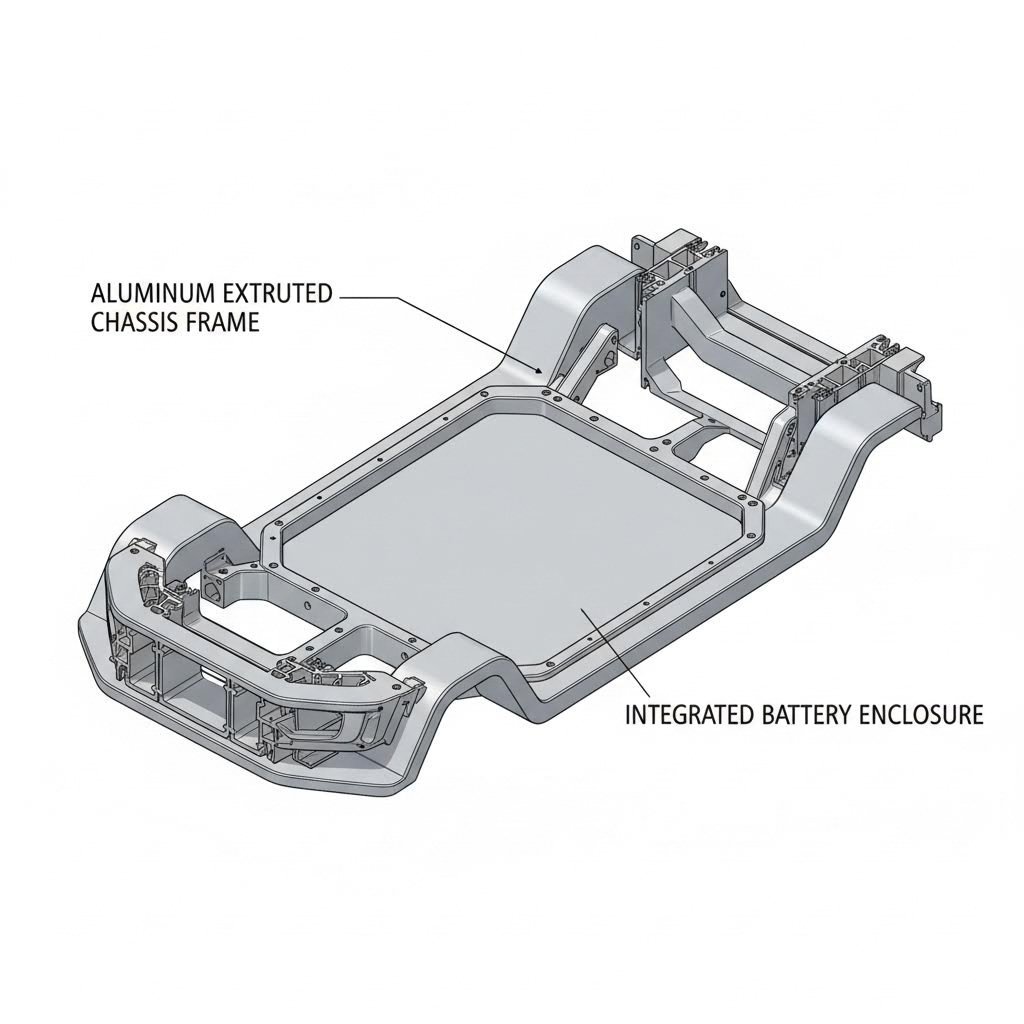
The shift toward electric mobility has created entirely new applications for aluminum in cars—and none is more critical than the battery enclosure. Picture an EV battery pack: a massive assembly measuring roughly 2 meters by 1.4 meters, weighing as much as 700 kg, and representing 22-27% of total vehicle weight. Protecting this asset while managing its thermal behavior demands exceptional engineering.
According to industry data, the battery housing and structure can comprise up to 20% of the battery system's cost and weight. This makes material and manufacturing process selection critically important. Extruded aluminum profiles address multiple challenges simultaneously:
The Mercedes EQS exemplifies this approach—its battery housing uses extrusions for both the lightweight structural frame and the perimeter cooling circuit. Porsche takes integration even further with the Taycan, where engineers explicitly state that "without the battery, the car isn't crash safe." The battery pack contributes approximately 10% of the vehicle's body stiffness while absorbing crash energy that would otherwise reach passengers.
"In a crash, including the side pole crash test, extrusions offer significant protection to the battery system due to strength and energy absorption, with minimal weight."
What makes extrusions particularly effective for battery enclosures? They deliver multiple functions from a single profile:
Beyond crash systems and battery enclosures, extruded profiles contribute to the fundamental vehicle structure. These body-in-white components form the skeleton upon which everything else is built.
Structural body applications include:
The advantages compound when considering assembly. According to European Aluminium, a GM extrusion-based engine cradle reduced part count from 24 steel components to just 17 aluminum parts—simplifying manufacturing while achieving that 32% weight reduction. The ability to place material exactly where needed, with wall thicknesses varying from 3.0 to 20.5 mm within a single assembly, optimizes performance without waste.
Not all applications involve crash forces or structural loads. Aluminum extrusions also excel in thermal management and interior systems where their unique properties solve different engineering challenges.
Thermal management applications:
Interior structural elements:
For instrument panel supports specifically, aluminum extrusions compete with magnesium castings. The choice depends on production volume, required stiffness, and NVH (noise, vibration, harshness) targets. According to European Aluminium documentation, aluminum instrument panel supports typically achieve around 40% weight reduction compared to steel—while meeting stringent structural rigidity requirements for passive passenger safety.
Why does all this matter to vehicle manufacturers? Every kilogram saved translates directly to improved performance metrics:
The design flexibility inherent in extrusion manufacturing enables engineers to optimize profiles for specific load cases. Unlike stamped steel parts constrained by forming limits, extruded sections can incorporate hollow chambers, varying wall thicknesses, and integrated features that would require multiple operations in alternative processes.
Understanding where these applications deliver value is only part of the equation. The next challenge lies in designing profiles that can actually be manufactured—which brings us to practical guidelines for implementing extruded structures successfully.
You've selected the right alloy and identified the perfect application—now comes the real engineering challenge. How do you actually design an extruded profile that can be manufactured consistently, meets structural requirements, and doesn't blow your budget? This is where many automotive programs stumble, and it's the reason experienced suppliers often become invaluable partners early in the development process.
The gap between theoretical possibilities and practical manufacturability is significant. While aluminum extrusion offers remarkable design flexibility, every manufacturing process has constraints. Understanding these parameters upfront prevents costly redesigns and tooling modifications later in your program.
Wall thickness is perhaps the single most critical parameter in extrusion design. Too thin, and you risk distortion during cooling or handling damage. Too thick, and you're adding unnecessary weight and cost. According to the Aluminum Extruders Council design guidelines, the sweet spot depends on your profile geometry and alloy selection.
For aluminum auto parts, practical minimum wall thicknesses typically range from 1.0 mm to 1.5 mm for 6000 series alloys. However, this number isn't absolute—it depends on the relationship between wall thickness and surrounding geometry. Here's what you need to consider:
Corner radii represent another critical consideration. Sharp internal corners concentrate stress in both the die and the finished part. The Aluminum Extrusion Manual recommends rounded corners wherever possible—they ease metal flow during extrusion and strengthen the resulting profile by eliminating stress concentrators.
Every extruded profile fits within a circumscribing circle—the smallest circle that completely encloses the cross-section. This dimension directly determines which presses can produce your part and significantly impacts economics.
According to AEC design guidance, most common profiles are less than 12 inches (305 mm) in diameter, though some extruders can produce shapes up to 32 inches (813 mm). However, economics favor profiles under 8 inches (203 mm) CCD with weights under 3 pounds per foot.
| Press Size (Tons) | Typical Max CCD (inches) | Relative Availability | Economic Sweet Spot |
|---|---|---|---|
| 1,000 - 2,000 | 4 - 6 | Very Common | Small profiles, high volume |
| 2,500 - 4,000 | 8 - 12 | Common | Most automotive structural parts |
| 5,000 - 7,000 | 14 - 18 | Less Common | Large structural members |
| 8,000+ | 20 - 32 | Limited | Specialty applications only |
Why does this matter for your project? Larger presses are less common, meaning longer lead times and potentially higher costs. If your design can be split into smaller profiles that are joined during assembly, you may gain significant flexibility in supplier selection and pricing.
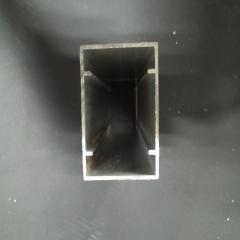
The decision between hollow and solid profiles involves trade-offs that affect tooling cost, structural performance, and secondary operations. Hollow sections—those with enclosed voids—require more complex dies with internal mandrels that form the inside surfaces. This increases tooling investment but enables significant advantages:
Solid profiles make sense when machining will remove significant material anyway, when the cross-section is very small, or when the design doesn't benefit from the structural advantages of hollow geometry. Semi-hollow profiles—those with partially enclosed voids—offer a middle ground with moderate tooling complexity.
The best extruded parts aren't designed in isolation—they're engineered for the complete manufacturing and assembly process. This means considering how your profile will be cut, machined, joined, and installed.
Tolerance capabilities: Standard extrusion tolerances are adequate for most applications and significantly reduce cost compared to special tolerances. Metal dimensions (measured across solid material) hold tighter tolerances than open space dimensions or angles. When tight fits are required, rely on metal dimensions whenever possible.
Built-in features for secondary operations:
Aluminum extrusions can be joined by virtually every method—welding, mechanical fastening, adhesive bonding, or even snap-fit connections designed directly into the profiles. Each approach has implications for your design:
Welding: If components will be MIG or TIG welded, remember that heat-affected zones may require post-weld treatment to restore strength, particularly for 6061-T6 alloy. Design joints to be accessible to welding equipment and consider how distortion will affect final dimensions.
Mechanical fastening: Extruded screw slots, threaded bosses, and alignment features can dramatically simplify assembly. Self-piercing rivets (SPRs) and flow-drill screws work well with aluminum extrusions and don't require pre-drilled holes.
Adhesive bonding: Modern structural adhesives provide excellent joint strength while also serving as isolators between dissimilar materials—critical for preventing galvanic corrosion when aluminum contacts steel or carbon fiber.
Most extruded parts require some post-extrusion processing. Designing with these operations in mind prevents manufacturing headaches:
CNC machining: Aluminum's excellent machinability is a major advantage, but consider fixturing requirements. Include flat surfaces or datum features that allow consistent part location during machining. For hollow sections, design internal features that support walls during cutting operations.
Bending: If your design requires curved profiles, remember that aluminum extrusions can be stretch-bent, roll-formed, or press-bent—but minimum bend radii depend on alloy, temper, and profile geometry. Bending in a softer temper (T4) by aging to final temper (T6) often produces better results than bending fully hardened material.
Punching and piercing: These operations work well on aluminum extrusions, but design hole locations with adequate edge distance from profile walls. Extruded pilot holes or guide marks improve accuracy and reduce setup time.
Keep in mind that your extrusion supplier often has in-house capabilities for these secondary operations. Discussing the complete manufacturing sequence early in design—rather than specifying only the raw extrusion—typically reveals opportunities to simplify processing and reduce total cost.
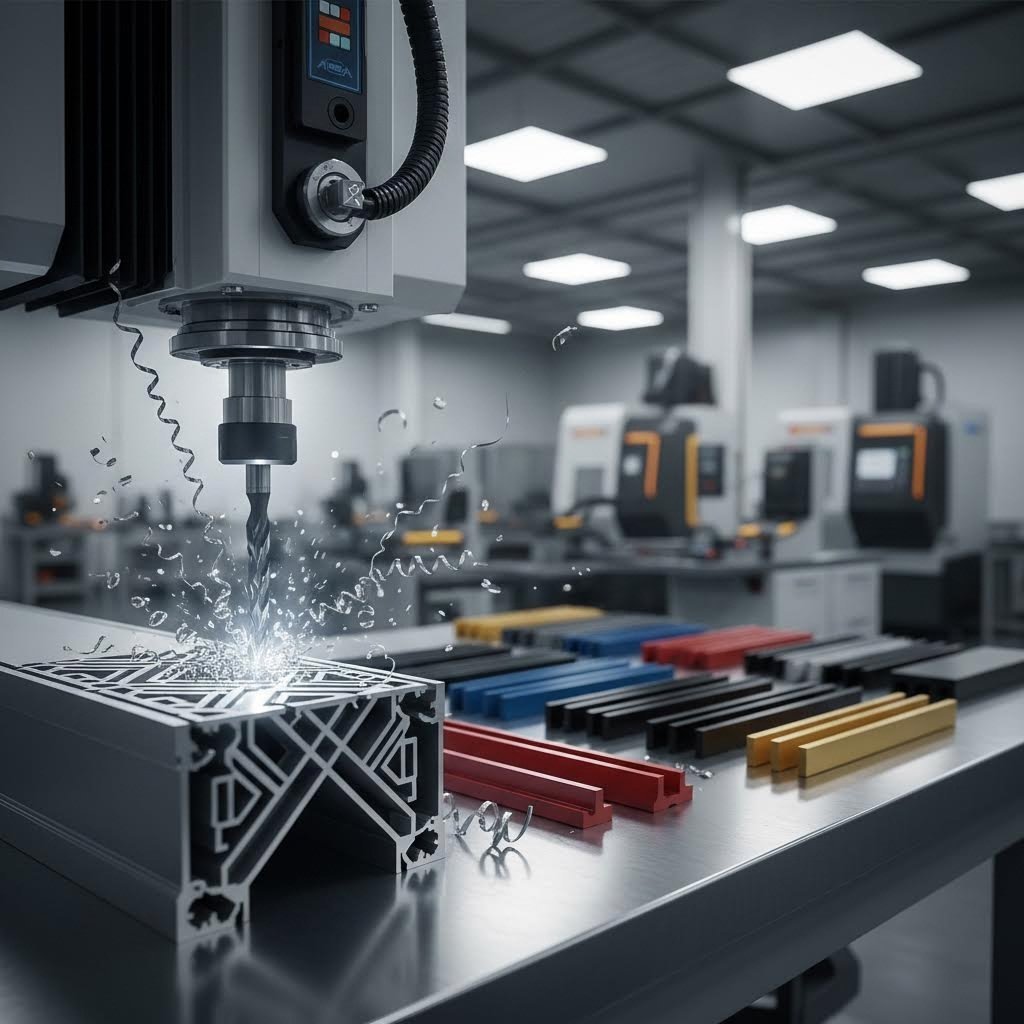
Your extruded profile has emerged from the press, been stretched straight, and cut to length. But here's the reality—for most automotive applications, this raw extrusion is just the starting point. The transformation from raw profile to finished component involves precision fabrication and carefully selected surface treatments that determine both performance and longevity. Understanding these processes helps you specify the right requirements and evaluate supplier capabilities effectively.
The automotive aluminum extrusion market demands components that arrive ready for assembly—not raw shapes requiring additional processing at multiple facilities. This is where deep processing capabilities become a critical differentiator among suppliers.
Imagine receiving a bumper beam extrusion that requires mounting holes, attachment features, and precise end cuts. Without in-house machining capabilities, you're looking at additional handling, transportation between facilities, and quality risks at every transfer point. That's why integrated fabrication matters.
Precision cutting forms the foundation of all secondary operations. Auto aluminium components require cuts that meet exacting tolerances—typically within ±0.5 mm for length and squareness. Modern automated saws with programmable controls deliver this precision while maintaining the production speeds automotive volumes demand.
CNC machining transforms basic extrusions into fully functional components. According to RapidDirect's manufacturing analysis, aluminum's excellent machinability makes it ideal for post-extrusion processing. Common operations include:
Bending and forming operations extend design possibilities beyond straight profiles. Stretch bending, roll forming, and press bending each suit different geometries and radii requirements. For crash management components, controlled bending creates curved bumper beams that follow vehicle body contours while maintaining structural integrity.
Welding joins individual extrusions into larger assemblies. MIG and TIG welding work well with 6000 series alloys, though heat-affected zones require attention during design. Friction stir welding—increasingly common for battery enclosures—produces joints with minimal thermal distortion, critical for maintaining dimensional accuracy across large assemblies.
Raw aluminum naturally forms a thin oxide layer that provides basic protection. But automotive applications demand more—enhanced corrosion resistance, specific aesthetic requirements, paint adhesion for body panels, or specialized properties for battery systems. The surface treatment you select fundamentally changes component performance.
Anodizing takes aluminum's natural oxidation tendency and amplifies it through electrochemical processing. According to Gabrian's surface finishing comparison, technicians submerge the aluminum part in an electrolytic bath and run current through it, using aluminum as the anode. This controlled process creates an oxide layer far thicker than what occurs naturally.
The resulting surface offers significant advantages for aluminum excursion applications:
Anodizing is particularly valuable for structural and architectural applications where protection is paramount but a metallic appearance is desired. You'll find it specified for interior trim, exposed structural members, and components where tight dimensional margins matter—since the oxide layer grows both inward and outward from the original surface.
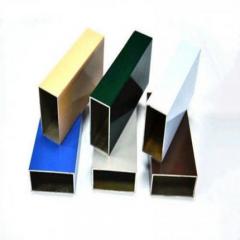
When brilliant colors or unique textures matter alongside protection, powder coating delivers. Unlike liquid paints, powder coating is a dry application process that creates a uniform, solid protective layer.
The process begins with thorough cleaning, by electrostatic application. A spray gun applies a negative charge to the powder particles, making them attracted to the grounded aluminum part. After coating, the part enters a curing oven where heat transforms the powder into a continuous, durable film.
Benefits that make powder coating popular for automotive components:
Powder coating suits outdoor equipment, architectural elements, and any application requiring brilliant, long-lasting color. It's commonly specified for aluminum doors, facades, and automotive components where appearance and environmental resistance both matter.
Polyvinylidene fluoride (PVDF) coatings represent the premium tier for exterior applications demanding exceptional longevity. These fluoropolymer-based coatings resist chalking, fading, and weathering for decades—making them standard specifications for architectural projects.
Key characteristics of PVDF coatings:
For the most demanding applications, micro-arc oxidation (MAO) creates a ceramic layer that outperforms conventional surface treatments. According to VMT's technical documentation, MAO involves controlled high-voltage plasma discharges within an electrolyte, transforming the aluminum surface into a dense, crystalline oxide layer.
What sets MAO apart from standard anodizing? The ceramic layer formed is thicker, denser, and more crystalline—with a metallurgical bond to the base metal that ensures exceptional adhesion. Benefits include:
MAO is particularly valuable for aluminum components in aerospace, EV powertrains, and applications where lightweight metals must withstand harsh conditions without compromise.
Your selection depends on balancing several factors—and understanding trade-offs:
| Treatment | Corrosion Resistance | Wear Resistance | Color Options | Cost Level | Best Applications |
|---|---|---|---|---|---|
| Anodizing | Excellent | Very Good | Limited (metallic tones) | Moderate | Structural components, heat dissipation parts |
| Powder Coating | Good | Good | Extensive (any color/texture) | Lower | Visible components, outdoor equipment |
| PVDF | Excellent | Good | Good (architectural range) | Higher | Exterior architectural, long-term exposure |
| Micro-Arc Oxidation | Superior | Superior | Limited | Highest | High-performance, extreme environments |
Surface treatments don't guarantee quality—consistent processes and rigorous inspection do. For automotive applications, quality control extends across the entire fabrication chain:
Suppliers with integrated deep processing capabilities—like Shengxin Aluminium's processing services offering CNC machining, multiple surface treatments including anodizing in custom colors, powder coating, PVDF, and micro-arc oxidation—streamline quality control by keeping the entire manufacturing sequence under one roof. This integrated approach reduces handling damage, improves traceability, and ensures consistent quality from raw billet to finished component.
With your fabrication and finishing requirements defined, the next critical step involves understanding the quality standards and certifications that separate automotive-capable suppliers from the rest.
Sounds complex? When you're sourcing aluminum extrusions for automotive applications, manufacturing capability is only half the equation. The other half—quality management systems and industry certifications—often determines whether a supplier can even quote on your program. Understanding these requirements helps you evaluate potential partners effectively and avoid costly surprises during supplier qualification.
The automotive industry maintains some of the most rigorous quality standards in manufacturing. A single quality escape can trigger recalls affecting millions of vehicles, creating enormous financial and reputational consequences. This reality drives the certification frameworks and qualification processes that separate automotive-capable suppliers from general industrial manufacturers.
At the foundation of automotive supplier qualification sits IATF 16949—the globally recognized quality management system standard for the automotive sector. Developed by the International Automotive Task Force, this standard builds upon ISO 9001 with automotive-specific requirements that emphasize defect prevention and continual improvement.
According to Net-Inspect's supplier guidance, IATF 16949 defines comprehensive quality management system requirements covering everything from product design through production and service parts. Unlike generic quality standards, this certification specifically addresses the unique challenges of automotive manufacturing—where consistency across complex, multi-tier supply chains is non-negotiable.
Why does this certification matter for your extrusion sourcing decisions? IATF 16949 certification demonstrates that a supplier has implemented robust processes for:
The certification process itself involves two-stage audits conducted by IATF-recognized certification bodies. Stage one reviews documentation to verify that the quality management system adequately addresses requirements. Stage two assesses practical implementation—how effectively the organization executes its documented processes in daily operations. Following initial certification, suppliers undergo annual surveillance audits and complete recertification every three years.
Here's where it gets particularly demanding: IATF 16949 certification is just the baseline. Major automotive manufacturers layer additional customer-specific requirements on top of this foundation. When a supplier works with Ford, General Motors, and Stellantis simultaneously, they're essentially managing three different compliance frameworks beyond the base standard.
The Production Part Approval Process (PPAP) represents the cornerstone of OEM qualification. As explained by Protolabs' manufacturing guide, PPAP emerged from the automotive industry to establish a standardized procedure ensuring that a supplier's production process consistently produces parts meeting customer requirements. The Automotive Industry Action Group (AIAG) formally adopted this standard, and it has since expanded to aerospace and medical device industries.
A complete PPAP submission typically includes 18 specific elements demonstrating production readiness:
According to AIAG's quality resources, these core tools—APQP, PPAP, FMEA, MSA, and SPC—form the building blocks of an effective quality management system. Organizations whose employees have mastered these processes demonstrate that qualified professionals are managing quality on behalf of their customers.
For safety-critical automotive components—crash structures, battery enclosures, steering and suspension parts—material certification goes beyond standard mill test reports. Suppliers must demonstrate complete lot traceability from raw billet through finished component.
What does this mean in practice? Every extrusion batch should trace back to specific aluminum billet lots, with documented chemistry and mechanical testing. When a quality issue arises, this traceability enables rapid identification of affected parts—critical for containing problems before they propagate through the supply chain or reach vehicles in the field.
Specific requirements for safety-critical components typically include:
OEMs don't just want promises—they want statistical evidence that your processes can consistently deliver conforming parts. Process capability studies quantify this performance using indices like Cpk and Ppk that compare process variation to specification tolerances.
For automotive extrusion suppliers, demonstrating capability involves:
The goal? Proactive quality management that identifies potential problems before they affect customers—not reactive inspection that catches defects after they occur.
When assessing potential extrusion partners, look beyond the certificate on the wall. Consider asking:
Suppliers with mature quality systems will answer these questions confidently and provide evidence supporting their claims. Those still developing their automotive capabilities may struggle—a red flag for programs with tight timelines or demanding quality requirements.
Quality certifications and process capabilities establish whether a supplier can meet your technical requirements. But the complete picture also includes cost considerations—and understanding the true economics of aluminum extrusions compared to alternative materials.
When procurement teams compare aluminum extrusions to steel stampings or composite alternatives, the conversation often starts—and unfortunately ends—with raw material price per kilogram. This narrow view misses the complete economic picture. The reality? Material cost represents just one piece of a complex total cost equation that spans tooling investment, processing efficiency, assembly labor, lifecycle performance, and end-of-life value recovery.
Understanding this fuller picture helps engineers and purchasing professionals make material decisions that optimize value rather than simply minimizing upfront spend. Let's break down what really drives the economics of automotive aluminum extrusions.
Yes, aluminum costs more per kilogram than steel—roughly 2 to 3.5 times more for sheet material according to life-cycle research from Secat and the University of Kentucky. But here's what that comparison overlooks: aluminum's density is approximately one-third that of steel. You need significantly less material by weight to achieve equivalent structural performance.
Consider the cascading effects of this weight difference:
According to the Aluminum Extruders Council's material comparison data, extrusion tooling is relatively inexpensive—generally a few hundred dollars for simple shapes—with short lead times. Compare this to stamping dies that often run into thousands of dollars with extended development timelines.
The recyclability factor also shifts economics significantly. Aluminum scrap commands approximately $0.93 per kilogram versus just $0.09 per kilogram for steel scrap. When 90% of body-in-white material is recovered at end-of-life, this difference in residual value affects the total ownership calculation substantially.
To illustrate these trade-offs clearly, here's how aluminum extrusions stack up against competing material systems across key economic and performance factors:
| Factor | Aluminum Extrusions | Steel Stampings | Composites (CFRP) |
|---|---|---|---|
| Raw Material Cost | Moderate ($2.31-$4.29/kg) | Low ($0.63-$1.17/kg) | High (5-10x aluminum) |
| Tooling Investment | Low-Moderate (hundreds to low thousands) | High (thousands to tens of thousands) | Very High (complex molds) |
| Tooling Lead Time | Short (weeks) | Long (months) | Long (months) |
| Weight Impact | ~40-50% lighter than steel equivalent | Baseline | ~50-60% lighter than steel |
| Corrosion Protection Needed | Minimal (natural oxide layer) | Significant (galvanizing, coatings required) | None |
| Part Consolidation Potential | High (complex profiles possible) | Limited (multiple parts often required) | Very High |
| Scrap Value | High (~$0.93/kg) | Low (~$0.09/kg) | Very Low (difficult to recycle) |
| Energy to Recycle | 5% of primary production | 40-75% of primary production | Limited recycling options |
This comparison reveals why simple material cost calculations mislead decision-makers. Steel's initial price advantage erodes when you factor in additional corrosion protection, higher tooling costs, increased part counts, and lower scrap recovery value.
How much is each kilogram of weight reduction actually worth? The answer depends heavily on your application—and regulatory pressures have made this calculation increasingly favorable for lightweight materials.
For internal combustion vehicles, weight reduction directly improves fuel economy. Research indicates that a 10% reduction in vehicle weight translates to approximately 5% improvement in fuel efficiency. The Secat life-cycle study found that over 174,140 lifetime miles, an aluminum-intensive body structure saves approximately 791.5 gallons of gasoline compared to its steel equivalent—translating to roughly $1,820 in fuel savings at $2.30 per gallon.
For electric vehicles, the value equation shifts to range extension. Every kilogram saved means either:
Regulatory pressures amplify these economics. With increasingly stringent CO2 emission targets in major markets, automakers face substantial penalties for exceeding fleet average limits. This regulatory environment creates tangible economic value for every kilogram of weight reduction—value that often exceeds the material cost premium.
When does aluminum's higher initial cost pay back? The Secat research provides a useful framework. Considering all four life-cycle stages—pre-manufacturing, manufacturing, use, and post-use—the study found that aluminum body structures achieve cost parity with steel within 3 to 10 years depending on fuel prices and recycled content assumptions.
Key findings from the life-cycle analysis:
The environmental performance adds another dimension to the value proposition. While primary aluminum production is energy-intensive, recycled aluminum requires only 5% of that energy. Steel recycling, by comparison, saves just 40-75% of primary production energy. As sustainability reporting and carbon pricing become more prominent, these differences create additional economic considerations.
When building your cost analysis for automotive aluminum extrusions, consider structuring it around these elements:
This comprehensive approach reveals that aluminum extrusions often deliver superior total value despite higher initial material costs—particularly for applications where weight reduction directly improves vehicle performance or regulatory compliance.
With a clear understanding of the economics, the final piece of the puzzle involves finding the right manufacturing partner to bring your aluminum extrusion program to life.
You've defined your alloy requirements, designed your profiles for manufacturability, and built a solid understanding of the economics. Now comes perhaps the most consequential decision in your automotive aluminum manufacturing program: choosing the right supplier partner. This choice ripples through every phase of your project—from prototype development through mass production—affecting quality, cost, timeline, and ultimately, your program's success.
The difference between an adequate supplier and an exceptional one often becomes apparent only when problems arise. A delayed die modification, an inconsistent surface finish, or a quality escape that halts your assembly line—these scenarios reveal whether you've partnered with a true automotive extrusion supplier or simply a company that happens to extrude aluminum. Let's explore how to make this distinction before you commit.
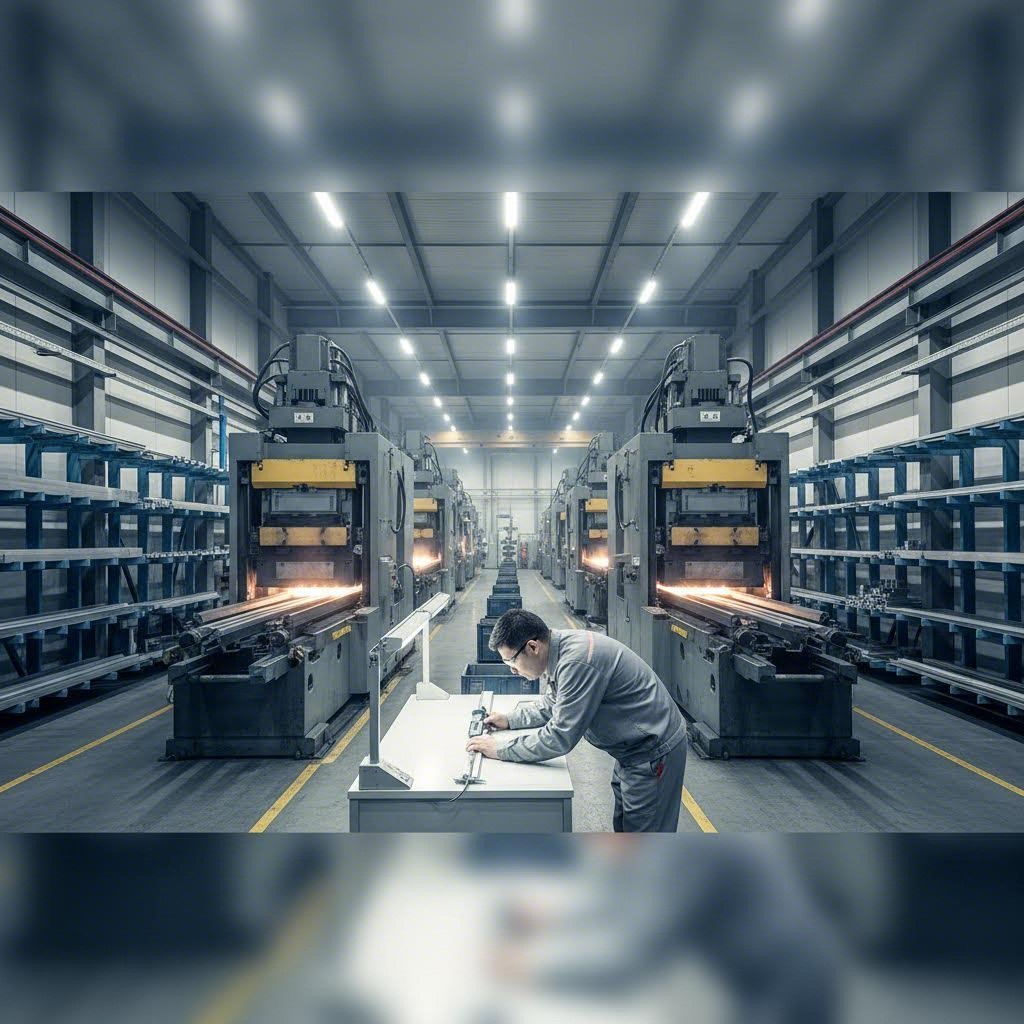
When you visit a potential aluminum extrusion partner—or review their capabilities remotely—the extrusion presses themselves tell an important story. According to Aluphant's capability assessment guide, press capacity directly defines what profiles a supplier can produce:
Here's the key insight: a supplier with multiple press capacities can handle a wider range of projects and maintain flexibility when production volumes change. If your program involves various profile sizes—from small trim pieces to large structural members—working with a single supplier across the range simplifies logistics and quality management.
Beyond press size, evaluate the supporting equipment and process controls. Modern automotive aluminum manufacturing demands temperature sensors, automatic press monitoring, and feedback systems controlling billet temperature, extrusion speed, and cooling rate. As industry benchmarks indicate, automation reduces human error and ensures dimensional repeatability—especially critical for clients requiring tolerance control within ±0.1 mm.
Ask pointed questions about capacity utilization and production planning:
Not all extrusion suppliers are created equal—and for automotive applications, the gaps between them matter enormously. Based on industry supplier selection guidance, here are the capabilities that distinguish qualified automotive partners:
Imagine this scenario: you've finalized your profile design, selected your alloy, and approved the supplier's quote. What happens next determines whether your program launches on schedule or slips into costly delays.
The die development phase represents a critical path item. According to typical industry benchmarks, expect these timeframes:
| Phase | Typical Duration | Key Considerations |
|---|---|---|
| Die manufacturing | 10-20 days | Complex profiles or tight tolerances extend timeline |
| Extrusion production | 7-15 days | Depends on volume and press availability |
| Surface finishing | 5-10 days | Multiple treatments or custom colors add time |
| Total project cycle | 4-6 weeks | Standard projects; expediting available at premium |
But lead time is just one dimension. True end-to-end support means your supplier partner engages proactively at each stage:
During design: Providing DFM feedback that identifies potential extrusion challenges, suggests wall thickness optimizations, and recommends design modifications that reduce cost without compromising function.
During prototyping: Producing sample quantities quickly for validation testing, with flexibility to iterate based on your findings. Some suppliers specialize in small batch or custom orders—essential for development programs.
During production ramp: Scaling from initial volumes to full production rates while maintaining quality consistency. This transition often exposes suppliers who lack robust process controls.
During ongoing production: Maintaining capability over time with statistical process control, regular capability recalculation, and proactive communication about any process changes that might affect your parts.
Consider what happens when your extrusion requires anodizing and precision drilling. With a fragmented supply chain, the raw extrusion ships to a machining subcontractor, then to an anodizing facility, then finally to your receiving dock. Each transfer introduces handling risks, transit time, and quality variability.
Now consider an integrated supplier with advanced extrusion presses ranging from 600T to 5500T, in-house CNC machining centers capable of precise cutting, drilling, and bending, plus comprehensive surface treatment options including anodizing in custom colors, powder coating, PVDF, and micro-arc oxidation. The entire manufacturing sequence—from billet to finished component—occurs under one quality management system.
Suppliers like Shengxin Aluminium's deep processing services exemplify this integrated approach. With over 30 years of industry experience and 35 extrusion presses covering the full capacity range, they offer technical teams that provide end-to-end support from die development through mass production. This consolidation reduces supply chain complexity, improves traceability, and often delivers better total cost despite potentially higher per-operation quotes.
According to supplier evaluation best practices, these questions cut through marketing claims to reveal actual capabilities:
Not every supplier deserves your partnership. Be cautious of:
Remember: the supplier evaluation process itself reveals how they'll perform as a partner. Responsive, transparent communication during quoting typically continues through production. Slow responses and vague answers tend to persist—or worsen—once they have your business.
The most successful automotive aluminum extrusion programs treat supplier relationships as partnerships rather than arms-length transactions. This means:
A strong aluminum extrusion partner functions as an extension of your engineering team—contributing to product improvement and operational efficiency. When you find a supplier with the right combination of technical capability, quality systems, integrated processing, and responsive communication, you've found more than a vendor. You've found a competitive advantage that will serve your automotive programs for years to come.
Automotive extrusions are precision-engineered aluminum profiles created by forcing heated aluminum through specially designed dies. These components maintain consistent cross-sectional shapes throughout their length, making them ideal for structural elements like bumper beams, crash boxes, door frames, and EV battery enclosures. The process enables complex hollow profiles and intricate geometries in a single manufacturing step, allowing automakers to achieve up to 40% weight reduction compared to steel while maintaining superior strength-to-weight ratios and natural corrosion resistance.
Leading automotive aluminum extrusion manufacturers include Hydro Extrusion (the largest extruder in the U.S.), Constellium, Kaiser Aluminum, Bonnell Aluminum, and Shape Corp. These companies hold IATF 16949 certifications essential for automotive supply chains. When selecting a supplier, evaluate their press capacity range (600T to 10,000T+), in-house die development capabilities, secondary processing options like CNC machining, and comprehensive surface treatment offerings including anodizing and powder coating.
The most common automotive extrusion alloys are 6063, 6061, and 7xxx series. 6063-T6 offers excellent extrudability and surface finish for decorative trim and interior structures. 6061-T6 provides higher tensile strength (310 MPa) ideal for crash boxes, battery enclosures, and structural frames requiring welding. 7075-T6 delivers maximum strength (570 MPa) for weight-critical applications like high-performance suspension components, though it has poor weldability and requires mechanical fastening.
Aluminum extrusions are critical for EV battery enclosures, comprising up to 20% of the battery system's cost and weight. They serve multiple functions: battery tray frames provide structural support, perimeter elements protect cells during side-pole impacts, hollow profiles integrate structural members with cooling fluid channels, and internal mounting structures secure battery modules. The thermal conductivity of 6061-T6 and 6063-T5 alloys (167-201 W/m·K) helps maintain optimal battery operating temperatures between 20-35°C.
IATF 16949 certification is the baseline requirement for automotive extrusion suppliers, demonstrating robust quality management systems for defect prevention and continuous improvement. Beyond this, suppliers must complete Production Part Approval Process (PPAP) submissions including control plans, FMEA documentation, measurement system analysis, and process capability studies. Safety-critical components require complete lot traceability from raw billet through finished component, with material certifications (EN10204 3.1/3.2) documenting alloy chemistry and mechanical properties.



 Onlineservice
 0086 136 3563 2360
 sales@sxalu.com
 +86 136 3563 2360
 Deutsch
 English
 français
 русский
 español
 português
 العربية
 ไทย
ไทย Việt
Việt Українська