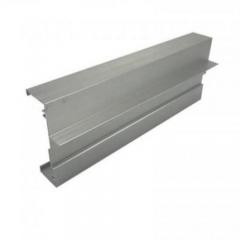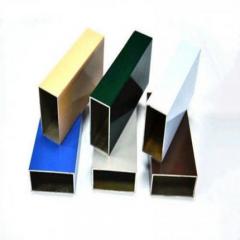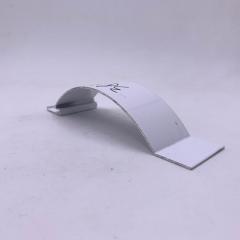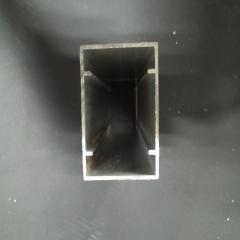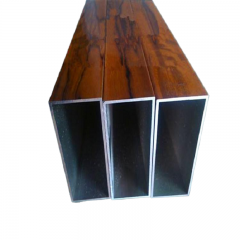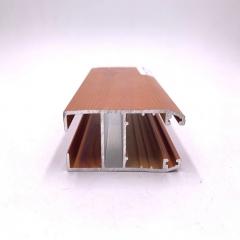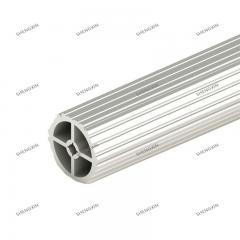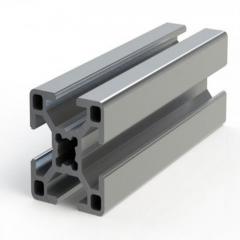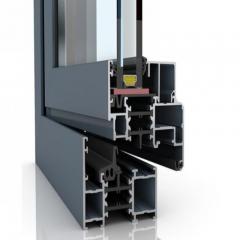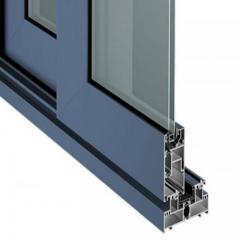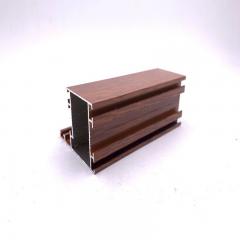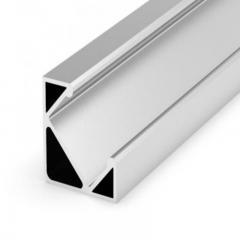
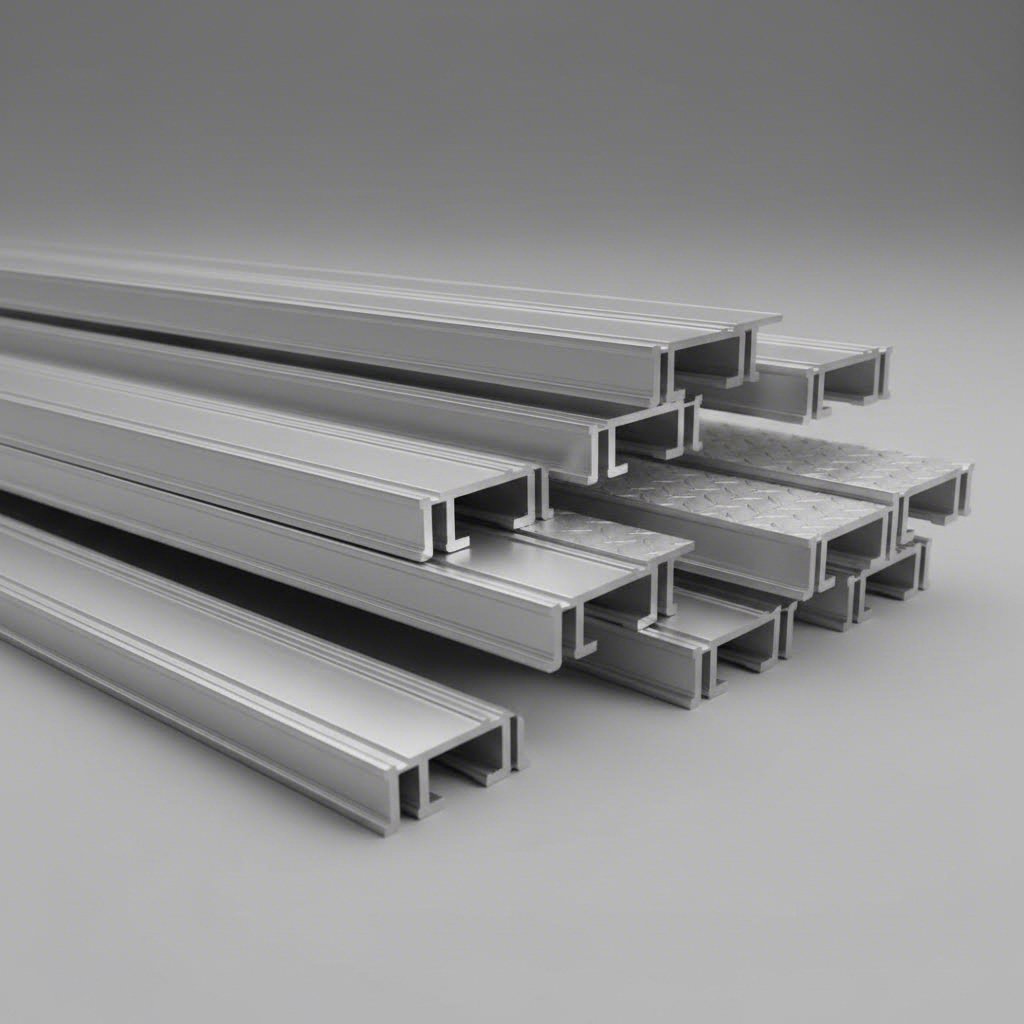
When you're shopping for trailer flooring, you'll quickly encounter the term "aluminum trailer floor extrusions." But what exactly are they? Simply put, these are precision-engineered aluminum planks created through a specialized manufacturing process that pushes heated aluminum through custom-shaped dies. The result? Strong, lightweight flooring components with consistent cross-sectional profiles designed specifically for trailer applications.
Imagine squeezing toothpaste through a tube - that's essentially how extrusion works, just with superheated aluminum instead. Manufacturers heat aluminum billets to around 900°F, then force the softened metal through a steel die using tremendous hydraulic pressure. As the aluminum emerges, it takes on the exact shape of the die opening, creating long sections with identical profiles. This process allows for complex shapes that would be impossible to achieve through other manufacturing methods.
This extruded aluminum trailer flooring has become the go-to choice for utility, enclosed, and flatbed trailers. Why? The combination of reduced weight, exceptional durability, and resistance to rot and corrosion makes it vastly superior to traditional wood flooring. Fleet operators particularly appreciate how the lighter aluminum floor translates directly into increased payload capacity and improved fuel economy.
You might wonder why manufacturers don't simply use flat aluminum sheets for trailer floors. The answer lies in structural efficiency. Sheet metal requires extensive cutting, bending, and welding to create usable flooring - a labor-intensive process that introduces potential weak points at every weld joint. According to industry experts, when certain grades of aluminum sheet metal are welded, the metal loses its strength, compromising product integrity.
Extruded aluminum trailer flooring, on the other hand, emerges from the die as a single, continuous piece with built-in structural features. There's no welding required for the profile itself, meaning no heat-affected zones that weaken the material. The extrusion process also allows for complex internal geometries - like hollow chambers and support ribs - that maximize strength while minimizing weight. This makes extruded planks ideal for high-stress applications, from trailer corner sections to the main walking surface.
A quality trailer floor extrusion isn't just a flat piece of aluminum. It's a carefully engineered component with multiple functional features integrated into a single profile. Understanding these elements helps you evaluate different products and choose the right aluminum floor for your specific needs.
These integrated features are what set extruded aluminum planks apart from other materials. Instead of adding aluminum molding trim separately or fabricating support structures, everything comes built into the extrusion profile. This streamlined design reduces installation complexity and creates a more reliable, longer-lasting trailer floor that can withstand years of demanding use.
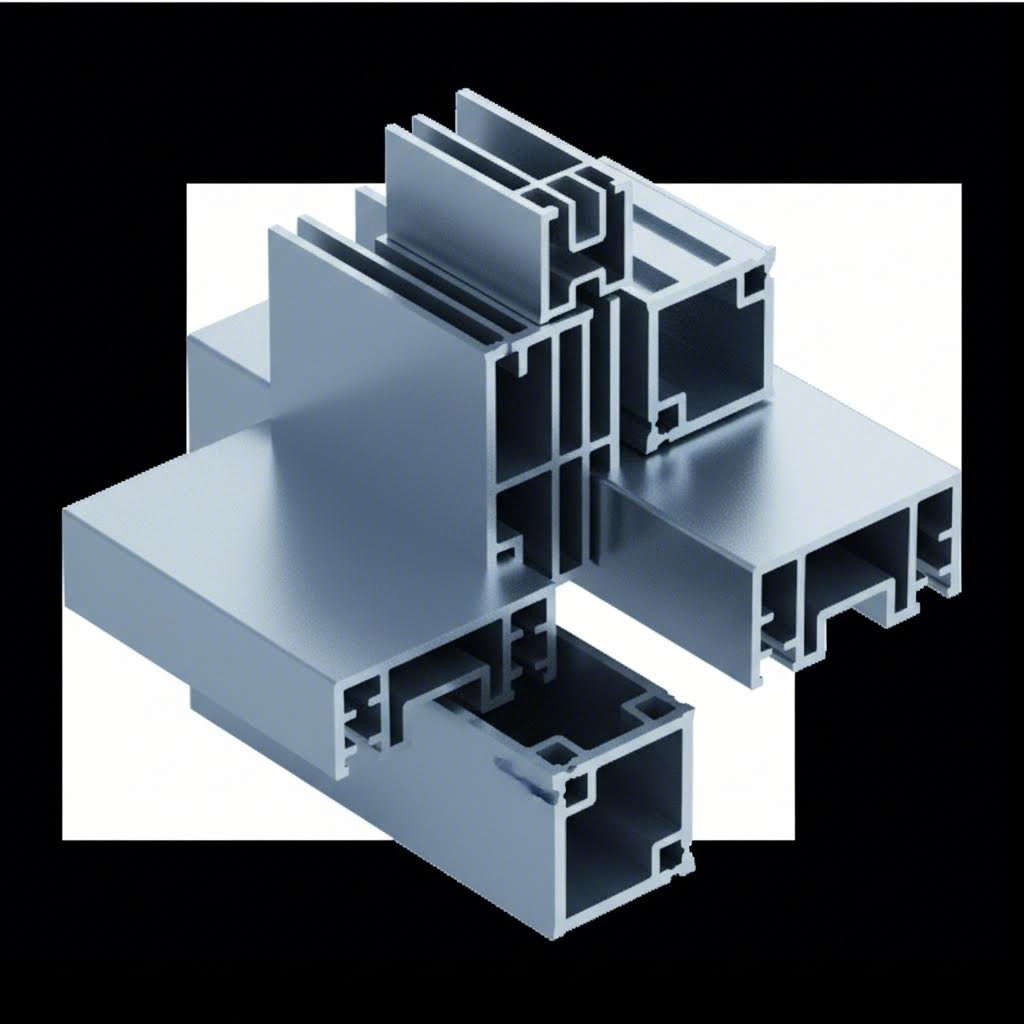
Not all aluminum is created equal. When you're investing in aluminum trailer decking material, the specific alloy used makes a tremendous difference in how your floor performs under pressure. Think of alloys like recipes - each one blends aluminum with different elements like magnesium, silicon, copper, or zinc to create distinct properties. Choosing the wrong alloy could mean premature wear, structural failure, or spending far more than necessary for features you don't need.
The most common alloys you'll encounter in extruded aluminum decking fall into the 6000 and 7000 series. Each series offers a different balance of strength, corrosion resistance, weldability, and cost. Understanding these differences helps you match your aluminum trailer deck to your actual hauling demands rather than relying on guesswork or marketing claims.
When manufacturers discuss alloy strength, they typically reference tensile strength - the maximum stress a material can withstand before breaking when pulled apart. This measurement, expressed in pounds per square inch (psi), directly relates to how much weight your trailer floor can handle without failing.
According to Industrial Metal Service, alloy 6061-T6 offers a tensile strength of approximately 42,000 psi, while the high-strength 7075-T6 reaches an impressive 78,000 psi. But here's what many buyers overlook: higher strength doesn't automatically mean better performance for every application. Stronger alloys often sacrifice other important properties like corrosion resistance or weldability.
The 6000 series alloys - particularly 6061 and 6063 - dominate the aluminum flooring market for good reason. As noted by Gabrian International, 6061 is often called "structural aluminum" because of its excellent all-around properties, while 6063 earns the nickname "architectural aluminum" for its superior surface finish and enhanced corrosion resistance.
Here's a quick breakdown of what the numbers mean for your trailer:
Your trailer's intended use should drive your alloy choice. Hauling a lawn mower occasionally has completely different demands than transporting construction equipment daily. When considering extruded aluminum planks for your project, ask yourself: What's the heaviest load this floor will ever support? How often will it experience that maximum stress? Will it face moisture, chemicals, or saltwater exposure?
For general-purpose utility trailers and enclosed cargo haulers, 6061-T6 typically provides the best value proposition. Its combination of moderate strength, excellent weldability, and reasonable cost makes it the industry standard for aluminum 2x6 replacement planks and full floor systems. Most fleet operators find this alloy handles everything from furniture to palletized goods without issue.
Marine trailers and applications with frequent water exposure benefit from 6063's enhanced corrosion resistance. According to Gabrian's comparison, "You'll generally find alloy 6063 in applications where exposure to weather or water is expected." While it offers slightly less strength than 6061, the improved durability in wet conditions often outweighs this trade-off.
High-strength 7000 series alloys make sense for specialized applications - think heavy equipment transport or military-spec trailers where maximum load capacity justifies the premium cost. However, these alloys present welding challenges and typically require professional fabrication.
| Alloy Number | Tensile Strength (psi) | Corrosion Resistance | Best Applications | Relative Cost |
|---|---|---|---|---|
| 6061-T6 | 42,000 | Good | General utility, flatbed, enclosed trailers | $ |
| 6063-T6 | 30,000 | Very Good | Marine trailers, wet environments, architectural | $ |
| 7005 | 51,000 | Fair | Medium-heavy equipment, performance applications | $$ |
| 7075-T6 | 78,000 | Fair | Heavy equipment, aerospace, military-spec trailers | $$$ |
One factor that often gets overlooked: weldability. If you plan to modify your trailer floor or repair damage in the field, 6000 series alloys are far more forgiving. The ASM Handbook notes that higher-strength 7000 series alloys are more challenging to extrude and work with, requiring specialized techniques that may not be available at your local fabrication shop.
Understanding these alloy differences transforms you from a passive buyer into an informed decision-maker. Rather than simply accepting whatever a supplier recommends, you can now evaluate whether a specific alloy actually matches your trailer's demands - and whether you're paying an appropriate price for the performance characteristics you're receiving.
Now that you understand alloy differences, the bigger question remains: should you even choose aluminum in the first place? When shopping for trailer flooring, you'll encounter three main material options - aluminum, steel, and wood. Each brings distinct advantages and drawbacks that directly impact your operational costs, maintenance burden, and long-term satisfaction.
Surprisingly, many buyers focus solely on initial purchase price without considering the complete financial picture. That's a costly mistake. According to Trident Trailer, switching from steel to aluminum trailers can result in over $3,000 in annual fuel savings alone - a figure that dramatically shifts the value equation when you calculate total ownership costs.
Let's break down how these three materials actually compare across the metrics that matter most to trailer operators.
Here's where metal trailer decking options diverge significantly. Aluminum weighs roughly one-third as much as steel, and this difference translates directly into hauling capacity. When your trailer floor weighs less, you can carry more cargo without exceeding weight limits.
Consider the math: a typical aluminum trailer floor might save 800-1,000 pounds compared to a steel equivalent. As noted by Anderson Trucking Service, aluminum floors "weigh slightly less than wood floors - about 1,000 pounds" lighter. That's nearly half a ton of additional payload capacity you gain simply by choosing the right flooring material.
For businesses hauling frequently or covering long distances, the fuel efficiency gains compound over time. Lighter trailers require less energy to accelerate, maintain speed, and stop. According to industry calculations, this weight reduction can save operators thousands of dollars annually in fuel costs - money that goes straight to your bottom line.
Steel, while offering the highest raw strength, creates a significant weight penalty. This trailer flooring metal makes sense primarily for extremely heavy equipment hauling where impact resistance matters more than weight savings. Wood falls somewhere in between, offering moderate weight with decent strength but lacking the durability advantages of metal options.
Initial purchase price tells only part of the story. Smart buyers evaluate what they'll spend over 10, 15, or 20 years of ownership. This total cost calculation includes maintenance, repairs, fuel consumption, and eventual resale value.
Wood flooring appears cheapest upfront but demands ongoing attention. As Thomes North America explains, wood "requires regular maintenance to prevent rot and deterioration" and "may be prone to warping or splitting." These maintenance costs accumulate year after year, gradually eroding the initial savings.
Steel presents a different challenge. While highly durable against impact, it's "prone to rust and corrosion if not treated properly," according to industry sources. Untreated steel in wet environments can deteriorate rapidly, leading to expensive replacement scenarios. The heavier weight also means higher fuel costs throughout the trailer's life.
Aluminum trailer decking commands higher upfront costs but delivers compelling long-term value. The material is "resistant to rust, corrosion, and rot" while requiring minimal maintenance. When metal flooring for trailer applications needs repair, aluminum's individual plank design allows targeted replacement rather than complete floor overhauls.
Fire resistance adds another consideration. Aluminum won't ignite or contribute to fire spread - a safety advantage over wood that's especially relevant for enclosed trailers hauling flammable materials. This property can also impact insurance rates and regulatory compliance for certain cargo types.
| Factor | Aluminum | Steel | Wood |
|---|---|---|---|
| Initial Cost | High ($$$) | Medium ($$) | Low ($) |
| Weight per Sq Ft | Light (2-3 lbs) | Heavy (8-10 lbs) | Medium (4-5 lbs) |
| Corrosion Resistance | Excellent | Poor (without treatment) | Poor (requires sealing) |
| Maintenance Requirements | Minimal | Moderate (rust prevention) | High (rot prevention) |
| Expected Lifespan | 20-30+ years | 15-25 years | 8-15 years |
| Resale Value Impact | Positive | Neutral | Negative (if worn) |
So when does each material make sense? Wood remains viable for budget-conscious buyers with light-duty applications who don't mind periodic maintenance. Steel earns its place in heavy equipment haulers where impact resistance trumps weight concerns. But for semi trailer flooring, flatbed trailer flooring, and most commercial applications, aluminum delivers the best balance of durability, weight savings, and lifetime value.
One final consideration: repairability. Anderson Trucking Service notes that "aluminum floors are difficult to repair" since they're "most often made of one sheet of metal, which must be replaced in case of damage." However, this applies primarily to sheet aluminum - extruded aluminum planks with interlocking designs allow individual section replacement, combining aluminum's durability advantages with wood's repair flexibility.
Understanding these trade-offs positions you to make an informed decision based on your specific use case rather than relying on assumptions or marketing claims. The right choice depends on your hauling patterns, budget timeline, and willingness to perform ongoing maintenance.
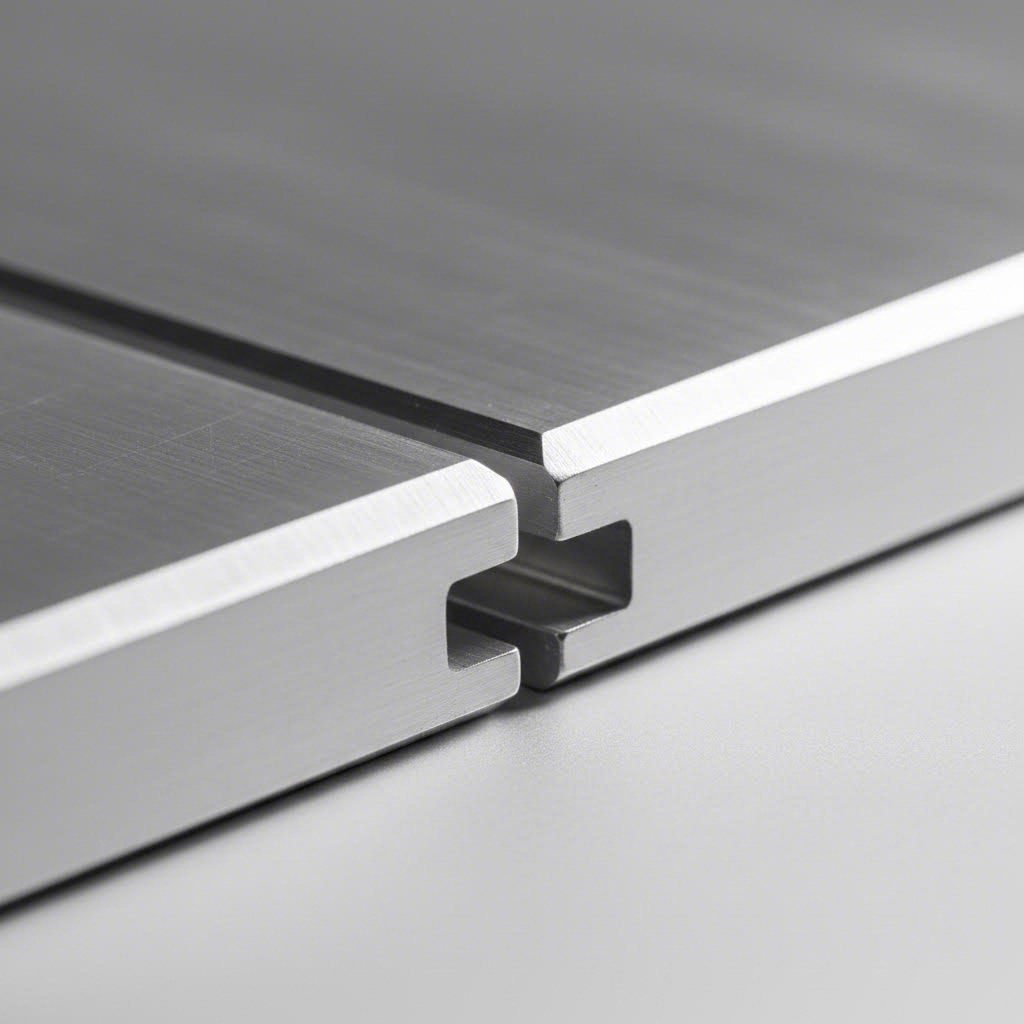
You've selected your alloy and decided aluminum is the right material. Now comes a question that directly impacts your floor's long-term performance: how do those individual planks actually connect? The interlocking mechanism you choose determines whether your trailer floor stays tight and rattle-free or develops annoying gaps and movement over years of use.
Unlike sheet materials that simply bolt down to crossmembers, extruded aluminum planks feature engineered mating surfaces that lock adjacent sections together. According to Gabrian International, these geometry-based joints allow designers to create "non-permanent, semi-permanent, or permanent assemblies to match the design application." For trailer flooring, this means you get a unified surface that distributes loads evenly while remaining serviceable for repairs.
The connection method also affects water resistance, noise levels, and installation complexity. Understanding your options helps you select an interlocking aluminum decking system that matches your specific trailer requirements.
The aluminum tongue and groove design dominates the trailer flooring market for good reason. This classic joinery approach features one plank edge with a protruding "tongue" that slides into a corresponding channel or "groove" on the adjacent plank. The result? A secure mechanical connection that prevents vertical movement between sections.
What makes this system particularly effective for trailers? The interlocking geometry creates several performance advantages:
As technical resources explain, tongue and groove joints are classified as "nesting joints" that "restrict movement in some directions without locking the components together." This means the planks can still be removed for maintenance or individual replacement without destroying adjacent sections - a significant advantage over permanently welded assemblies.
Beyond basic tongue and groove, you'll encounter variations designed for specific applications. Overlapping flange designs extend one plank edge over the next, creating a weatherproof barrier ideal for exposed trailers. Some manufacturers offer stepped profiles that interlock horizontally while providing additional vertical support. When edging trailer floors, specialized transition profiles connect the main flooring to side rails or thresholds.
Interlocking edges connect planks to each other, but how does the assembled floor attach to your trailer frame? This is where fastening methods become critical. The wrong approach can lead to loosening over time, corrosion at connection points, or even structural failure under heavy loads.
Common profile types offer different fastening characteristics:
Proper support spacing is equally important as the fastening method itself. Industry experts warn to "choose the right thickness so it will not bend down between the cross members. Nothing worse than a trailer deck with ripples because the material is too thin for the load."
For aluminum interlocking decking, crossmember spacing typically ranges from 6 to 12 inches depending on expected loads. Tighter spacing increases strength but adds weight and cost. Most general-purpose applications work well with 12-inch centers, while heavy equipment haulers may require 6- or 8-inch spacing. Always match your crossmember spacing to both the floor profile thickness and your maximum anticipated load.
One often-overlooked detail: thermal expansion. Aluminum expands and contracts with temperature changes more than steel frames. This means your fastening system needs to accommodate slight movement without loosening or creating stress points. Slotted mounting holes or flexible connection hardware prevents the cracking or buckling that can occur when rigid fasteners fight thermal expansion.
The combination of interlocking edges and proper fastening creates a floor system that acts as a unified structural element rather than a collection of loose boards. This integration dramatically improves load distribution - when a forklift wheel concentrates weight on a single plank, the tongue and groove connections transfer that stress across multiple sections, reducing point loading on individual crossmembers.
Now that you understand connection methods, here's where things get practical. Not every trailer application demands the same flooring specifications. A horse trailer hauling anxious animals has completely different requirements than a flatbed carrying construction materials or a boat trailer submerged in saltwater regularly. Matching your aluminum flooring for trailers to your specific use case prevents costly mistakes and ensures optimal performance.
Think about it this way: surface texture, drainage capabilities, alloy selection, and profile thickness all shift based on what you're hauling and where you're operating. The extruded aluminum decking perfect for an enclosed cargo hauler might fail miserably in a marine environment. Let's break down exactly what each trailer type demands.
Utility trailers see the widest variety of cargo - everything from lawn equipment to palletized goods to construction materials. This versatility demands a forgiving floor that handles diverse loads without specialized requirements.
Flatbed trailers share similar requirements but often face more demanding point loads from forklifts and concentrated equipment weight. Consider thicker extrusions and tighter crossmember spacing if you regularly transport items exceeding 2,000 pounds in concentrated areas.
Enclosed cargo trailers present a different challenge. Since the floor isn't exposed to rain, corrosion resistance becomes less critical than interior functionality. However, enclosed spaces trap moisture from condensation, cargo drips, and tracked-in water - creating unique demands.
According to ALCOM USA, enclosed trailer flooring options range from water-resistant decking to extruded aluminum, with upgrade possibilities including "rubber coin or TPO coin flooring" and "aluminum diamond plate floor overlay." The trailer aluminum skin and walls create a contained environment where drainage becomes more critical than weatherproofing.
When selecting aluminum decking for trailers in enclosed applications, also consider how the flooring integrates with interior aluminum trailer panels. Proper transition profiles at wall junctions prevent debris accumulation and simplify cleaning.
Horse trailers demand perhaps the most specialized flooring considerations. Your floor directly impacts animal safety, comfort, and health during transport. Get this wrong, and you risk injured horses and expensive veterinary bills.
According to Farmhouse Tack, aluminum flooring "is commonly used in horse trailers because it's lightweight and relatively inexpensive." However, they also note that aluminum "is prone to corrosion from horse urine and road salts when not maintained properly." This creates a critical maintenance consideration for equine applications.
As experts recommend, "rubber mats are recommended for slip resistance and should be removed periodically to check the integrity" of the floor beneath. This layered approach lets you inspect and maintain the structural aluminum while providing optimal surface conditions for your horses.
Marine trailers face the harshest conditions any aluminum floor will encounter. Saltwater exposure, constant submersion during launches, and UV radiation combine to attack flooring materials relentlessly. Standard specifications that work fine for dry-land applications will fail prematurely in marine environments.
The investment in proper marine-grade specifications pays dividends over time. According to industry sources, you want a floor that "is durable and weather-resistant, won't fade in the sun, or rot under rain" - requirements that marine environments amplify dramatically.
Beyond trailer type, surface texture choice significantly impacts daily usability. Here's how different patterns perform across applications:
| Surface Pattern | Best Applications | Advantages | Considerations |
|---|---|---|---|
| Diamond Plate | Utility, flatbed, construction | Excellent grip, hides scratches, aggressive drainage | Can catch on smooth-wheeled dollies |
| Ribbed/Serrated | Horse trailers, wet environments | Superior slip resistance, directional drainage | Harder to clean than smooth surfaces |
| Smooth/Brushed | Enclosed cargo, car haulers | Easy rolling for wheeled cargo, simple cleaning | Requires rubber mats for foot traffic in wet conditions |
| Perforated | Marine, wash-down applications | Maximum drainage, lightweight | Reduced structural strength, limited cargo types |
Identifying which specifications matter most for your use case prevents over-engineering (and overpaying) while ensuring adequate performance. A weekend utility trailer doesn't need marine-grade anodizing, just as a boat trailer shouldn't rely on standard 6061 without additional protection.
With application-specific requirements understood, the next step is understanding how to actually install these extrusions correctly - because even the perfect floor profile will underperform if improperly mounted.
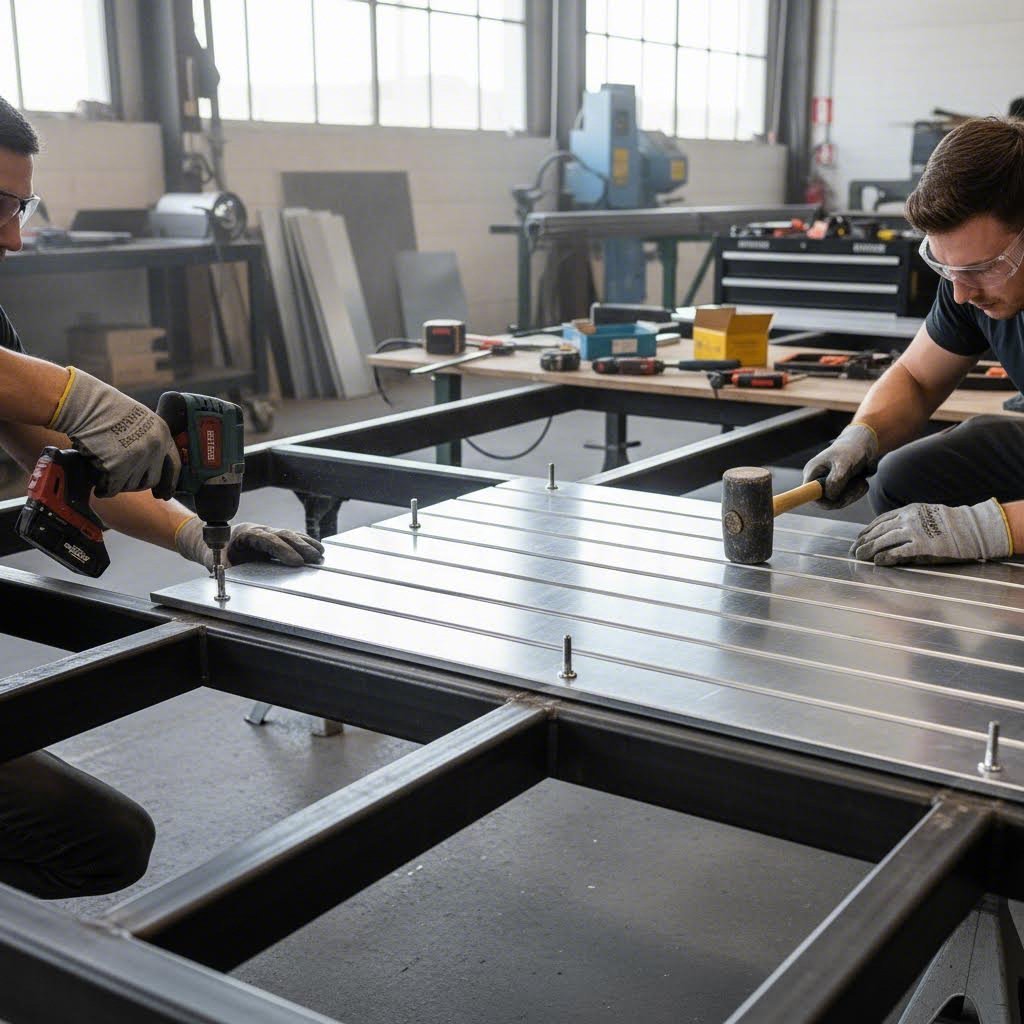
You've selected the right alloy, chosen your profile type, and matched specifications to your trailer application. Now comes the moment of truth: installation. Even premium aluminum trailer floor extrusions will underperform if mounted incorrectly. Improper installation leads to rattling, premature wear, water intrusion, and structural issues that compromise both safety and longevity.
The good news? Installing extruded aluminum planking isn't complicated once you understand the fundamentals. Whether you're retrofitting an existing trailer or building from scratch, following a systematic approach prevents costly mistakes and ensures your floor performs as designed for decades.
Before ordering materials, you need accurate measurements. Sounds obvious, but rushing this step is the most common source of installation headaches. Trailer floors rarely match nominal dimensions exactly - manufacturing tolerances, frame deflection, and irregular shapes all affect your actual requirements.
Start with these measurements:
With dimensions in hand, calculate your floor for trailer requirements using this formula:
Total Square Footage = Length × Width + 10% Waste Allowance
That 10% buffer accounts for cutting waste, fitting adjustments, and the occasional mistake. For complex layouts with multiple cutouts, increase to 15%. Running short mid-installation creates delays and potential color/lot matching issues with supplemental orders.
When ordering extruded aluminum planking, also consider plank orientation. Running planks parallel to the trailer length typically provides better load distribution and simpler installation. However, crosswise installation may work better for certain interlocking profiles or when matching existing aluminum trailer walls.
Professional installers follow a consistent sequence that minimizes rework and ensures proper fit. Whether you're installing trailer floors yourself or supervising a contractor, understanding this process helps you identify quality workmanship.
Having the right tools on hand prevents mid-project supply runs and ensures professional results:
Learning from others' errors saves time, money, and frustration. These mistakes appear repeatedly in DIY installations:
This factor deserves special attention because it's frequently overlooked. As engineering specialists explain, differential thermal expansion occurs when "components are rigidly fastened together" but "experience different temperature gradients." Your aluminum floor and steel frame expand at different rates - if fastening doesn't accommodate this movement, stress builds up.
Practical solutions include:
Temperature swings matter more than you might expect. A trailer stored indoors during winter then parked in summer sun can experience 100°F+ temperature differentials. Without expansion accommodation, this creates the buckling, fastener loosening, and stress cracking that research identifies as consequences of unmanaged differential thermal expansion.
Your cross-member layout directly impacts floor performance. Too much space between supports causes deflection; too little adds unnecessary weight and cost. The right spacing depends on your floor profile thickness and expected loads.
| Profile Thickness | Light Duty (under 100 PSF) | Medium Duty (100-250 PSF) | Heavy Duty (250+ PSF) |
|---|---|---|---|
| 0.100" - 0.125" | 12" spacing | 8" spacing | Not recommended |
| 0.125" - 0.188" | 16" spacing | 12" spacing | 8" spacing |
| 0.188" - 0.250" | 24" spacing | 16" spacing | 12" spacing |
If your existing trailer has inadequate cross-member spacing for your intended loads, add supplemental supports before installing new flooring. This investment prevents the rippling and permanent deformation that occurs when aluminum spans too great a distance under heavy weight.
With proper installation complete, your aluminum trailer floor should deliver decades of reliable service. But how do you maintain that performance over time? Understanding maintenance requirements and long-term care ensures your investment continues paying dividends.
Here's where aluminium flooring truly outshines traditional materials. Unlike wood that demands constant sealing, staining, and rot prevention - or steel requiring aggressive rust treatment - aluminum floors need surprisingly little attention to deliver decades of reliable service. This minimal maintenance advantage translates directly into time and money savings over your trailer's lifetime.
According to Black Rhino Trailer, "with proper maintenance, an aluminum trailer can provide years of reliable service." The key word is "proper" - not intensive or frequent, just consistent. Let's break down exactly what that entails.
Maintaining aluminum floors requires far less effort than you might expect. As Lifetime Trailers explains, "regular checks and maintenance can prevent minor issues from becoming major problems, saving you time and money in the long run." Here's your essential maintenance checklist:
Industry experts emphasize that "regular cleaning will keep your trailer shining and prevent corrosion or rust from forming over time." This simple habit - a quick rinse after each significant use - prevents the buildup that causes long-term damage.
Even well-maintained aluminum floors eventually show wear. The question is: when does wear become a problem requiring action? Understanding normal aging versus concerning damage helps you make smart maintenance decisions.
Surface scratching is normal and largely cosmetic. Heavy equipment, dragged cargo, and foot traffic create superficial marks that don't compromise structural integrity. However, deep gouges exposing raw aluminum beneath surface treatments warrant attention - these areas lose corrosion protection and may need spot treatment.
Watch for these warning signs indicating replacement consideration:
When shopping for used aluminum trailer decking, inspect carefully for these issues. Previous owners may have neglected maintenance or overloaded floors beyond their rated capacity. What appears cosmetically acceptable might harbor hidden structural compromises.
Under normal use conditions, quality aluminum floors last 20-30+ years - far exceeding wood's 8-15 year typical lifespan. Marine applications with saltwater exposure reduce this somewhat, while covered trailers with light-duty use may exceed 30 years. Surface treatments like anodizing or powder coating extend service life further by adding protective barriers against environmental attack.
For trailer trim molding and edge components, similar maintenance principles apply. These high-visibility elements often show wear first since they're exposed to loading impacts and weather. Replacing worn trailer molding trim periodically maintains both appearance and function without requiring full floor replacement.
The bottom line? Aluminum's maintenance advantage isn't just marketing - it's a fundamental material property that reduces your ongoing ownership burden while extending usable service life well beyond competing materials.
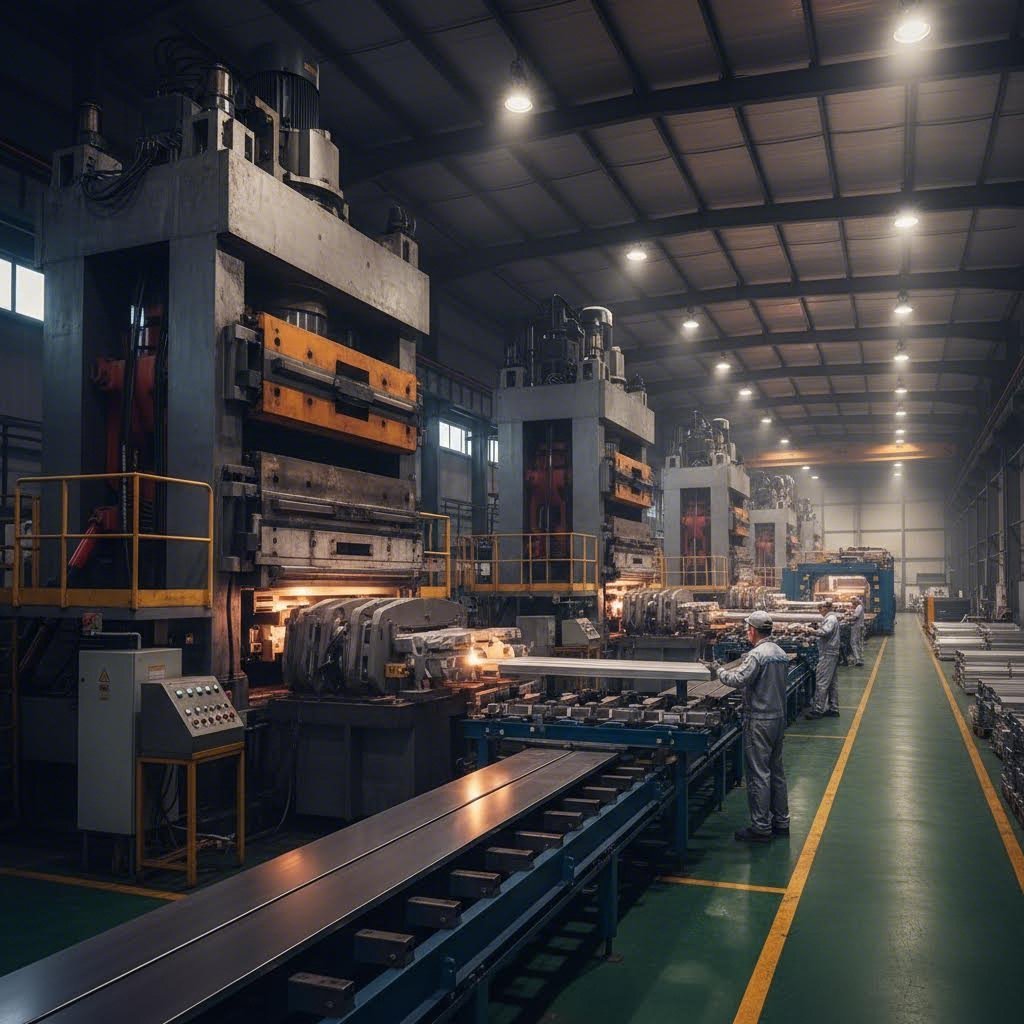
You've done your homework - selected the right alloy, understood connection methods, and know exactly what specifications your trailer application demands. But here's where many buyers stumble: actually finding quality extrusions that match those carefully considered requirements. Not all aluminum trailer floor extrusions are created equal, and distinguishing premium products from substandard offerings requires knowing what to look for.
Whether you're purchasing standard profiles or exploring custom solutions, understanding quality indicators protects your investment. According to industry quality specialists, inspecting aluminum extrusion profiles is a "multi-step process that involves visual checks, dimensional verification, mechanical testing, and material analysis." Let's translate that expertise into practical buying guidance.
When aluminum trailer decking for sale arrives at your facility - or when you're evaluating samples before ordering - several quality markers separate premium products from inferior alternatives. Knowing these indicators helps you avoid the frustration of discovering problems after installation.
Uniform wall thickness throughout the extrusion profile indicates proper manufacturing control. Variations suggest die wear, incorrect extrusion pressure, or inadequate quality monitoring. As quality inspection experts note, dimensional accuracy should be compared against specifications - for small profiles, tolerances of ±0.15 mm are typical.
Use a caliper to measure wall thickness at multiple points along the profile and across different sections. Significant variation (more than 10% from specification) warrants rejection or discussion with the supplier.
Examine the extrusion surface under good lighting. Quality indicators include:
Verify that actual dimensions match specifications. Extruded aluminum trim and flooring planks must fit together precisely - dimensional errors cascade through your installation, creating gaps, misalignment, and structural compromises.
Critical dimensions to verify include overall width, height, tongue and groove mating surfaces, and mounting hole positions. Request the manufacturer's tolerance specifications and verify samples fall within those ranges.
This is perhaps the most critical quality factor you cannot assess visually. As aluminum inspection specialists explain, "Ensuring the correct alloy is used is crucial for both strength and corrosion resistance." An extrusion marked as 6061-T6 should actually be 6061-T6 - not a cheaper substitute with lower mechanical properties.
Verification methods include:
Standard off-the-shelf profiles work for many applications, but your specific trailer requirements may demand custom solutions. Perhaps you need a unique interlocking geometry, specific mounting features, or non-standard dimensions. This is where working with manufacturers offering custom die development and deep processing services provides significant advantages.
According to custom extrusion specialists, the process begins "with a detailed design that defines the profile's shape, dimensions, tolerances, and mechanical requirements." Manufacturers offering comprehensive services guide you through each stage - from concept to delivered product.
Established manufacturers like Shengxin Aluminium provide end-to-end support from die development through mass production. With over 30 years of industry experience and 35 advanced extrusion presses ranging from 600T to 5500T, they handle everything from initial engineering consultation to final quality inspection. Their CNC machining capabilities deliver precise cutting, drilling, and bending for extruded aluminum trailer trim and flooring components that meet exact specifications.
The custom extrusion process typically follows these stages:
Quality manufacturers offer surface treatments that significantly extend service life. For aluminum trim molding trailers and flooring applications, common options include:
When sourcing aluminum trailer door trim or other exposed components, surface treatment selection significantly impacts long-term appearance and performance.
Before committing to any supplier, gather comprehensive information. According to sourcing specialists, "understanding an aluminum extrusion supplier's capabilities, standards, and pricing structures are key to a long-term, fruitful relationship."
Ask these essential questions when evaluating potential suppliers:
Not all extrusion suppliers offer the same capabilities. When your project requires aluminum trim for trailers with specific features, verify that your chosen manufacturer can deliver:
| Capability | Why It Matters | What to Verify |
|---|---|---|
| Custom Die Development | Enables unique profile geometries matching your exact requirements | Die design assistance, tooling costs, development timeline |
| CNC Machining | Delivers precise cuts, holes, and features for ready-to-install components | Available operations, tolerances, capacity |
| Surface Finishing | Protects against corrosion and enhances appearance | Treatment options, color matching, coating thickness |
| Quality Testing | Ensures products meet specifications consistently | Testing methods, documentation, certification |
| Production Scalability | Accommodates both prototype quantities and volume production | Minimum orders, lead times, capacity constraints |
Choosing the right supplier involves balancing multiple factors: product quality, pricing, lead times, technical support, and long-term reliability. The lowest price rarely delivers the best value when you consider the complete ownership picture.
Working with a reliable extrusion supplier who follows established quality control protocols can significantly reduce your inspection burden and project risk. Look for manufacturers who document their processes, provide test reports, and stand behind their products with meaningful warranties.
For custom trailer flooring solutions requiring specialized profiles, precision machining, or enhanced surface treatments, explore manufacturers offering comprehensive deep processing services. Resources like Shengxin Aluminium's custom extrusion services demonstrate the full-service approach that transforms raw aluminum into ready-to-install trailer components.
The effort you invest in selecting quality extrusions and reliable suppliers pays dividends throughout your trailer's service life. Premium aluminum trailer floor extrusions, properly sourced and correctly installed, deliver decades of trouble-free performance - making your initial due diligence one of the smartest investments in your trailer project.
Aluminum trailer floor extrusions are precision-engineered flooring planks created by heating aluminum billets to approximately 900°F and forcing them through custom-shaped steel dies using hydraulic pressure. This process produces consistent cross-sectional profiles with integrated features like support ribs, interlocking edges, and mounting channels. Unlike sheet metal, extruded profiles emerge as single continuous pieces without weld joints, offering superior structural integrity for trailer applications.
The best alloy depends on your application. 6061-T6 is the industry standard for general-purpose trailers, offering 42,000 psi tensile strength with good weldability and corrosion resistance. 6063-T6 provides superior corrosion resistance for marine environments despite slightly lower strength. High-strength 7075-T6 reaches 78,000 psi for heavy equipment transport but costs more and is harder to weld. Custom extrusion manufacturers like Shengxin Aluminium can help match alloy selection to your specific load requirements.
Aluminum weighs about one-third as much as steel, potentially saving 800-1,000 pounds per trailer floor and increasing payload capacity. While aluminum has higher upfront costs than wood, it requires minimal maintenance, resists rot and corrosion, and lasts 20-30+ years compared to wood's 8-15 years. Steel offers maximum strength but is prone to rust and adds significant weight. For most commercial applications, aluminum delivers the best total cost of ownership.
Yes, manufacturers offering custom die development can create unique profile geometries tailored to your exact specifications. Services include custom cross-sectional shapes, specific interlocking mechanisms, integrated mounting features, and precise dimensions. Comprehensive manufacturers provide end-to-end support from engineering consultation through CNC machining for ready-to-install components, plus surface treatments like anodizing and powder coating for enhanced durability.
Aluminum floors require minimal maintenance compared to wood or steel. Regular cleaning with mild soap and water after exposure to road salt or chemicals prevents corrosion. Quarterly fastener inspections catch loosening from thermal cycling and vibration. Check drainage channels for debris and inspect interlocking edges for separation. With proper care, quality aluminum flooring provides 20-30+ years of reliable service without the sealing, staining, or rust treatment other materials demand.



 Onlineservice
 0086 136 3563 2360
 sales@sxalu.com
 +86 136 3563 2360
 Deutsch
 English
 français
 русский
 español
 português
 العربية
 ไทย
ไทย Việt
Việt Українська