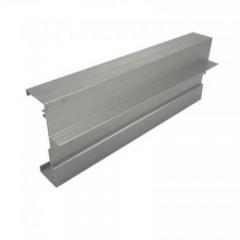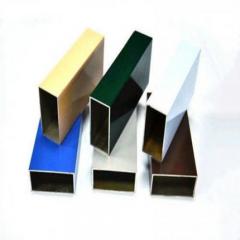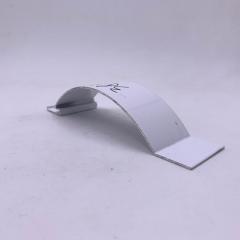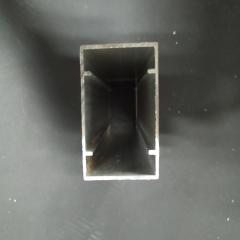
Imagine you need a custom aluminum heat sink for your next electronics project. You reach out to one supplier for design assistance, another for heat sink extrusion, a third for machining, and yet another for surface finishing. Sounds complex? That's exactly the headache turnkey services eliminate.
Aluminum extrusion heat sink turnkey services represent a comprehensive manufacturing approach where a single provider handles every stage of production—from initial thermal design consultation through extrusion, secondary operations, surface finishing, and final delivery. This consolidated model means engineers and procurement professionals receive production-ready thermal management solutions without juggling multiple vendors, contracts, or communication channels.
The term "turnkey" originates from the concept that a customer only needs to "turn the key" to make everything function as intended. In the context of aluminum fabrication services for heat sinks, this means the provider undertakes entire responsibility from design through completion and commissioning.
A truly turnkey solution encompasses:
When you work with a custom heatsink manufacturer offering true turnkey capabilities, you're not simply outsourcing production—you're gaining a partner invested in your project's success from concept to completion. Companies like PSI Industries and Heatsink USA have built their reputations by offering this integrated approach to thermal management solutions.
Why does single-source manufacturing matter? Consider the traditional approach: designs get created based on your specifications, then shipped to a manufacturer for production, forwarded to another company for machining, and sent elsewhere for finishing. Each handoff introduces delays, potential miscommunication, and quality control gaps.
The turnkey difference becomes clear when you examine the practical benefits:
For engineers specifying thermal solutions or procurement professionals managing supplier relationships, this single-source approach translates to simpler project management and more predictable outcomes. You'll spend less time coordinating between vendors and more time focusing on your core product development.
Now that you understand what turnkey services offer, you might wonder: why do most thermal management providers rely on aluminum extrusion rather than other manufacturing methods? The answer lies in a compelling combination of thermal performance, cost efficiency, and design flexibility that makes extruded heat sinks the go-to solution for engineers worldwide.
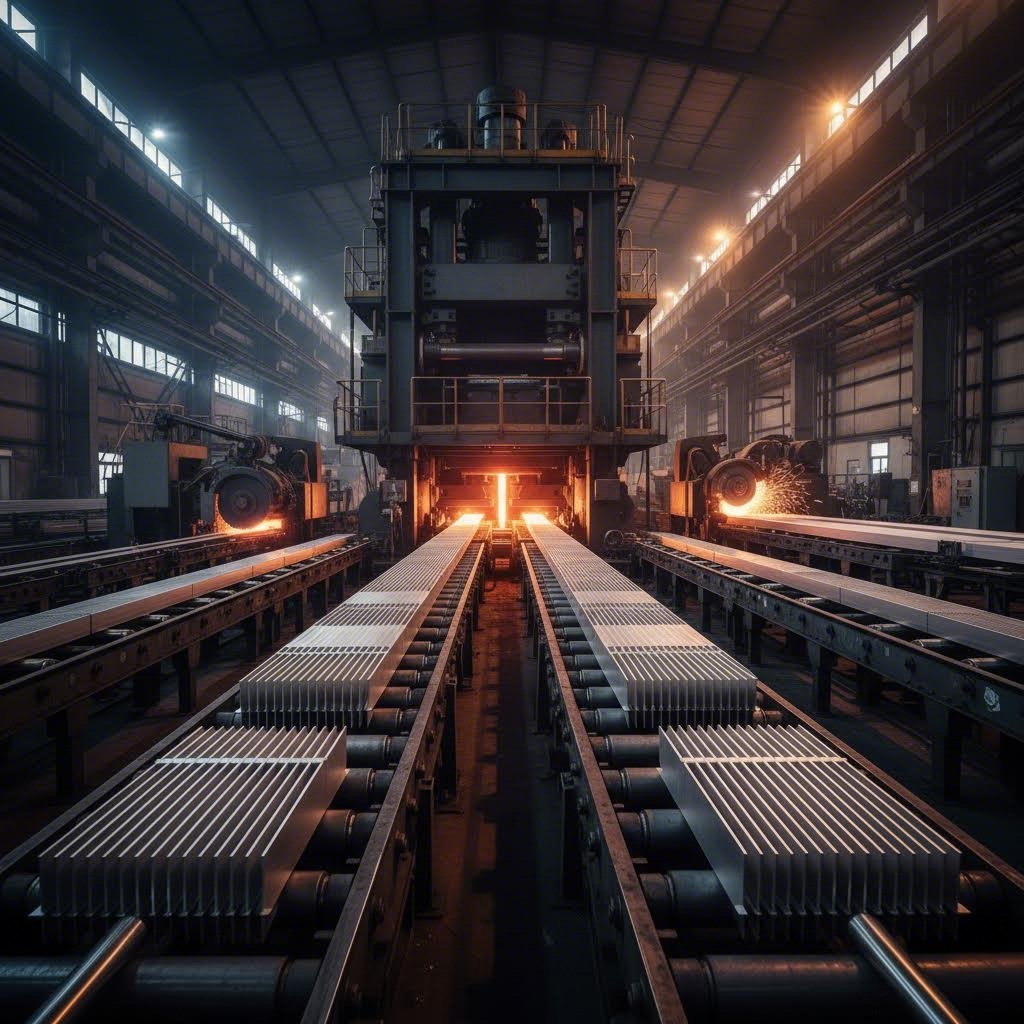
An extruded aluminum heat sink is created by forcing heated aluminum alloy through a shaped die, producing continuous profiles with consistent cross-sections. This process allows manufacturers to create intricate fin geometries that maximize surface area for heat dissipation—something alternative methods struggle to match economically.
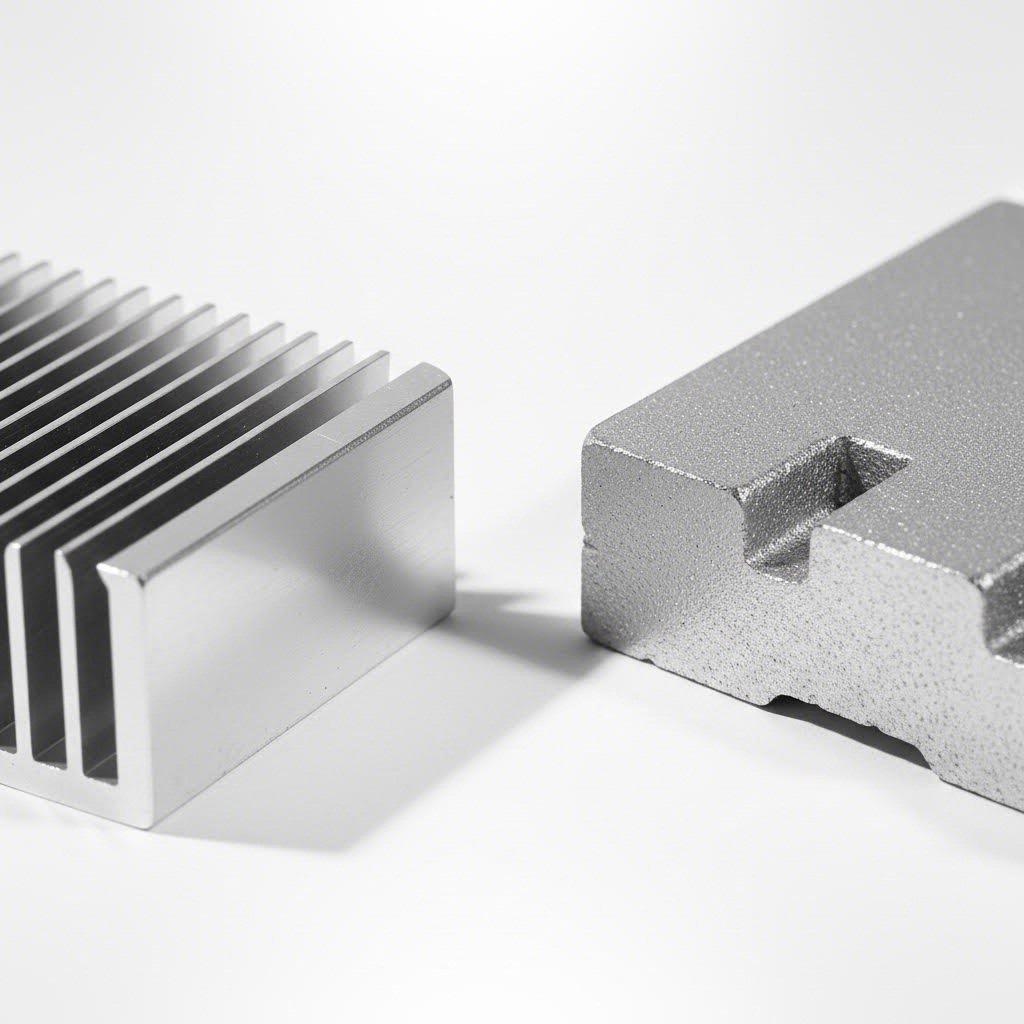
When comparing manufacturing methods, thermal conductivity sits at the heart of every decision. Extruded heatsinks consistently outperform die-cast alternatives for one critical reason: material integrity.
During extrusion, aluminum flows through the die in a controlled manner, producing dense, porosity-free profiles. Die casting, by contrast, involves injecting molten aluminum into molds—a process that often creates microscopic air pockets within the material. These voids interrupt heat flow and reduce thermal efficiency.
According to industry testing data, extrusions can deliver 23–53% better cooling performance than comparable die-cast heatsinks. This significant difference stems from:
For applications where every degree of temperature reduction matters—think power electronics, LED arrays, or telecommunications equipment—this performance gap makes aluminum extrusion heat sink solutions the clear winner.
Beyond die casting, engineers often consider bonded fin assemblies and skived heat sinks. Each has its place, but extruded aluminum heatsinks offer distinct advantages for most applications:
| Manufacturing Method | Best For | Limitations |
|---|---|---|
| Extrusion | Medium-to-high volumes, custom profiles, cost-sensitive projects | Limited to linear cross-sections |
| Die Casting | Complex 3D shapes, very high volumes | Higher tooling costs, lower thermal performance |
| Bonded Fin | Ultra-high fin density requirements | Thermal resistance at bond interfaces, higher cost |
| Skived | Tall, thin fins from solid blocks | Material waste, limited scalability |
The economic advantages of an extruded heat sink become particularly compelling when you examine the full production picture:
Aluminum heatsinks manufactured through extrusion also benefit from the material's inherent properties. At roughly 60% less dense than copper, aluminum delivers excellent thermal performance without the weight penalty—a critical consideration for aerospace, automotive, and portable electronics applications.
The extruded aluminum heatsink manufacturing process also pairs exceptionally well with secondary operations. Profiles can be easily cut to length, drilled, tapped, and machined to meet specific mounting requirements. This manufacturability extends to surface finishing, where aluminum's natural oxide layer and compatibility with anodizing enhance both corrosion resistance and thermal emissivity.
With these performance and economic advantages established, the next critical decision involves selecting the right aluminum alloy to optimize your heat sink's thermal transfer capabilities.
You've chosen aluminum extrusion as your manufacturing method—smart move. But here's where many engineers stumble: not all aluminum alloys perform equally in thermal applications. The alloy you select directly impacts how efficiently your heat sink transfers heat away from critical components, how easily it can be manufactured, and ultimately, how well your thermal management solution performs in the field.
When specifying aluminum heat sink material, you're essentially balancing three factors: thermal conductivity, mechanical strength, and extrudability. Get this balance right, and you'll have a cost-effective solution that meets your performance requirements. Get it wrong, and you'll face either manufacturing challenges or disappointing thermal results.
Your first instinct might be to choose the alloy with the highest thermal conductivity. After all, better heat transfer means better cooling, right? Not quite. Consider 1050 aluminum—it offers an impressive thermal conductivity of 229 W/m·K, but this alloy is mechanically too soft for practical heat sink applications. It would bend under stress and fail in vibration-prone environments.
This is why the 6000 series alloys dominate aluminium heat sink production. These alloys deliver the sweet spot between thermal performance, mechanical durability, and manufacturing ease. According to thermal management specialists, the 6xxx series offers "balanced thermal and mechanical properties—ideal for electronics, automotive, and industrial heat sinks."
Here's what makes the 6000 series particularly suitable for aluminum sinks used in thermal management:
Within the 6000 series, two alloys stand out for extruded aluminum heat sink material: 6063-T5 and 6061-T6. Understanding when to specify each can significantly impact your project's success.
6063-T5 has earned its reputation as the industry standard for extruded heat sinks. Why? It offers the best combination of thermal conductivity and extrudability in the 6000 series. With a thermal conductivity of 201 W/m·K, it transfers heat efficiently while allowing manufacturers to produce intricate fin profiles with tight tolerances and excellent surface quality. You'll find 6063-T5 in CPU coolers, LED lighting systems, and consumer electronics—applications where thermal performance and aesthetics both matter.
6061-T6 trades some thermal performance for increased mechanical strength. At 166 W/m·K, its conductivity is approximately 17% lower than 6063. However, when your heat sink must withstand high-stress environments—power converters in industrial equipment, automotive applications with significant vibration, or structural mounting requirements—6061-T6 becomes the preferred choice.
| Property | 6063-T5 | 6061-T6 | 1050 (Reference) |
|---|---|---|---|
| Thermal Conductivity | 201 W/m·K | 166 W/m·K | 229 W/m·K |
| Extrudability Rating | Excellent | Good | Excellent |
| Mechanical Strength | Moderate | High | Low |
| Surface Finish Quality | Superior | Good | Good |
| Typical Applications | Electronics, LED, consumer products | Power converters, automotive, industrial | Rarely used (too soft) |
Here's a practical guideline: start with 6063-T5 as your default specification for aluminium heat sink applications. Only switch to 6061-T6 when your application genuinely requires higher mechanical strength—and accept the thermal conductivity trade-off that comes with it.
Remember, as industry experts note, "the difference in thermal conductivity between 6000 series alloys is relatively minimal." Maximizing your heat sink's surface area and optimizing airflow often contribute more to thermal performance than squeezing out a few extra W/m·K from your alloy selection.
With your aluminum alloy selected, the next step involves understanding how turnkey providers transform your thermal specifications into finished products through their complete manufacturing workflow.
You've selected your aluminum alloy and understand why extrusion dominates heat sink manufacturing. But what actually happens when you engage a turnkey provider? Understanding the complete workflow helps you prepare properly, set realistic timelines, and communicate effectively with your manufacturing partner throughout the project.
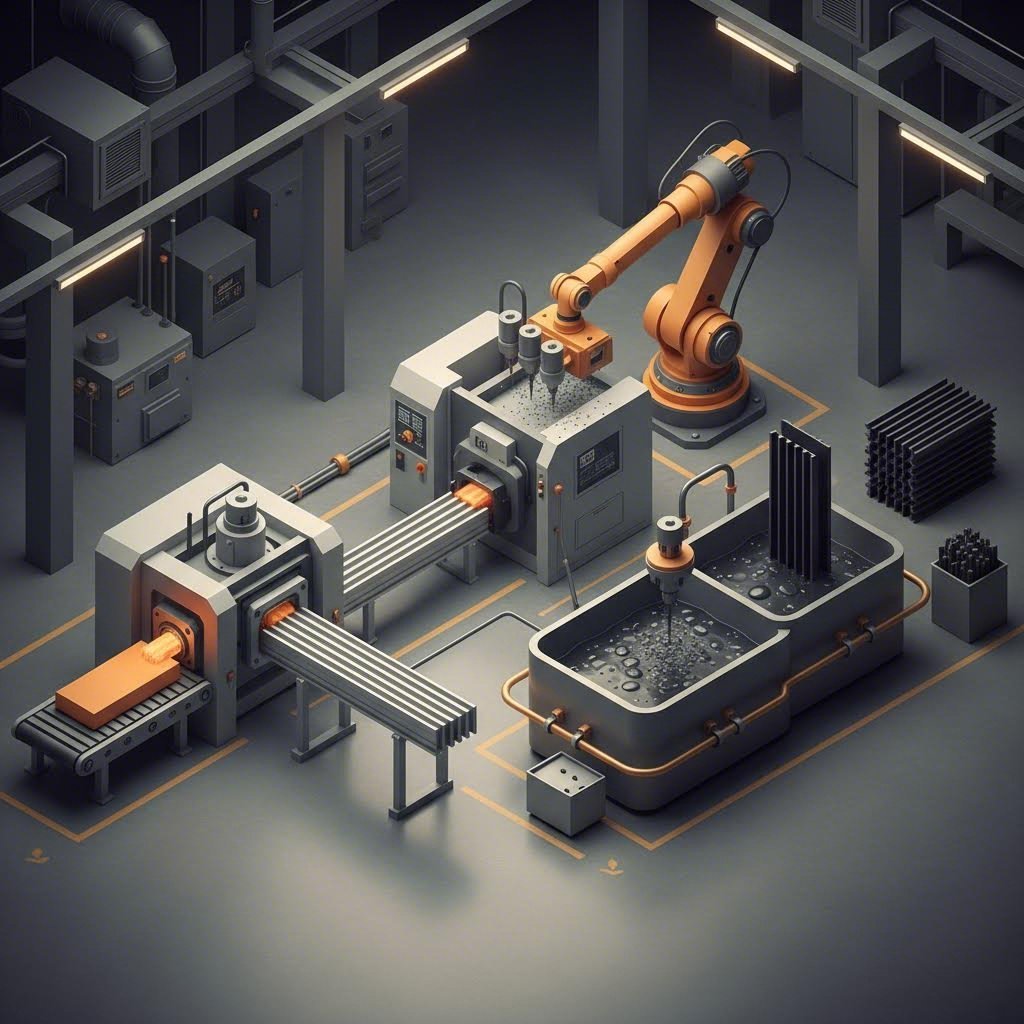
Aluminum extrusion services for heat sinks follow a structured sequence that transforms your thermal requirements into production-ready components. Each stage builds upon the previous one, with turnkey providers managing the entire progression under one roof. Let's walk through exactly what to expect.
Before any metal gets heated or dies get manufactured, successful projects begin with thorough preparation. Think of this as laying the foundation—the more complete your initial specifications, the smoother everything that follows.
What should you have ready when contacting a turnkey provider? Here's your preparation checklist:
According to thermal design specialists, establishing your power dissipation requirements early is critical. The formula for maximum power dissipation depends on the maximum junction temperature, ambient temperature, and thermal resistance of your system. Having these figures ready accelerates the entire design process.
Once you've gathered your specifications, the turnkey manufacturing workflow unfolds in a logical sequence. Each stage has specific deliverables and checkpoints that ensure your project stays on track.
The beauty of this structured workflow becomes apparent when you consider the alternative. Without extrusion services consolidated under one provider, you'd be coordinating handoffs between die makers, extruders, machine shops, and finishers—each transition introducing delays and potential quality issues.
For low volume manufacturing services or initial prototype runs, some stages may be accelerated or simplified. Conversely, high-volume production projects might include additional quality gates and statistical process controls. Your turnkey provider adapts the workflow to match your specific requirements.
With a clear understanding of the manufacturing workflow, the next consideration involves optimizing your heat sink design for both thermal performance and manufacturability.
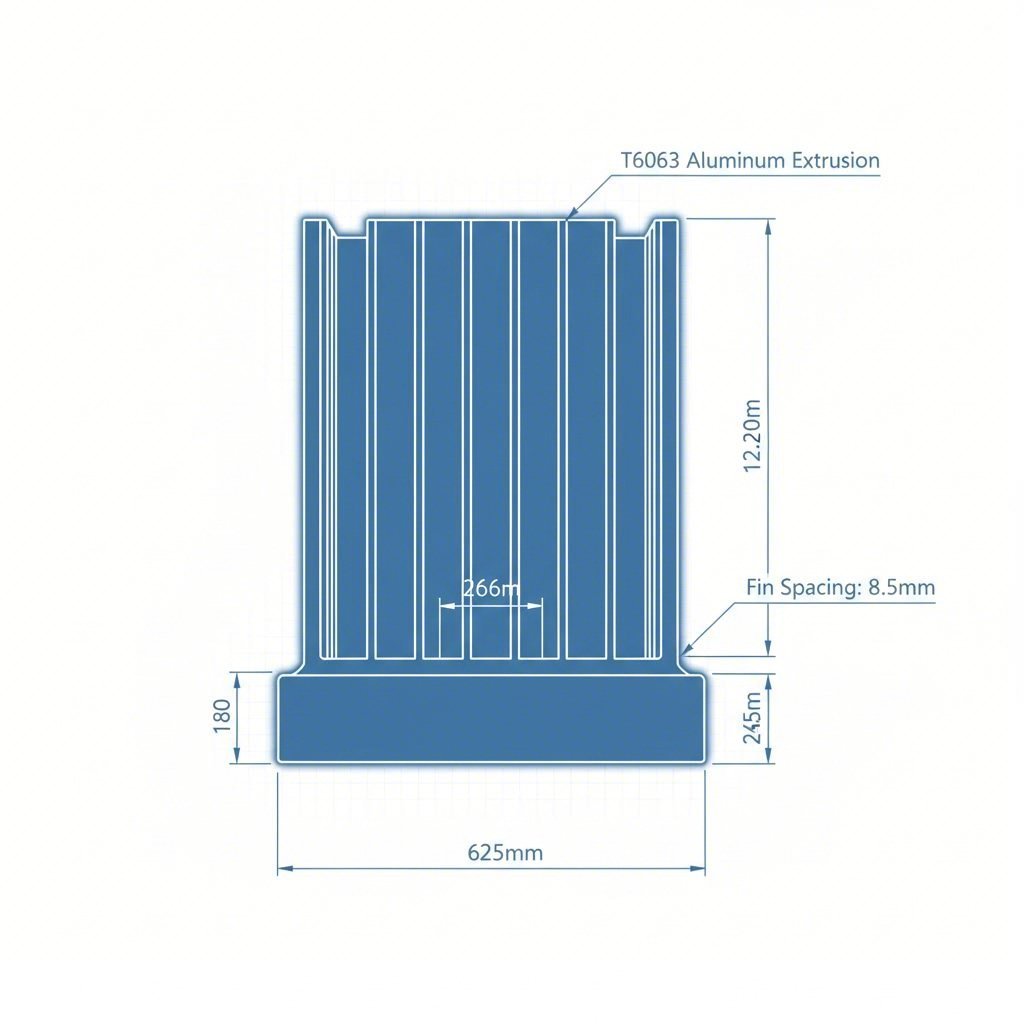
You've selected your alloy and understand the manufacturing workflow. Now comes the engineering challenge that separates adequate thermal solutions from exceptional ones: optimizing your extrusion heat sink design for both performance and manufacturability. Get these details right, and you'll maximize heat dissipation while keeping production costs under control.
Custom heat sink design involves balancing competing demands. Taller fins increase surface area but become harder to extrude. Thinner fins improve thermal efficiency but may lack structural integrity. Tighter fin spacing enhances heat transfer in forced convection but can restrict airflow in passive applications. Understanding these trade-offs helps you specify designs that deliver optimal results.
When you examine high-performance extruded heat sink profiles, you'll notice they share common characteristics: carefully calculated fin heights, precisely controlled spacing, and base thicknesses matched to thermal loads. These aren't arbitrary choices—each dimension directly impacts how efficiently heat moves from your components into the surrounding air.
The aspect ratio—the relationship between fin height and fin thickness—sits at the center of every custom heatsink design decision. According to industry specifications, standard extruded aluminum heat sinks typically achieve fin aspect ratios below 15:1. Push beyond this limit, and you'll encounter manufacturing difficulties that drive up costs and lead times.
Why does this ratio matter so much? Consider what happens during extrusion:
For small aluminum extrusions used in compact electronics, manufacturers can sometimes achieve aspect ratios approaching 20:1 by using specialized dies and controlled extrusion speeds. However, these profiles typically require additional straightening operations and tighter process controls—adding cost to your project.
Beyond aspect ratios, fin spacing profoundly affects thermal performance. Research from thermal engineering studies demonstrates that optimizing fin geometry directly correlates with heat dissipation efficiency. Closer fin spacing increases total surface area but creates higher pressure drops that can restrict airflow. The optimal spacing depends entirely on your cooling method.
For natural convection applications, wider fin gaps—typically 6mm to 10mm—allow air to flow freely through the heat sink. Forced convection systems with fans or blowers can utilize tighter spacing, sometimes down to 1.5mm to 2mm, because the active airflow overcomes the increased resistance.
Your extrusion press capacity determines what heatsink extrusion profiles are actually achievable. Larger presses generate more force, enabling more complex profiles with finer features. When discussing your custom heat sinks with turnkey providers, understanding these constraints helps you set realistic expectations.
Base thickness deserves particular attention in thermal interface design. The base serves two critical functions: spreading heat laterally from concentrated sources and providing a flat mounting surface for thermal interface materials. Too thin, and heat concentrates directly below your components without spreading to outer fins. Too thick, and you add unnecessary thermal resistance and material cost.
A general guideline: base thickness should be approximately 1.5 to 2 times the spacing between heat-generating components and the nearest fins. For single-source applications, 3mm to 6mm base thicknesses work well for most power levels. Multi-source configurations or high-wattage applications may require thicker bases or embedded heat pipes for adequate spreading.
Tolerance requirements become especially critical where your heat sink meets thermal interface materials. According to heat sink fabrication guidelines, surface flatness directly impacts thermal resistance at the interface. Even microscopic gaps between the heat sink and component create air pockets that dramatically reduce heat transfer efficiency.
When requesting custom heat sink extrusions, specify these key design parameters clearly:
Wavy or undulated fin designs, as shown in thermal optimization research, can enhance surface area beyond what straight fins provide. These specialized extruded heat sink profiles create additional turbulence in the airflow, improving convective heat transfer. The "waviness" can be incorporated into extrusion dies, though such features increase die complexity and cost.
Remember that your turnkey provider's design engineers can optimize these parameters based on their manufacturing capabilities and your thermal requirements. Providing complete specifications upfront—rather than rigid dimensions—often results in better-performing, more cost-effective solutions.
With your fin geometry and profile design optimized, secondary machining operations transform the raw extrusion into an assembly-ready component.
Your heat sink profile emerges from the extrusion press looking impressive—but it's not ready for assembly. Raw heatsink extrusions require secondary operations to transform them into production-ready components that integrate seamlessly with your electronic assemblies. This is where CNC machining capabilities become essential, adding the mounting features, precision cuts, and component clearances your application demands.
When secondary operations happen within the same turnkey facility as extrusion, you gain significant advantages. Each handling transition between suppliers risks dimensional errors and surface damage. Integrated manufacturing eliminates these handoffs, maintaining the tight tolerances critical for thermal interface performance throughout the entire production process.
Think about what your heat sink actually needs before it can function in your product. Mounting holes must align precisely with your PCB or chassis. The profile length must match your thermal zone exactly. Fastener threads need to accept your specified screws without cross-threading. Component clearances must accommodate adjacent parts without interference.
Each of these requirements demands specific machining operations:
According to thermal manufacturing specialists, secondary operations like drilling, milling, stamping, and cutting transform basic extrusions into application-specific solutions. The key is communicating your requirements clearly upfront so your provider can plan efficient machining sequences.
Unlike aluminum stamping parts that form sheet material into shapes, machined extrusions start with your optimized thermal profile and add precise features without compromising the fin geometry you've carefully specified.
Modern CNC machining centers bring remarkable precision to heat sink fabrication. Multi-axis machines can perform complex operations in single setups, maintaining dimensional relationships between features that would drift if the part were repositioned between operations.
What makes CNC machining particularly valuable for precision extrusions used in thermal applications? Several factors come into play:
For cnc aluminum prototype development, these capabilities prove especially valuable. Engineers can iterate quickly on designs, testing different mounting configurations or clearance modifications without waiting for new tooling. Once the design is finalized, the same CNC programs scale directly to production volumes.
The aluminum parts assembly service aspect of turnkey manufacturing often includes features that turn simple heat sinks into functional modules. According to CNC machining specialists, advanced processing supports integrated assembly features like PEM nuts, press-fit pins, or cavities for embedded copper heat pipes—transforming a basic heatsink into a high-performance thermal module.
Quality verification follows machining operations. Dimensional inspection using coordinate measuring machines (CMMs) confirms that hole locations, feature depths, and surface flatness meet your specifications. This verification step catches any deviations before parts move to surface finishing, preventing costly rework downstream.
When evaluating turnkey providers, ask specifically about their CNC machining capabilities. Do they operate 3-axis, 4-axis, or 5-axis equipment? What tolerances can they reliably hold? How do they verify dimensional accuracy? The answers reveal whether they can deliver the precision your thermal interface requires.
With secondary machining complete, your heat sinks are dimensionally correct and feature-complete. The next stage—surface finishing—adds protection and can enhance thermal radiation performance.
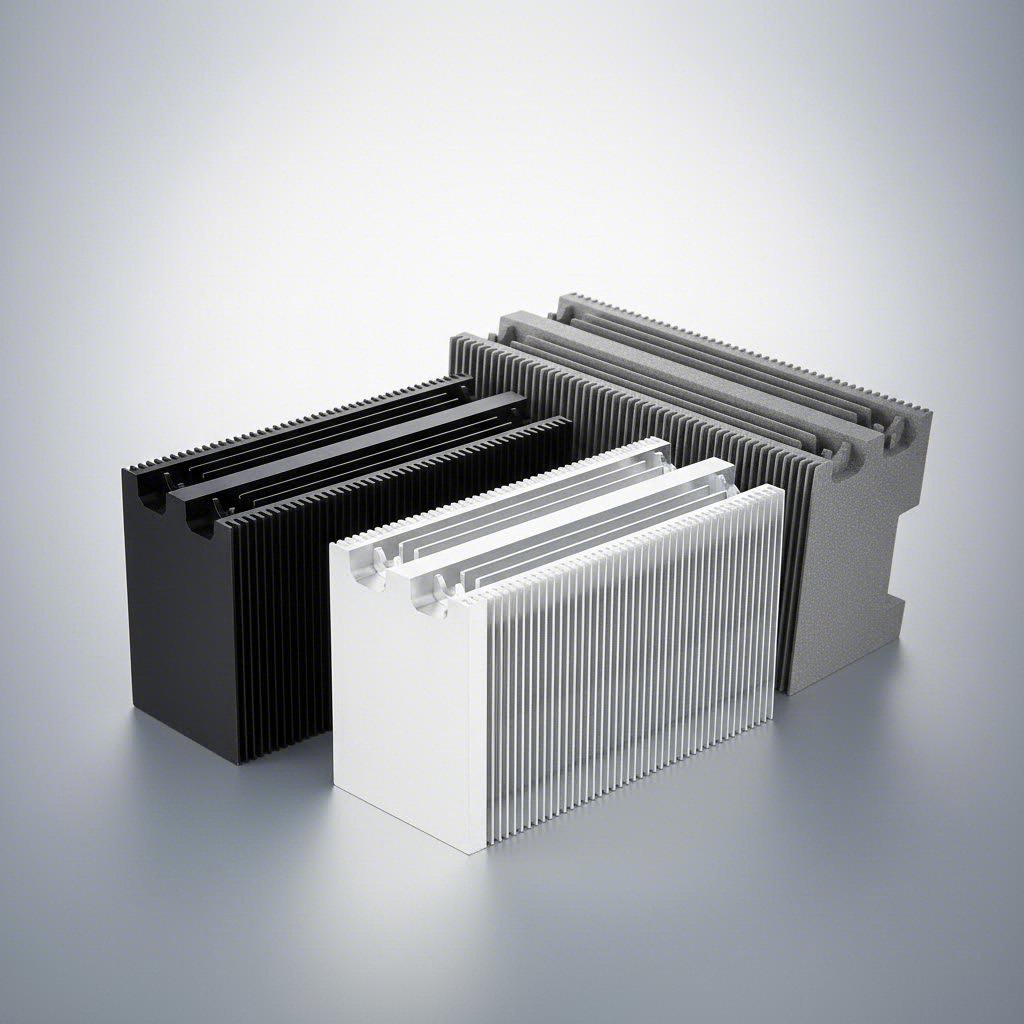
Your heat sink is machined, dimensionally verified, and ready for the final production stage. But before it ships, surface finishing adds both protection and—surprisingly to many engineers—can significantly enhance thermal performance. The finish you select isn't just cosmetic; it directly affects how efficiently your heat sink radiates heat and how long it survives in demanding operating environments.
When evaluating anodizing services or powder coating services for your thermal management solution, you're making decisions that impact both immediate performance and long-term reliability. Let's examine how each finishing option affects your heat sink's ability to do its job.
Here's something that surprises many engineers: anodizing doesn't just protect aluminum—it can actually improve heat dissipation. How? The answer lies in thermal emissivity, a material's ability to radiate heat as infrared energy.
Raw aluminum has low emissivity, typically around 0.05 to 0.10. This means bare aluminum reflects most thermal radiation rather than emitting it. In applications where convective cooling dominates, this matters little. But when your heat sink operates in enclosed spaces or relies partly on radiative heat transfer, emissivity becomes crucial.
Black anodizing transforms this characteristic dramatically. The darkened oxide layer increases surface emissivity to approximately 0.80 to 0.90—nearly matching ideal blackbody radiation. This enhancement allows your heat sink to radiate significantly more thermal energy into its surroundings, particularly beneficial in:
Clear anodizing offers a different value proposition. While it doesn't significantly boost emissivity (remaining around 0.20 to 0.40), it provides excellent corrosion protection with minimal thermal impact. The oxide layer is thin enough—typically 5 to 25 microns—that it introduces negligible thermal resistance. For applications prioritizing durability over radiative enhancement, clear anodizing delivers protection without performance compromise.
Whether you're working with an anodizing service locally or through your turnkey provider, specify your requirements clearly. Standard Type II sulfuric acid anodizing suits most applications, while Type III hard anodizing provides superior wear resistance for high-contact environments. Facilities specializing in industrial applications—including anodizing Houston operations and providers nationwide—can match process parameters to your specific thermal and durability requirements.
Not every heat sink operates in a climate-controlled electronics enclosure. Some face salt spray, chemical exposure, extreme temperatures, or outdoor weathering. Matching your surface treatment to actual operating conditions prevents premature failure and ensures consistent thermal performance throughout your product's lifespan.
Industrial powder coating offers robust protection for harsh environments. Unlike anodizing, which converts the aluminum surface into oxide, powder coating applies a polymer layer that shields against mechanical damage, UV exposure, and chemical attack. For heat sinks in outdoor telecommunications equipment or industrial control systems, thermoset powder coating provides the durability these applications demand.
However, powder coating comes with thermal trade-offs. The polymer layer acts as an insulator, adding thermal resistance between the aluminum and surrounding air. For high-performance cooling applications, this resistance can measurably reduce heat dissipation. The practical impact depends on coating thickness—thinner applications (50-75 microns) affect performance less than heavy-duty coatings (100+ microns).
When operating temperatures exceed standard ranges, specialized treatments become necessary. High temperature powder coating powder formulations maintain integrity at temperatures that would degrade standard coatings. These specialty powders—typically silicone-modified polyesters or fluoropolymers—withstand continuous exposure to 200°C or higher while maintaining protective properties.
| Finish Type | Thermal Emissivity | Thermal Impact | Durability | Best Applications |
|---|---|---|---|---|
| Clear Anodizing | 0.20–0.40 | Minimal | Good | Indoor electronics, consumer products |
| Black Anodizing | 0.80–0.90 | Enhanced radiation | Good | Passive cooling, enclosed systems |
| Hard Anodizing (Type III) | 0.70–0.85 | Slight resistance added | Excellent | High-wear, military, aerospace |
| Standard Powder Coating | 0.85–0.95 | Adds thermal resistance | Very Good | Outdoor equipment, industrial systems |
| High-Temp Powder Coating | 0.80–0.90 | Moderate resistance | Excellent | Automotive, power electronics |
| PVDF Coating | 0.85–0.90 | Moderate resistance | Outstanding | Marine, chemical exposure, outdoor |
Liquid & powdercoat finishes each serve distinct purposes in your finishing toolkit. Liquid coatings offer thinner application options when thermal resistance must be minimized, while powder coatings provide superior durability for demanding physical environments. Your turnkey provider can recommend the optimal approach based on your specific operating conditions.
For marine or chemical processing applications, PVDF (polyvinylidene fluoride) coatings deliver exceptional resistance to salt spray, acids, and solvents. Though more expensive than standard powder coating services, PVDF-finished heat sinks maintain both appearance and protection in environments that would rapidly degrade other finishes.
The key insight? Surface finishing decisions should integrate with your thermal analysis, not follow as an afterthought. A heat sink optimized for bare aluminum performance may underperform expectations once coated—or conversely, may exceed predictions when black anodizing enhances radiative transfer. Discuss finishing options with your turnkey provider during the design phase to ensure your thermal calculations account for the final surface condition.
With surface finishing selected and applied, your heat sinks are production-ready. The next consideration involves matching these thermal solutions to specific industry requirements and operating environments.
Your heat sink is designed, extruded, machined, and finished. But here's the reality: a thermal solution that excels in LED lighting may fail spectacularly in aerospace applications. Different industries impose dramatically different demands on heat sink manufacturers—from thermal loads and environmental exposure to regulatory compliance and reliability standards. Understanding these requirements helps you specify solutions that perform reliably in your specific application.
Turnkey providers serving multiple industries develop specialized expertise and process adaptations for each vertical. When you partner with an experienced heat sink supplier, you gain access to this accumulated knowledge—avoiding the costly trial-and-error that comes with learning industry-specific requirements firsthand.
Every market sector brings unique thermal challenges. What works perfectly in a climate-controlled data center fails within months on a telecommunications tower. Let's examine what each major industry demands from its industrial heat sink solutions.
Beyond the basic thermal specifications, each industry imposes environmental and regulatory requirements that shape how aluminum heat sink suppliers approach manufacturing. A heatsink manufacturer serving aerospace customers maintains different quality systems than one focused primarily on consumer electronics.
Quality certifications provide assurance that manufacturing processes meet industry expectations. ISO 9001:2015 certification establishes baseline quality management systems that most industries require. This certification ensures consistent manufacturing standards, documented processes, and continuous improvement practices that deliver reliable products batch after batch.
More demanding industries require additional certifications:
Environmental testing validates that heat sinks perform reliably under real-world conditions. Depending on your industry, your turnkey provider may conduct salt spray testing for corrosion resistance, thermal shock cycling to verify material integrity, or vibration testing to confirm mechanical durability. These validation steps catch potential failures before products reach the field.
When evaluating heat sink manufacturers for your industry, ask specifically about their experience in your sector. Have they supplied similar applications? Do they hold relevant certifications? Can they provide references from comparable projects? The answers reveal whether they understand the specific challenges your thermal management solution must overcome—and whether their processes are structured to deliver the reliability your application demands.
You've explored alloy selection, design optimization, machining operations, surface finishing, and industry-specific requirements. Now comes the strategic question that ties everything together: how do you translate this knowledge into an efficient supply chain that delivers consistent results? The answer lies in vendor consolidation—working with turnkey providers who handle your complete thermal management requirements under one roof.
When you partner with aluminum extrusion suppliers offering comprehensive capabilities, you're not just purchasing components. You're gaining a manufacturing partner who understands how each production stage affects the next, who can optimize your design for both performance and cost, and who takes accountability for delivering production-ready aluminum heat sinks that meet your specifications.
Imagine managing a thermal solution project the traditional way: you source die development from one company, extrusion from another, CNC machining from a third, and anodizing from a fourth. Each transition requires purchase orders, quality inspections, shipping coordination, and communication overhead. When problems arise—and they will—determining responsibility becomes a frustrating exercise in finger-pointing between suppliers.
Now consider the turnkey alternative. One provider, one contact, one quality system, one accountability chain. Custom aluminum extrusions move seamlessly from die shop to extrusion press to machining center to finishing line without ever leaving the facility. Issues get identified and resolved internally, often before you're even aware a problem existed.
The supply chain benefits extend beyond convenience:
The most expensive component in your supply chain isn't always the part with the highest price tag—it's often the coordination overhead, quality escapes, and delivery delays that accumulate when multiple vendors must synchronize their efforts.
Beyond operational efficiency, partnering with custom aluminum extrusions suppliers offering turnkey capabilities delivers measurable business advantages. Consider time-to-market: every week saved in your development cycle represents potential revenue captured before competitors. Turnkey providers compress timelines by eliminating the handoff delays inherent in fragmented supply chains.
Quality control improves dramatically under consolidated manufacturing. When one organization owns the entire process—from die development through surface finishing—there's nowhere to hide quality issues. Problems get traced to their root causes and corrected systematically, rather than recurring because responsibility diffuses across multiple companies.
What should you look for when evaluating turnkey partners for your custom extruded aluminum thermal solutions? Manufacturing capability breadth tells much of the story:
For example, Shengxin Aluminium's Deep Processing & Custom Extrusion Services demonstrates what comprehensive turnkey capabilities look like in practice. With over 30 years of industry experience, 35 advanced extrusion presses spanning 600T to 5500T capacity, and state-of-the-art CNC machining centers, they deliver end-to-end support from die development through mass production. Their extensive surface treatment options—including anodizing in custom colors like Champagne and Rose Gold, powder coating, PVDF, and micro-arc oxidation—mean your thermal management solution receives complete processing under unified quality control.
The decision to consolidate your thermal management supply chain ultimately comes down to risk management. Fragmented supply chains multiply the variables that can derail your project—miscommunication between vendors, quality variations between suppliers, delivery coordination failures, and finger-pointing when problems occur. Turnkey partnerships reduce these variables to a manageable set, giving you predictable outcomes and clearer accountability.
When you're ready to move forward with your aluminum heat sinks project, approach potential providers with your complete requirements: thermal specifications, volume projections, quality certifications needed, and timeline expectations. Evaluate their responses not just on price, but on their demonstrated capability to handle your entire manufacturing workflow. The right turnkey partner becomes an extension of your engineering team—invested in your success from initial concept through ongoing production.
Turnkey heat sink services encompass the entire manufacturing workflow under one provider: thermal analysis and design consultation, custom die development, aluminum extrusion production, secondary CNC machining operations (drilling, tapping, precision cutting), surface finishing (anodizing, powder coating), quality inspection, and logistics delivery. This consolidated approach eliminates coordination between multiple vendors, reduces lead times, and ensures consistent quality control throughout production.
Costs vary based on several factors including profile complexity, die development requirements, volume quantities, secondary machining needs, and surface finishing specifications. Turnkey services often prove more cost-effective than piecemeal sourcing by eliminating shipping between facilities, reducing handling damage, and minimizing coordination overhead. Providers like Shengxin Aluminium offer factory-direct pricing with comprehensive capabilities spanning 35 extrusion presses from 600T to 5500T capacity.
Extruded aluminum heat sinks deliver 23-53% better cooling performance than die-cast alternatives due to superior material density without porosity. The extrusion process produces dense, consistent profiles with uninterrupted thermal pathways, while die casting often creates microscopic air pockets that reduce thermal efficiency. Additionally, extrusion offers lower tooling costs, faster die production, better scalability, and compatibility with 6063-T5 alloy which provides approximately 201 W/m·K thermal conductivity.
6063-T5 is the industry standard for extruded heat sinks, offering excellent thermal conductivity (201 W/m·K), superior extrudability for complex fin geometries, and high-quality surface finish ideal for thermal interface contact. For applications requiring higher mechanical strength—such as automotive or industrial environments with significant vibration—6061-T6 provides better durability at the trade-off of approximately 17% lower thermal conductivity (166 W/m·K).
Black anodizing significantly enhances thermal radiation by increasing surface emissivity from 0.05-0.10 (bare aluminum) to 0.80-0.90. This improvement is particularly beneficial for enclosed electronics, passive cooling applications, and space-constrained designs where radiative heat transfer matters. Clear anodizing provides corrosion protection with minimal thermal impact, maintaining emissivity around 0.20-0.40 while adding negligible thermal resistance through its thin 5-25 micron oxide layer.



 Onlineservice
 0086 136 3563 2360
 sales@sxalu.com
 +86 136 3563 2360
 Deutsch
 English
 français
 русский
 español
 português
 العربية
 ไทย
 Việt
 Українська