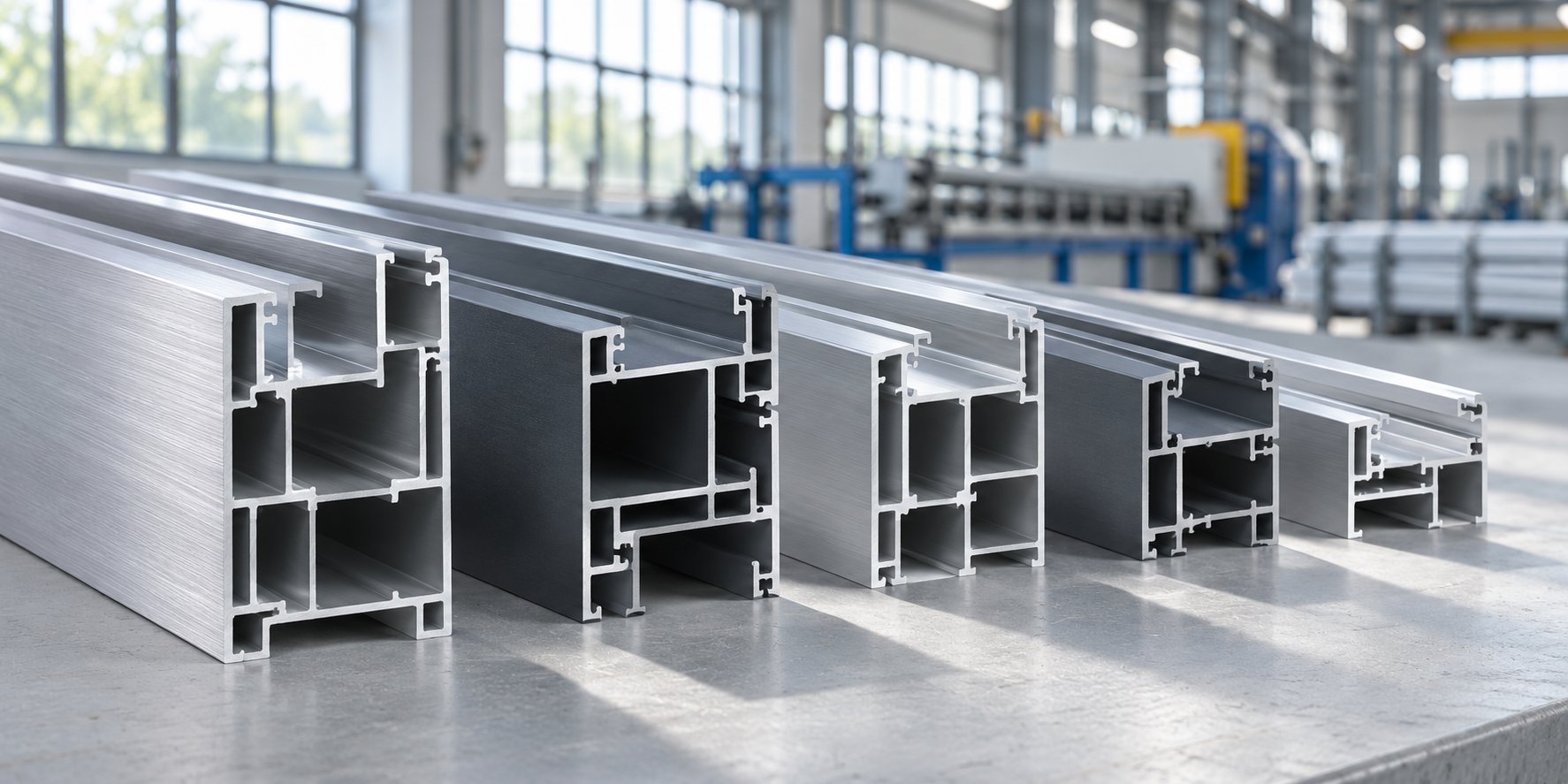
Have you ever looked at a sleek window and wondered how such a thin frame holds so much glass? The answer starts long before the window reaches a building site. It starts inside an extrusion press.
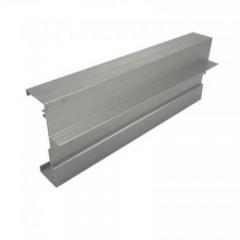
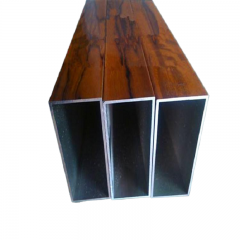
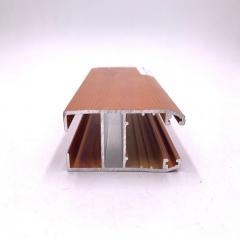
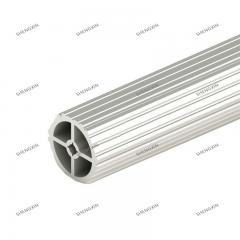
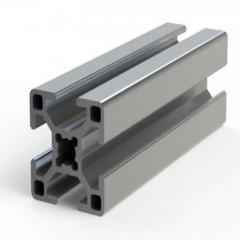
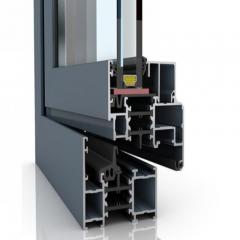
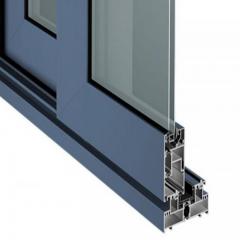
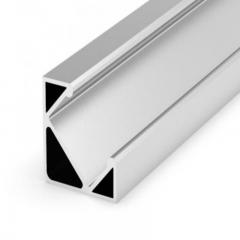
An aluminium window frame extrusion is a profile made by forcing a heated aluminium billet through a shaped die. The result is a continuous cross-section, such as a frame, sash, mullion, transom, or glazing bead, that fabricators cut to length, machine, and assemble into finished windows.
One engineer quoted by Window + Door compares the process to a Play-Doh press used on a much larger scale. You push material through a shape, and the same profile comes out every time.
Why do so many architects and fabricators choose windows in aluminium? A few properties stand out:
The main trade-off? Aluminium conducts heat very well. For energy-conscious projects, frames need thermal breaks, which are low-conductivity barriers between the inner and outer metal.
A typical system uses several extruded parts, and each one has a specific job:
This guide follows aluminum window extrusions from billet to installed window, covering the process, alloys, specs, thermal performance, standards, finishes, and buyer checkpoints. All of these parts begin as the same solid log of metal, yet each ends up with a very different shape and job. The way a plain billet becomes a precise, multi-chamber profile is where the real story begins.
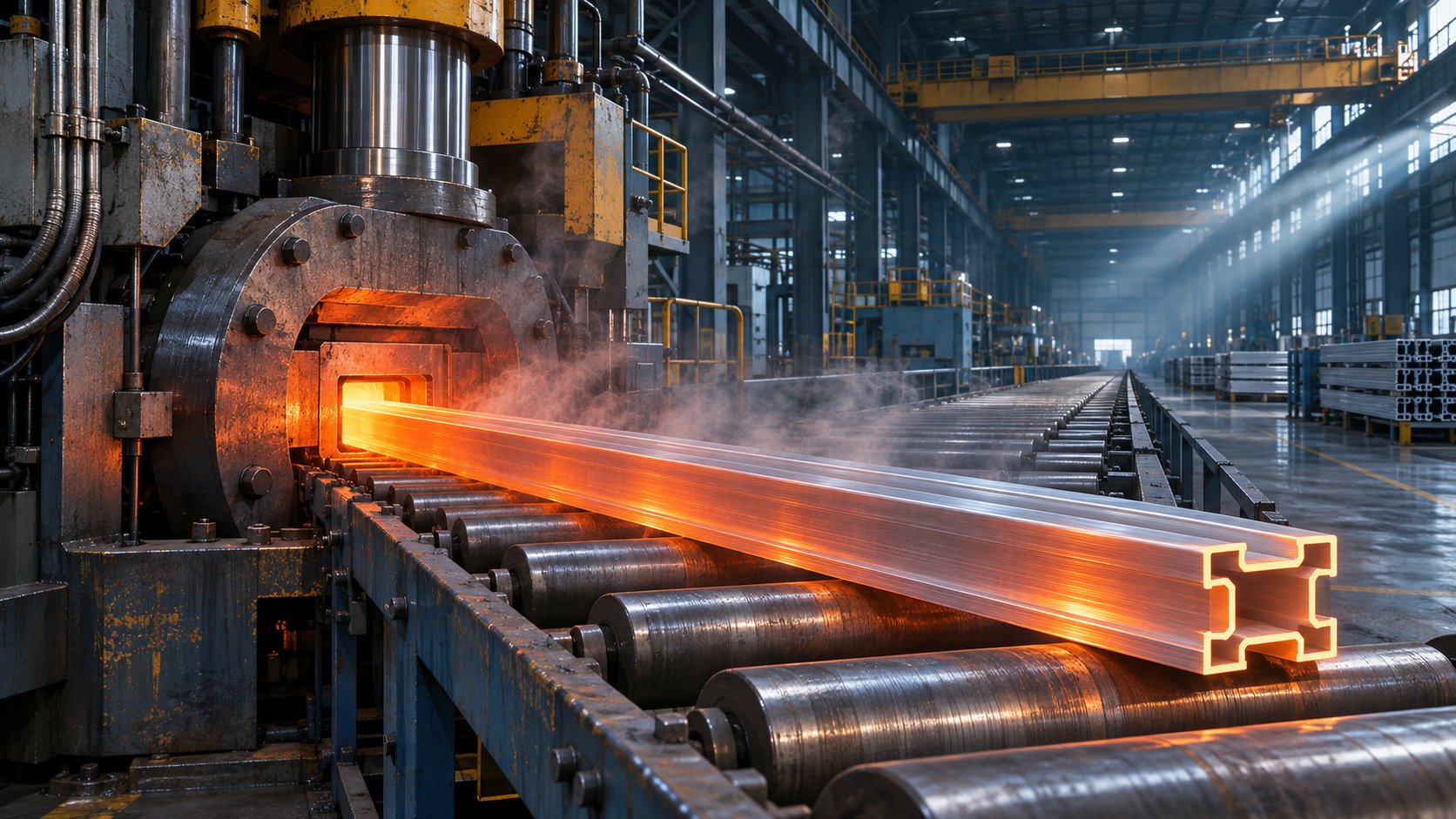
When you close a window and the sash meets the frame with a soft, even seal, you are feeling the result of many production decisions. Most of them were made at the extrusion plant, long before anyone assembled the window. Here is the full sequence, in order:
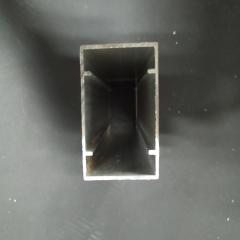
Every feature of a window custom industrial aluminum profile starts in the die. That includes hollow chambers, screw ports, gasket grooves, and thermal-break pockets. Dies are machined from hardened tool steel. For hollow profiles, Bor USA explains that the die uses a mandrel: the metal splits around it and welds back together inside the die. A small error here causes real problems later. A gasket groove cut slightly off-size means a gasket that never seats properly.
The billet matters just as much. After casting, alloying elements are not spread evenly through the metal. Homogenization is a heat treatment that evens out this internal structure. It dissolves coarse magnesium-silicon particles and turns sharp iron-bearing particles into smaller, rounder ones. A rushed or poorly controlled cycle can raise press pressure, slow output, and leave streaks after anodizing. On an anodized frame, that can be the difference between a uniform finish and a blotchy one.
Sounds intense? It is. Aluminium logs are heated to around 900°F, and a hydraulic ram then pushes the metal through the die with roughly 3,600 tons of pressure. The metal softens, but it never melts. Press size varies by producer. Larger presses take bigger billets and can produce wider, heavier window extrusions.
As the profile exits the die, it is quenched with air or water. The cooling rate is part of the heat treatment, so it directly affects the final strength. If a profile cools too slowly, it may fall short of its target mechanical properties.
Next, each length is gripped at both ends and stretched slightly. This straightens the profile and relieves internal stress. Why does that matter to you? A bowed sash will not close evenly or seal tightly. The profiles are then sawn to length and aged in an oven. Ageing raises strength to a target temper, such as T5 or T6, and that choice has a big effect on how the frame performs.
A raw, mill-finish profile is not yet an aluminum window frame. It is usually anodized or powder coated first. In thermally broken systems, an insulating barrier is added to join the inner and outer metal sections. Fabricators then cut the profiles, machine drainage slots and hardware holes, crimp the corners, and install the glass. Imagine a perfectly extruded profile with poorly crimped corners. Water will find that gap. A reliable extruded aluminum window frame depends on every stage, from the die to the glazing.
Even a flawless process can only work with the metal it is given, though. Two profiles can look identical on a drawing and still behave very differently under wind load or after anodizing. The reason usually comes down to alloy and temper.
Why do two frames that look the same perform so differently? The answer often sits in a short code on the mill certificate, such as 6063-T5. The first part names the alloy. The second part names the temper.
Most aluminium window frames are extruded from 6063, and for good reason. Extrusion specialist Metra North America calls it the architectural standard. It offers outstanding extrudability, sharp profile detail, tight tolerances, and superior response to anodizing and paint. In practice, it flows easily into complex thin-wall hollows with multiple chambers and gasket grooves. Its strength is moderate, but that is enough for most residential and light commercial openings.
You may notice that some supplier listings mention 6063 made from 99.7% A00 primary aluminium ingot. Higher-purity base metal contains fewer stray impurities, such as iron. This can help anodized color stay more consistent from batch to batch. Still, purity is only one factor. Alloy chemistry, billet homogenization, and press control matter just as much.
Each 6000-series alloy trades shape complexity and finish against strength. Here is how they compare in window work:
| Alloy | Typical Role in Fenestration | Extrudability | Surface Finish Quality | Relative Strength | Typical Uses |
|---|---|---|---|---|---|
| 6060 | Fine-finish lighter sections | Excellent | Excellent | Lower than 6063 | Glazing beads, trims, light frames |
| 6063 | Standard frame and sash alloy | Outstanding, handles complex hollows | Superior anodizing and paint response | Moderate | Frames, sashes, curtain wall, trims |
| 6005 / 6005A | Structural members with complex shapes | Good, better than 6061 | Good | Near 6061 | Large mullions, structural tubing |
| 6061 | Heavy structural members | Lower, struggles with intricate hollows | Rougher | High | Heavy reinforcements, brackets, large mullions |
The strength gap is real. In the T6 temper, 6061 reaches about 35 ksi yield and 42 ksi ultimate, while 6005 reaches about 35 ksi yield and 41 ksi ultimate. However, 6063 has a significant cost advantage over 6061, so over-specifying only adds cost, die wear, and weight.
Temper describes how the metal was heat treated. Here is the simple version:
Most aluminum frame windows use T5 because it delivers enough strength at a lower cost. Now imagine a tall glazed facade exposed to strong coastal winds. There, T6 profiles, often in 6005 or 6061, may be specified for heavier mullions. Quenching matters too. 6063 can be air-quenched at the press runout table, while 6061 often needs aggressive water quenching, which can distort the profile without proper controls.
Key takeaway: Match alloy and temper to the structural load and finish you expect, avoid paying for strength you do not need, and request mill certificates that confirm both.
Yet alloy is only half of the stiffness story. A 6063-T5 profile with thin walls or a shallow depth will still flex under load, which is why the numbers printed on a profile listing deserve a much closer look.
Ever opened a profile listing and seen a row of numbers like "70 series, 1.8 mm, 1.2 kg/m, 6 m"? Many aluminum profiles are listed this way, yet few listings explain what those figures mean for your finished window. Here is how to read them.
Wall thickness is the thickness of metal in a single wall of the section. Thicker walls add stiffness, hold screws more securely at hinges and locks, and raise cost. There is no universal number, though. The thickness you need depends on local standards, span, and wind load. In China, for example, GB/T 8478-2020 sets a 1.8 mm nominal minimum for exterior-window main profiles. Load-bearing members such as mullions must also pass design calculation and testing.
Weight per metre (kg/m) is a practical stand-in for material content and price, because many extruders quote by the kilogram. In one calculated example, increasing the wall of a 40 x 60 mm hollow section from 1.4 to 2.0 mm raises its mass from 0.735 to 1.037 kg/m. Depth matters even more. The same source shows that a deeper 40 x 80 mm section with 1.8 mm walls has about 83.3% more bending inertia than the 40 x 60 mm section at 2.0 mm. In other words, a heavier window profile is not automatically a stiffer one.
Profiles usually ship in standard mill lengths of around 6 m. That length balances transport, handling, and cutting yield, so fabricators plan their cut lists around it to reduce waste.
Tolerance is the allowed deviation from the drawing. Bor USA claims tolerances of roughly ±0.1-0.3 mm for its extruded profiles. China's GB/T 5237.1 super-high-precision grade, required for mating main window profiles, goes as tight as about ±0.09-0.10 mm for 1.2-2.0 mm walls on smaller sections.
Why fuss over a tenth of a millimetre? Because small errors add up across parts. This is called tolerance stack-up:
Series numbers commonly refer to frame depth in millimetres. Under GB/T 8478-2020, a 70 series frame has a 70 mm construction depth, or about 2.76 inches. Don't confuse this with wall thickness. A 70 series profile can still have 1.8 mm walls. Deeper series generally hold thicker glass units, span larger openings, resist bending better, and leave more room for thermal breaks.
| Series | Approximate Frame Depth | General Application Scale | What to Expect |
|---|---|---|---|
| 50 series | About 50 mm | Smaller residential openings, mild climates | Light sections with limited room for thick glazing or wide thermal breaks |
| 60 series | About 60 mm | Standard residential casements and sliders | A balance of cost, stiffness, and glazing capacity |
| 70 series | About 70 mm | Larger residential openings and light commercial work | More space for multi-chamber designs and thermal breaks |
| 80 series | About 80 mm | Large sliding doors, floor-to-ceiling glazing, commercial units | Higher stiffness for bigger glass and greater wind exposure |
Slim-frame and narrow-frame designs push in a different direction. Narrow sightlines maximize glass and views, but less visible metal can mean less stiffness and less room for insulation. A capable aluminum profile manufacturer will often compensate with deeper sections, stronger alloys, or internal reinforcement, so it pays to ask how the slim look is achieved.
Depth buys stiffness and space. Yet all that extra aluminium is also an excellent conductor of heat, and the room a deeper series creates only pays off when something insulating fills it.
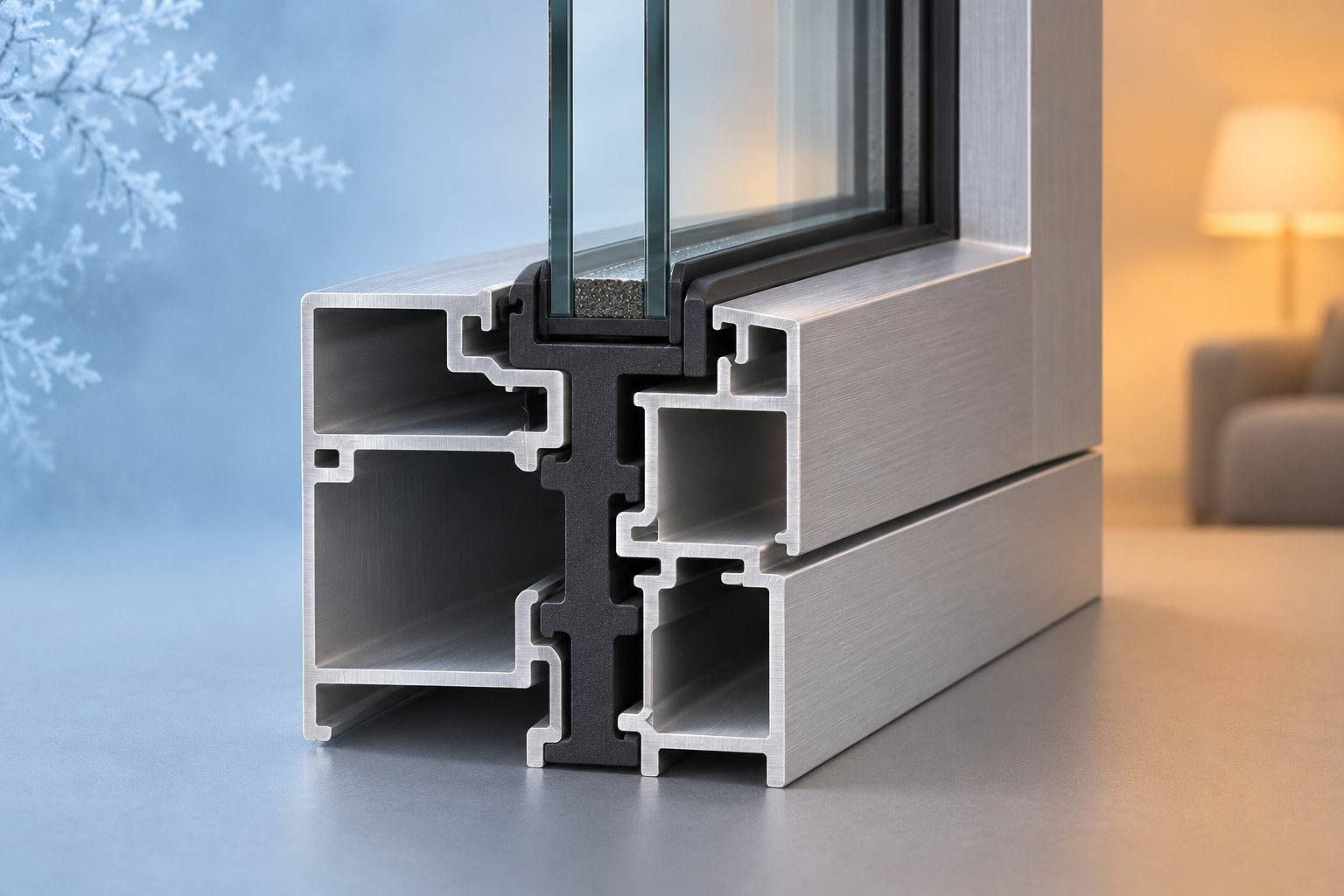
Are aluminium frames energy efficient? The honest answer is that it depends on what sits between the inside and outside metal. Aluminium conducts heat roughly 1,000 times faster than wood or vinyl. A solid aluminium frame carries winter cold straight to the room side, where the interior surface can drop below the dew point. The result is condensation, streaking, and eventually mold along the frame edge.
A thermal break is a low-conductivity barrier that separates the inner and outer aluminium sections. It interrupts the metal path that heat would otherwise follow. Most aluminum window extrusion profiles use one of two methods:
Both methods are proven in windows and curtain wall. The better choice usually depends on the extruder's workflow, the opening size, and the performance target. Keep in mind that a thermal break cannot be retrofitted. It has to be designed into the extrusion from the start.
U-value measures the rate of heat transfer through a window, and lower is better. You'll notice two kinds on data sheets. Uf describes the frame alone. Uw, or the whole-window U-factor, combines the frame, the glass, and the glass edge.
In North America, NFRC rates the whole window at one standard size, roughly 4 by 5 feet for most windows, against an exterior temperature of -0.4 degrees F. In Europe, EN ISO 10077 calculation methods report frame, center-of-glass, and glass-edge values separately, at about 32 degrees F outside. As Zola Windows explains, an NFRC U-value can read about 15% higher than the ISO value for the same window, purely because the conditions differ.
Here is the key point. These results describe a tested or calculated window system, not a bare extrusion. The same profile can produce very different numbers with different glass, spacers, and gaskets.
Imagine you choose an extruded slim-frame window industrial aluminum profile for a floor-to-ceiling view. Wider thermal breaks and deeper multi-chamber window profiles improve insulation, but they add depth, material, and cost. Slim sightlines leave little room for insulation or reinforcement. Every design sits somewhere on that line between view, stiffness, and warmth.
Ask suppliers for system-level thermal data, such as NFRC ratings or EN ISO 10077 calculations for the complete window, rather than assuming performance from a profile drawing.
Still, a good U-value says nothing about whether that same window keeps out wind-driven rain or holds firm in a storm. Those answers come from a separate set of tests, and from badges that are easy to misread.
Scroll through almost any listing for aluminum window profiles and you will see a neat row of logos: CE, ISO, SGS, RoHS. They look reassuring. But what do they actually promise? Often far less than buyers assume. As one manufacturer's certification guide puts it, a certification mark is a claim, and a claim is only worth the verifiable evidence behind it.
In the US and Canada, aluminum window frames are usually rated under AAMA/WDMA/CSA 101/I.S.2/A440, often shortened to NAFS. It sorts windows into performance classes, from R (residential) through LC (light commercial) and CW (commercial) to AW (architectural), with tougher minimum requirements at each step. The standard is revised periodically, and an updated edition is in circulation, so check which edition a test report cites.
A rating is earned by testing a complete window with three core ASTM methods:
So what is design pressure? In plain terms, it is the wind load, in pounds per square foot, that a window is rated to resist. Wind gets stronger with building height and on open or coastal sites. A ground-floor window in a sheltered suburb needs far less than one on the 20th floor facing the ocean. Structural testing also loads the window beyond its rated design pressure to build in a safety margin.
In Europe, windows are CE marked against the harmonized product standard EN 14351-1, backed by a Declaration of Performance. That document states values such as air permeability, watertightness, resistance to wind load, and thermal transmittance. Those values belong to the finished window. The extrusions themselves are typically supplied to material standards such as the EN 755 series.
In China, the reference is GB/T 5237, the national series for architectural aluminium extrusions. Many supplier pages still quote the 2008 edition, but Part 1 was revised in 2017 and took effect in July 2018, replacing GB 5237.1-2008. As Code of China lists, the series has six parts:
Here is a detail you'll notice only if you read the revision notes: the 2017 edition deleted the 2008 minimum nominal wall thickness requirement. A listing that still leans on the 2008 edition may be quoting a superseded rule.
Each badge answers a narrow question. ISO 9001 certifies how a factory runs its quality management system, not any individual product. SGS is a testing and inspection company, and its reports cover the specific samples it tested. RoHS restricts hazardous substances such as lead and cadmium in electrical and electronic equipment, and it is self-declared by default. CE is, in most cases, a manufacturer's declaration of conformity within a defined legal scope, not an independent quality mark.
| Standard or Badge | Region | What It Covers | What It Does Not Prove |
|---|---|---|---|
| AAMA/WDMA/CSA 101/I.S.2/A440 | US and Canada | Performance class and grade of a tested window | Performance of a different size, glazing, or configuration |
| ASTM E283, E331, E330 | North America | Air, water, and structural test methods | Anything about an untested system |
| CE with EN 14351-1 | European Economic Area | Declared performance of a window product | Independent proof of quality, or performance of a bare profile |
| GB/T 5237 | China | Profile material, dimensions, finishes, and thermal barrier profiles | Finished-window air, water, or wind performance |
| ISO 9001 | International | The factory's quality management system | That any given profile meets spec |
| SGS test report | International | Results for the specific samples tested | That the next batch is identical |
| RoHS | EU origin, used globally | Restricted substance limits in materials | Strength, sealing, or durability |
No badge on a window industrial custom aluminum profile can prove that the finished window passes air, water, structural, or local code requirements; only system testing of the complete window can do that.
Look again at GB/T 5237, though. Four of its six parts deal with what happens to the surface after pressing. That split is no accident, because the finish often decides how long a frame keeps its looks and its protection.
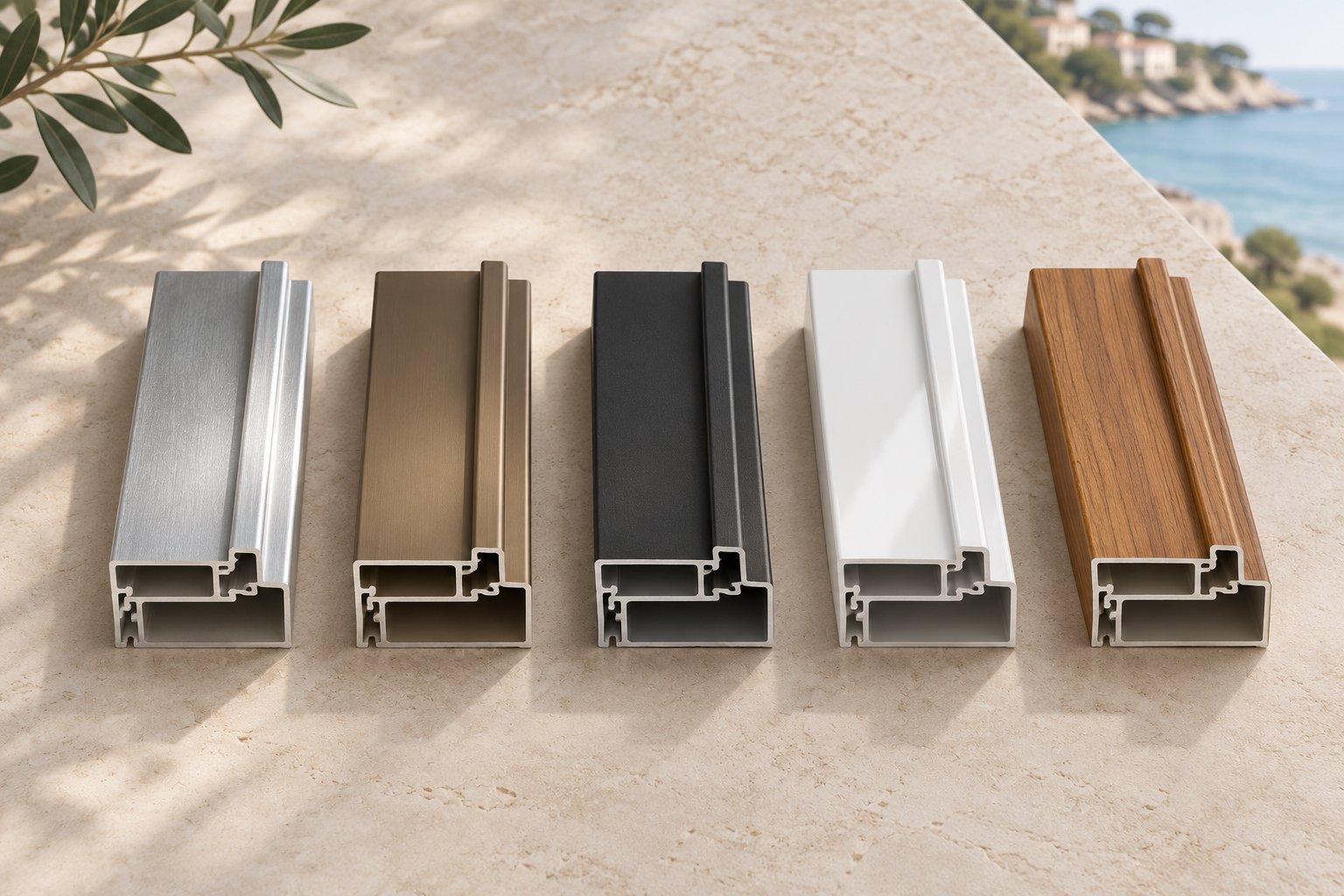
When you picture a window failing, you probably imagine a leaking seal or a stuck sash. Yet chalky, faded, or pitted frames are just as common a complaint, and they usually trace back to the finish. Bare aluminium does form a natural oxide layer. Still, coatings maker PPG notes that a protective finish adds corrosion resistance, abrasion resistance, UV protection, color options, and overall durability.
Each finish suits a different look, budget, and environment. Here is how the main options compare:
| Finish | Appearance Options | Durability | Coastal or Polluted Sites | Repairability | Relative Cost |
|---|---|---|---|---|---|
| Mill finish | Raw metal only | Relies on the natural oxide layer and dulls over time | Poor | No coating to repair | Lowest |
| Anodized | Metallics and earth tones, limited bright colors | Hard, integral finish that will not peel, but brittle under impact or bending | Good when coating class and seal quality are documented | Cannot be field-repaired to its original look | Moderate to high |
| Powder coated | Wide color and gloss range | Good, varies with powder chemistry | Good with high-performance powders and proper pretreatment | Touch-up possible, color match imperfect | Low to moderate |
| PVDF / fluorocarbon | Solid, mica, and metallic colors | Excellent UV, chalk, and fade resistance | Excellent, a benchmark for marine exposure | Touch-up with compatible coating | High |
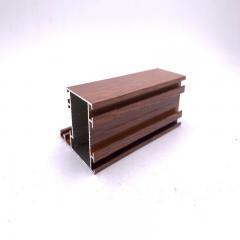
| Wood-grain transfer | Timber look on aluminium | Depends on base coat and transfer film quality | Moderate, set by the base coat | Grain pattern is hard to match | Moderate |
Why does coating thickness matter? A film that is too thin leaves edges and pores exposed. One that is too thick can chip or crowd gasket grooves and hardware channels. That is why standards set minimums. Under AAMA 611, exterior anodizing comes in two architectural classes: Class I requires at least 0.7 mils (about 18 microns), while Class II requires 0.4 mils (about 10 microns). For organic coatings, AAMA 2605 requires 4,000 hours of ASTM B117 salt spray testing and a color change of no more than 5 delta E units after 10 years of Florida exposure. In China, Parts 2 to 5 of GB/T 5237 cover anodized and coated profiles. Whatever the market, ask for a thickness report, not just a color name.
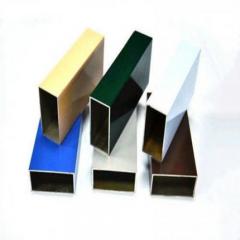
One practical tip: order glazing beads, the slim glass extrusion that clips each pane in place, with the same finish as the main aluminium extruded profile. Mismatched beads can fade at a different rate and stand out within a few years.
Imagine a frame facing the sea. Salt settles on cut edges, fastener holes, and joints, where the coating is thinnest. UV reflected off the water speeds up chalking. Humidity cycling can trigger filiform corrosion, the worm-like tracks that creep beneath a coating that lacks proper pretreatment.
That is why pretreatment matters as much as the topcoat. Cleaning, etching, and a conversion coating help the finish bond to the metal and resist corrosion at its surface. Anodized frames on coastal sites need extra care too, because the oxide layer is porous. For marine exposure, Class I is the sensible minimum, along with documented seal quality, such as a hot deionized water or nickel acetate seal.
Bathrooms, pool halls, coastal homes, and industrial zones full of pollutants all justify an upgraded finish. It is no surprise that so many buyers search for anti-corrosion profiles by name.
Aluminium can be recycled again and again without losing its core properties. Remelting scrap into recycled-content billet takes far less energy than producing primary metal from ore. A well-finished aluminium frame that lasts decades also spreads its environmental cost over a long service life. On commercial projects, the Aluminum Extruders Council notes that extrusions can contribute to LEED points in the Energy and Atmosphere, Materials and Resources, and Indoor Environmental Quality categories.
Ask aluminium profile suppliers about recycled content and whether they can provide environmental product declarations for the billet and finish you plan to order.
A bathroom casement in a sheltered suburb and a curtain wall on a seafront tower might share the same alloy. Almost nothing else in their specification should match, from series depth to finish class.
So how do you decide what a project really needs? Start with the site, not the catalogue. Exposure varies more than most people expect. A building facing the surf can collect far more salt than one a few kilometers inland, as one coastal specification guide points out. Height, wind, and use shift the picture just as much. Whether you are planning a windows aluminium frame package for a bungalow or a tower, the same five priorities apply. Only their weighting changes.
| Project Type | Series Depth | Alloy / Temper | Thermal Break | Finish Specification | Performance Testing |
|---|---|---|---|---|---|
| Low-rise residential | 50 to 70 series, sized to the opening | 6063-T5 is usually enough | Polyamide or pour-and-debridge where the climate calls for it | Quality powder coat or anodizing | Residential class or declared performance for the complete window |
| Commercial | 70 to 80 series for larger openings | 6063-T5, with T6 for heavy mullions | Sized to meet the local energy code | High-performance powder, PVDF, or architectural anodizing | Commercial class reports at realistic sizes |
| High-rise | Deep sections or curtain wall systems | 6063-T6, 6005, or 6061 where loads demand it | Engineered breaks with structural verification | PVDF or Class I anodizing | Highest classes, with design pressure checked for height |
| Coastal | Set by the wind load | Matched to load, plus careful detailing of dissimilar metals | Matched to the heating or cooling demand | Marine-grade coatings with documented pretreatment, plus corrosion-resistant hardware | Wind, water, and air tests at the project's actual dimensions |
Paperwork matters, but measurements matter more. Use this checklist before you sign off:
For large batches, a sampling plan such as ANSI/ASQ Z1.4 sets how many pieces to inspect.
Work through this list carefully and you end up with something valuable: a precise set of requirements. Putting those requirements into a form that a supplier can quote against accurately is a skill of its own.

Have you ever sent a supplier a photo and a short note, then received a quote that matched nothing you had in mind? It happens all the time. A clear request lets the extruder price the part you actually need instead of guessing from an image, as one RFQ checklist for fabricators points out. Photos help explain appearance, but they do not define a reproducible section.
Before you contact anyone, gather these details in one place:
It also pays to ask for a quote that separates unit price, tooling, samples, finishing, and packing. For a custom window industrial extruded aluminum profile, confirm who owns the die and how drawing revisions are handled.
With your brief ready, browsing existing profiles can save time, because a close match may need only small changes. Shengxin Aluminium's collection of aluminium window frame profiles is one place to start. It is aimed at window manufacturers, glazing-system fabricators, and architectural procurement teams, and it gathers custom extrusion listings for window and door frame production alongside multiple finish options. Use it to compare section shapes and finishes against your drawing, then send an inquiry built from the list above. Just remember that profile geometry, glazing interfaces, hardware compatibility, and finish requirements still have to match the system you intend to build.
A listing shows you shape, finish, and the aluminum window frame material on offer. You'll notice what it cannot show: how the finished window behaves in wind, rain, or winter cold.
Apply the buyer checkpoints from the previous section, and confirm that energy ratings, weather performance, and code compliance come from finished-system testing and local review, never from an extrusion listing alone.
For most residential and light commercial windows, 6063 in the T5 temper is the practical default. It flows easily into thin-wall, multi-chamber shapes with gasket grooves and screw ports, and it takes anodizing and paint evenly, so frames look consistent from one batch to the next. When a project involves tall glazed facades, large mullions, or strong coastal wind, specifiers often move to T6 tempers or to stronger alloys such as 6005 or 6061, accepting higher processing cost and less finish refinement in exchange for strength. 6060 suits fine-finish lighter parts like beads and trims. Whatever you choose, ask for mill certificates that state both alloy and temper, and consider spot checks with a spectrometer or hardness tester, because a lower-strength substitute looks identical to the eye.
They can be, but only when the frame includes a thermal break. Aluminium moves heat very quickly, so a solid metal frame lets winter cold reach the room side, which can cause condensation and mold along the edges. A thermal break, either a crimped glass fiber-reinforced polyamide strip or a poured polyurethane barrier with the bridging metal removed, interrupts that path. Deeper, multi-chamber profiles and wider breaks improve insulation further, though they add depth and cost. Keep in mind that energy ratings such as NFRC U-factors in North America or EN ISO 10077 values in Europe describe the complete window with its glass, spacers, and gaskets. A bare extrusion has no meaningful rating on its own, so always request system-level thermal data.
The series number usually refers to the frame depth in millimetres, not the wall thickness. A deeper series can hold thicker insulated glass, span bigger openings, resist bending better, and leave more room for thermal breaks, which is why 70 and 80 series profiles are common for large sliders, floor-to-ceiling glazing, and commercial work, while 50 and 60 series suit smaller residential openings. Wall thickness is a separate figure that affects stiffness, screw retention at hinges and locks, and price. There is no single correct value: the right thickness depends on your local standard, the span, and the wind load. Note that depth often adds more stiffness than simply thickening the walls, so a heavier profile is not automatically a stronger one.
No. Each badge answers a narrow question. ISO 9001 covers how a factory manages quality, not whether a given profile meets spec. An SGS report applies only to the samples that were tested. RoHS limits hazardous substances and says nothing about strength or sealing. CE marking for windows relates to declared performance of a finished window product within a defined legal scope, not to a bare extrusion. Profile standards such as GB/T 5237 or the EN 755 series define material, dimensions, and finishes. Air leakage, water resistance, structural capacity, and code compliance can only be confirmed by testing the complete window system, for example under AAMA/WDMA/CSA 101/I.S.2/A440 with ASTM E283, E331, and E330, at sizes close to your actual openings.
Gather a dimensioned profile drawing or target series with critical dimensions marked, the alloy and temper, required wall thickness, glazing unit thickness and bead style, the hardware system the profile must accept, finish type and color with the service environment, quantities split into trial and production runs, and required lengths. Ask for a quote that separates unit price, tooling, samples, finishing, and packing, and confirm die ownership for custom sections. Reviewing an existing catalogue first can save time, since a close match may only need small changes. Shengxin Aluminium's aluminium window frame profiles collection, for example, offers custom extrusion listings and multiple finish options for window and door frame production. Even so, matching glazing interfaces, hardware compatibility, and finish to your intended system remains your responsibility, and energy, weather, and code performance must come from finished-window testing rather than a listing.



 Onlineservice
 0086 136 3563 2360
 sales@sxalu.com
 +86 136 3563 2360
 Deutsch
 English
 français
 русский
 español
 português
 العربية
 ไทย
 Việt
 Українська